

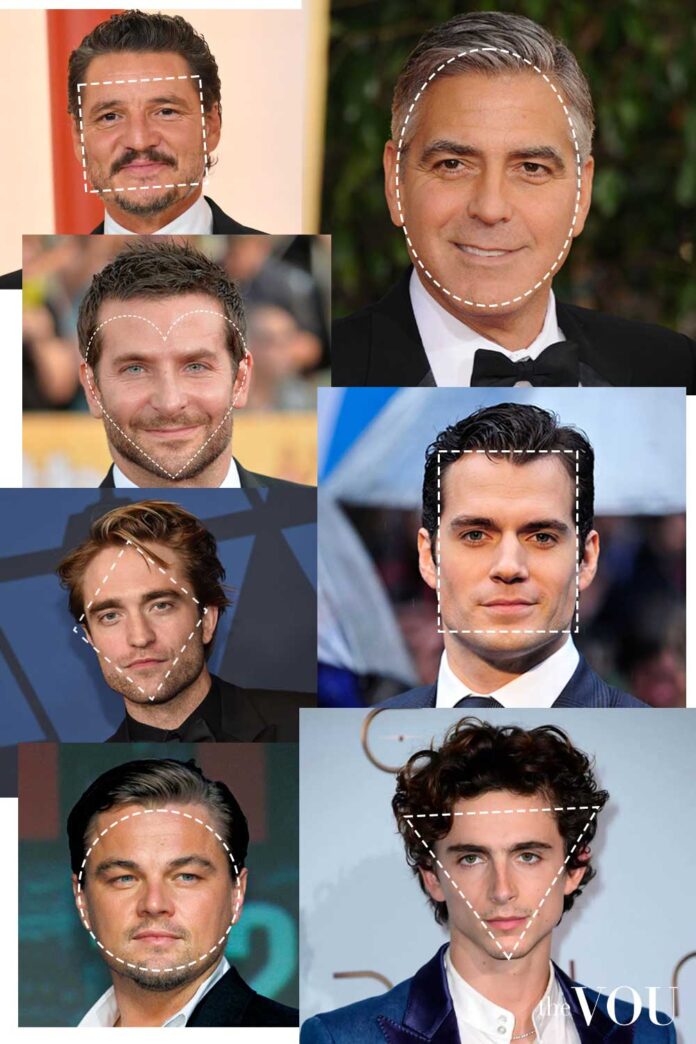
What’s This About:
Face shape is a set of names for what you can already see in the mirror. It is a starting point for choosing a haircut, a beard or a pair of glasses, not a measurement you have to get right.
Look straight at your own face and note what you can see, such as:
– whether your face is clearly longer than it is wide, or closer to square
– which is widest: your forehead, your cheekbones or your jaw
– whether the corners of your jaw look angular or curved
– whether your chin comes to a point, a curve or a flat edge
and many more!
Those are the observations the styling notes lean on hardest. The section below adds what a camera, your hair and a beard each do to the same outline, and the notes work whether or not you settle on one of the nine names.
Key Points:
- Hair worn with height on top and kept shorter at the sides makes a face read as longer. Hair with fullness at the sides makes it read as wider. Those two are the effects you can steer most directly with a haircut, whichever of the nine names you pick, and they are not the only things a cut changes.
- A beard sits on the lower face and a haircut sits above it, so if what you want to change is the jaw and chin, facial hair is the thing that is actually in that part of the picture.
- Your growth pattern, density and texture decide what your hair will actually do. A cut that sits one way on thick straight hair will not sit the same way on fine or curly hair, whatever shape your face is.
- Frames sit across your cheekbones and their top edge runs close to your brow line, so it is worth looking at both before you choose frame width and frame shape rather than after.
- If two of the nine names fit you, read both sets of notes. Oblong and rectangle are the same long face with different jaw corners; triangle and pear are both a face fuller at the jaw than at the forehead; heart and inverted triangle are both a face wider at the brow than at the chin; and diamond is the odd one out, widest across the cheekbones with the forehead and jaw both narrower than the middle.
Want to learn more? Continue reading the full article below ↓
Understanding your unique face shape is a cornerstone of personal style, grooming expertise, and self-presentation.
Knowing roughly how your own features sit together makes it easier to describe what you want to a barber, a stylist or an optician, and easier to judge whether a haircut you have seen on someone else is likely to sit the same way on you.
This guide covers the nine names in common use, what each one actually looks like, where the names overlap, and the haircuts, beards and glasses that tend to go with each.
How to Look at Your Own Face
You do not need to measure anything. Stand square to a mirror in even light, with your hair pushed back off your forehead and your chin level, and look at four things in turn.
1. Length against width. Is your face clearly longer than it is wide, or is it close to as wide as it is long? This is the observation the notes below lean on most, because height on top and width at the sides are the two effects a haircut gives you most directly. Which of the two you want, or whether you want either, is a preference rather than a correction.
2. Which part is widest. Compare your forehead, your cheekbones and your jaw. One of the three usually stands out as the widest, and that is what most of the nine names are describing.
3. The corners of your jaw. Run a finger from below your ear to your chin. If the line turns a sharp corner, that reads as angular. If it curves, that reads as soft. Two faces with identical proportions look very different depending on this one detail.
4. The shape of your chin. Pointed, rounded or squared off.
What This Method Cannot Tell You
A mirror or a photograph shows you an outline, and several things change that outline without changing your bone structure at all.
A camera changes the answer. A phone held close and slightly above you widens the forehead and narrows the jaw; held further away and level, the same face reads differently. If you use a photograph, take it straight on, at arm’s length or further, with the lens level with your eyes.
Hair hides the outline. Volume at the sides makes a face read wider and a fringe makes it read shorter, so push your hair back before you look.
A beard is part of what you see. Facial hair is the easiest way to change the lower half of your face, which is also the half most of these names are about.
Fullness is not the same as bone structure. How full your cheeks are changes with weight and with age, and it changes independently of how wide your cheekbones are.
None of that makes the exercise useless. It does mean the result is a description of how your face reads today, not a measurement of what is underneath, and there is nothing hidden to uncover. If you would rather go straight to advice, the feature-led notes near the end of this guide work from the four observations above without needing a label at all.
Why the Nine Names Overlap
These names come from styling and grooming writing rather than from a single agreed standard, so several of them describe the same face in different words. Rather than leave you choosing between two labels, here is exactly how this guide uses them.
Oblong and rectangle are one long face. This guide uses rectangle for the version with square jaw corners and oblong for the version with softer ones, and the notes in the two sections are close to identical.
Triangle and pear are one face here: fuller at the jaw than at the forehead. Both sections are kept because both words are in common use and readers arrive looking for one or the other, and the advice in them is the same advice.
Heart and inverted triangle are one face too: wider across the brow and the cheekbones than at the chin. A hairline that dips to a point often gets mentioned alongside heart, and this guide does not treat it as part of the definition; the Heart section below says the same.
Diamond is the one that is genuinely separate. It is widest across the cheekbones, with the forehead and the jaw both narrower than the middle, so it is not a face that tapers in one direction.
If two names fit you, read both sets of notes. Nothing below depends on picking one.
The Nine Face Shape Names
1. Oval Face Shape
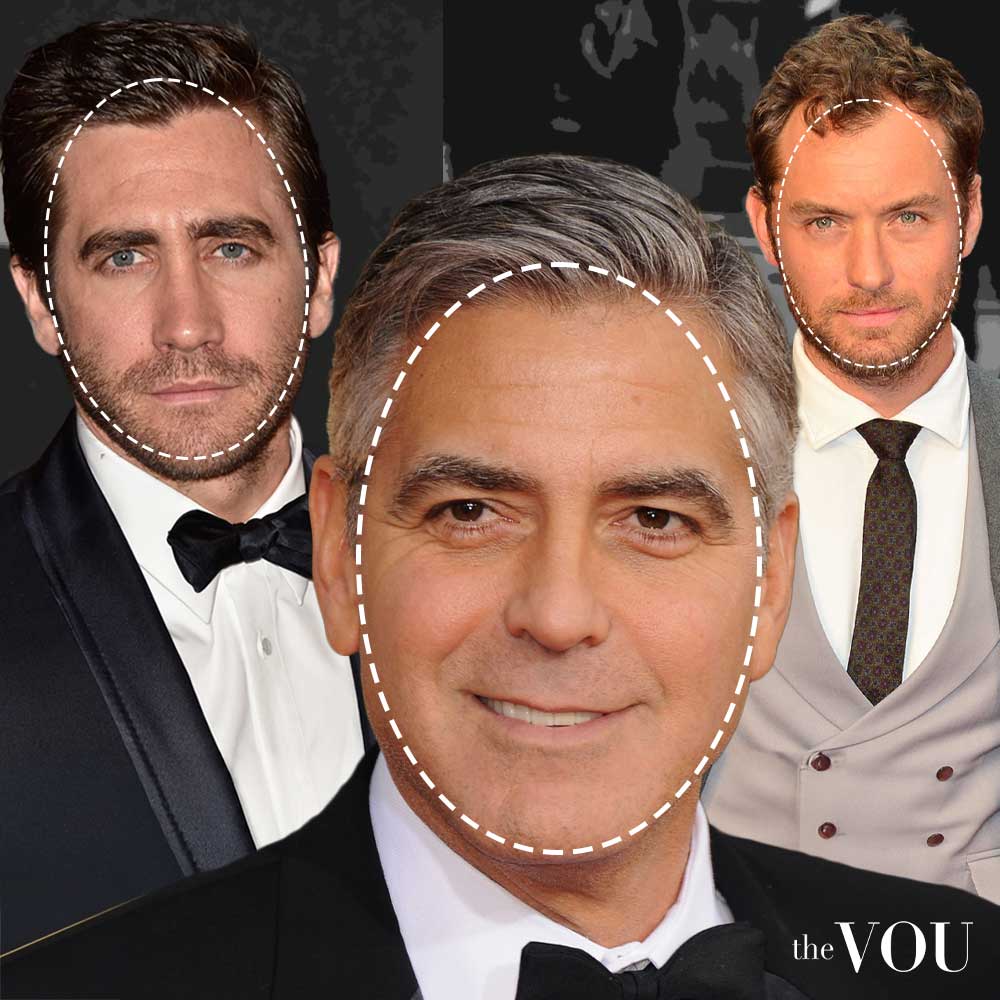
Imagine an egg standing upright; that’s essentially an oval face shape.
This face shape is described in various ways across different sources, such as the egg-shaped face, elliptical face shape, balanced face, medium-long face, proportional face shape, or classical face shape.
An oval face is a little longer than it is wide, with the forehead and jaw slightly narrower than the cheekbones and none of the differences dramatic. You will see a ratio quoted for this shape online. This guide does not use it: nothing here asks you to measure anything, and a number you are not measuring against cannot help you.
The sides of the face curve gently rather than having sharp angles.
Think of celebrities with Oval face shape like Idris Elba, George Clooney, Jude Law, or Jake Gyllenhaal; they all have oval faces in various variations.
The oval face shape serves as a baseline for other shapes, as many face shapes are essentially variations of the oval – either stretched, widened, or angular.
That is why oval is often used as the reference the other names are described against. It is a starting point for description, not a better face to have.
Haircuts That Tend to Suit an Oval Face
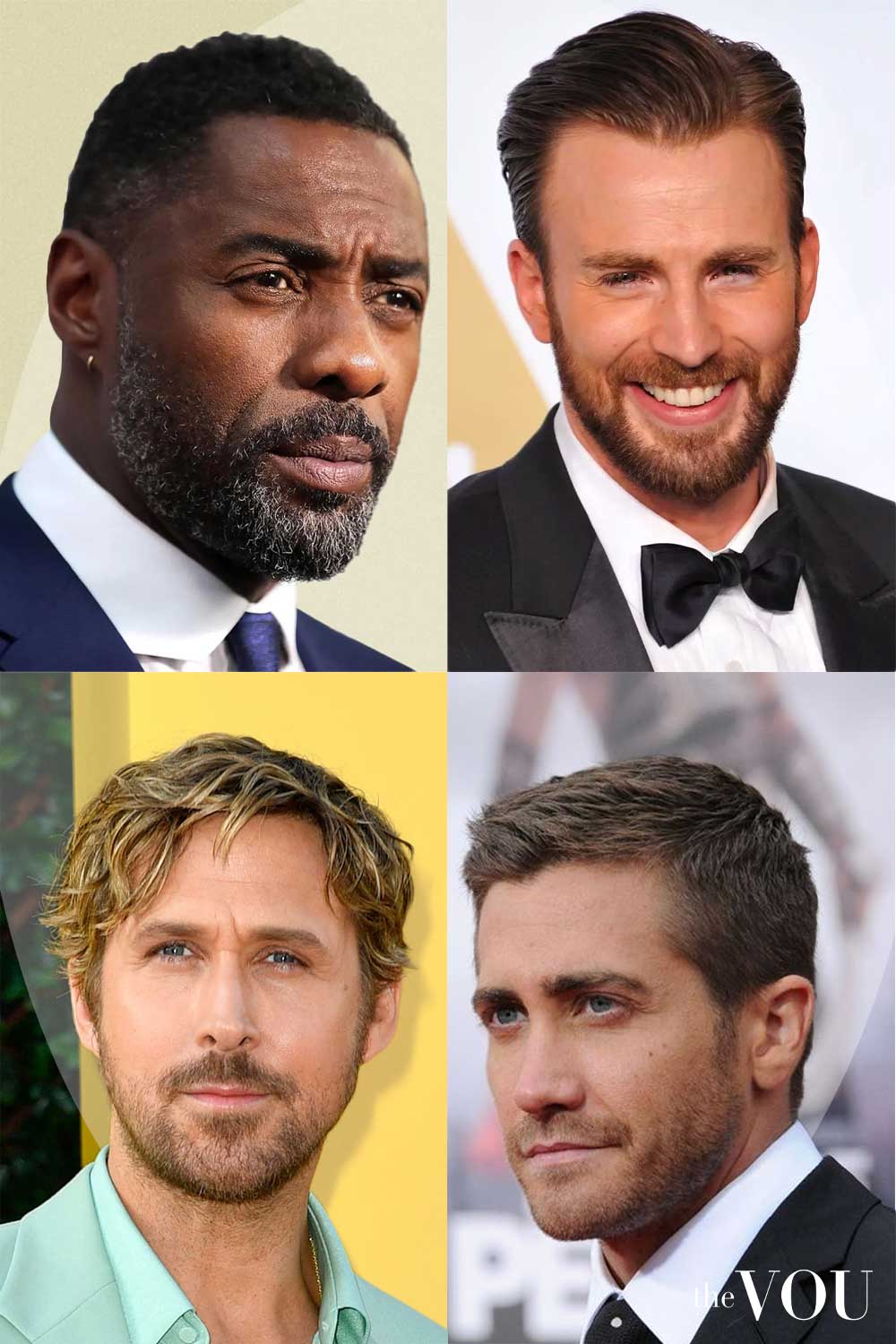
An oval face is already close to balanced in length and width, so most of the cuts below will sit on it without needing to add or take away much.
Classic cuts with clean lines and moderate length are the easy starting point. George Clooney wears a side part of that kind.
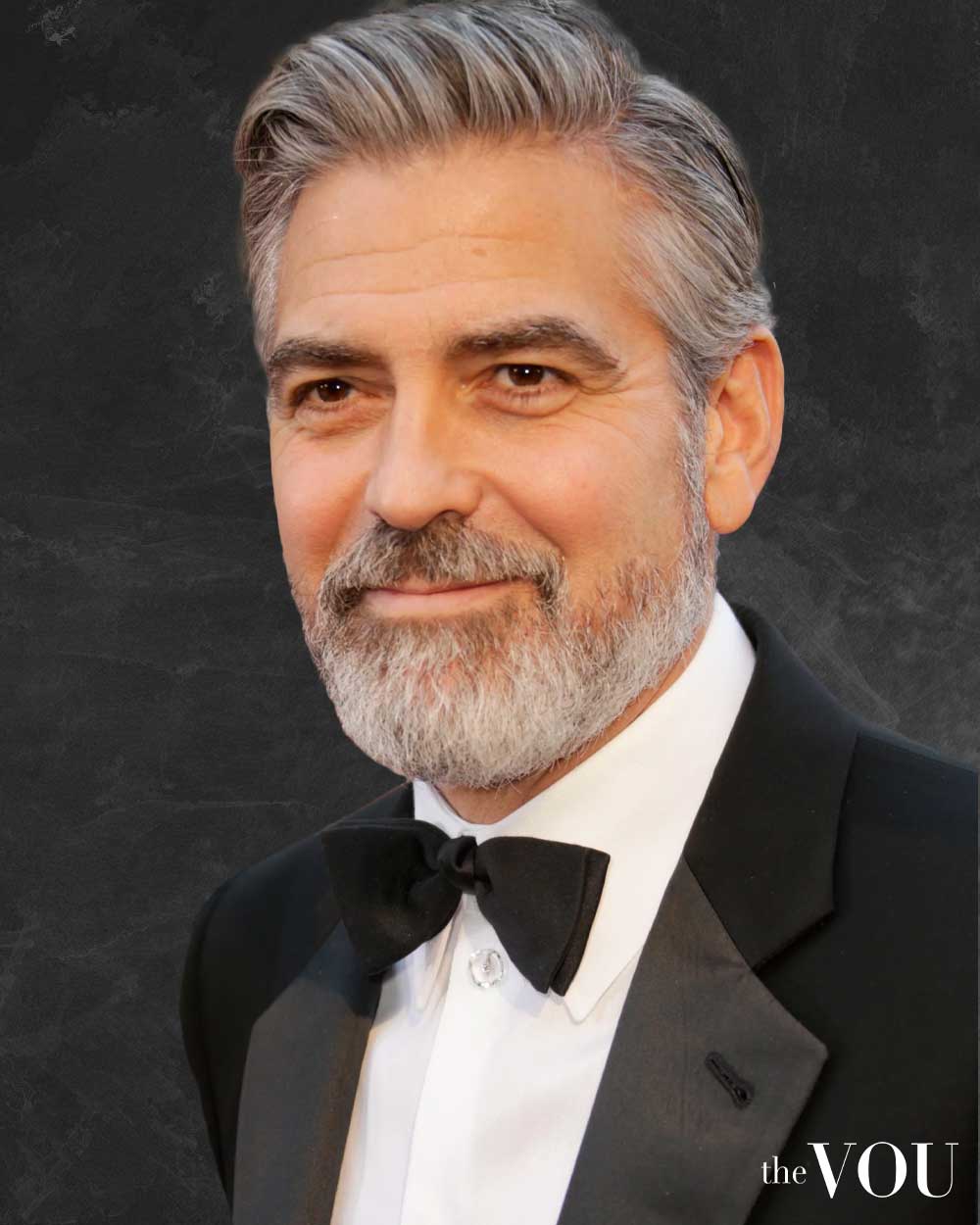
If you like the balance you already have, very little needs to change; if you want more definition somewhere, that is a preference to take to a barber rather than a correction.
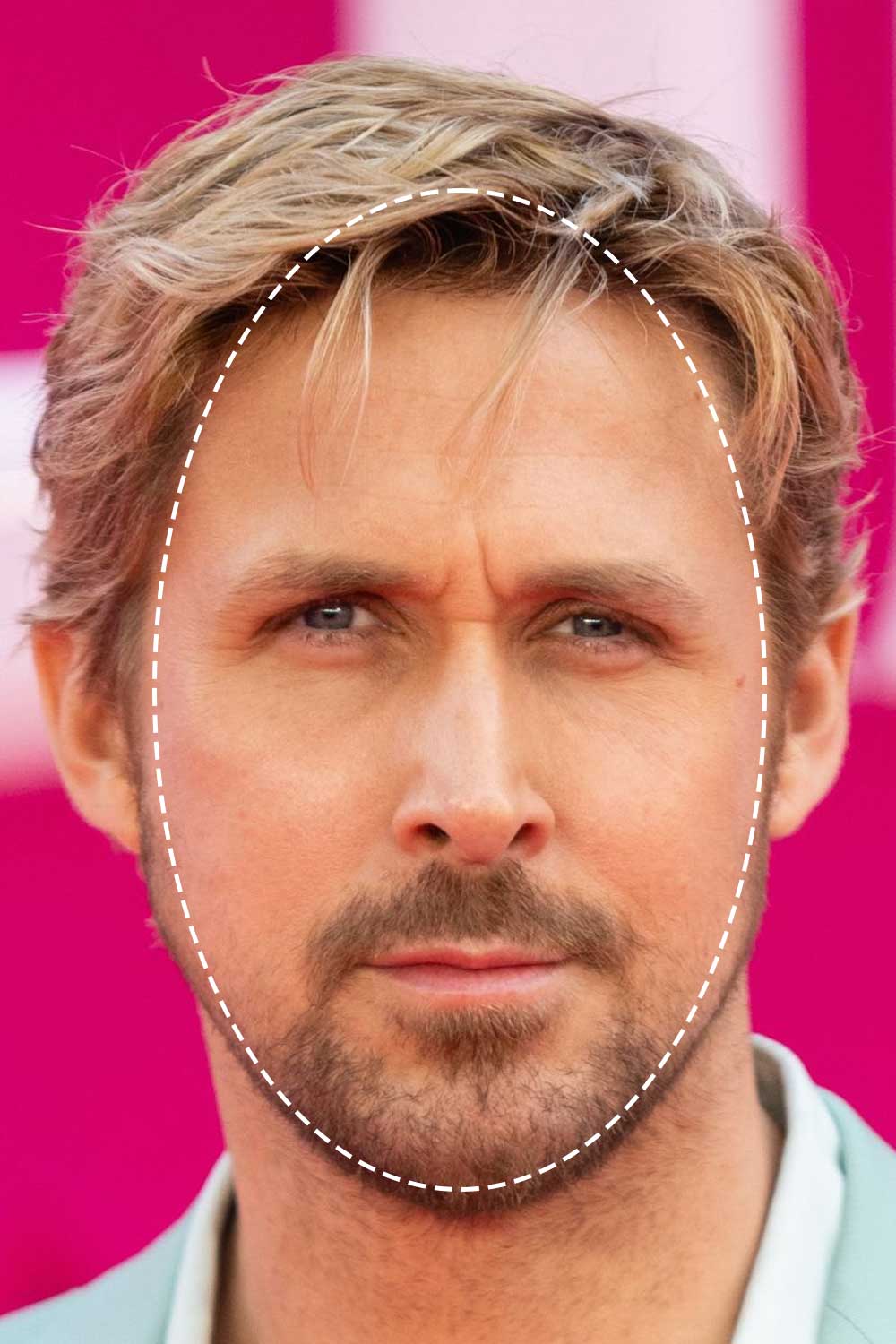
Cuts that keep the volume fairly even all round will leave that balance where it is.
If you would rather change the balance, more height on top or more width at the sides will do it, and neither is a mistake.
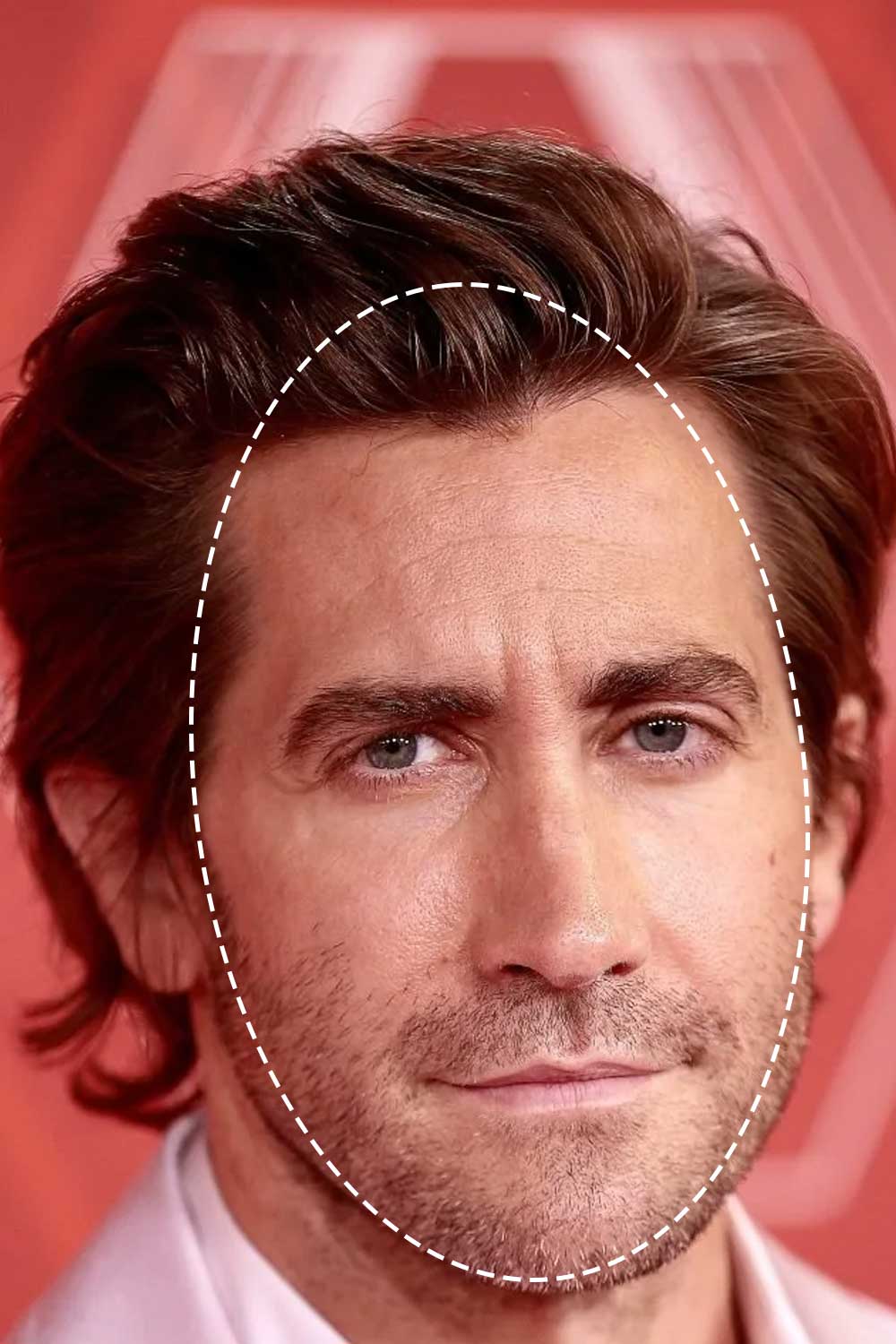
See more haircuts and hairstyles for Oval Face Shape
Beard Styles That Tend to Suit an Oval Face
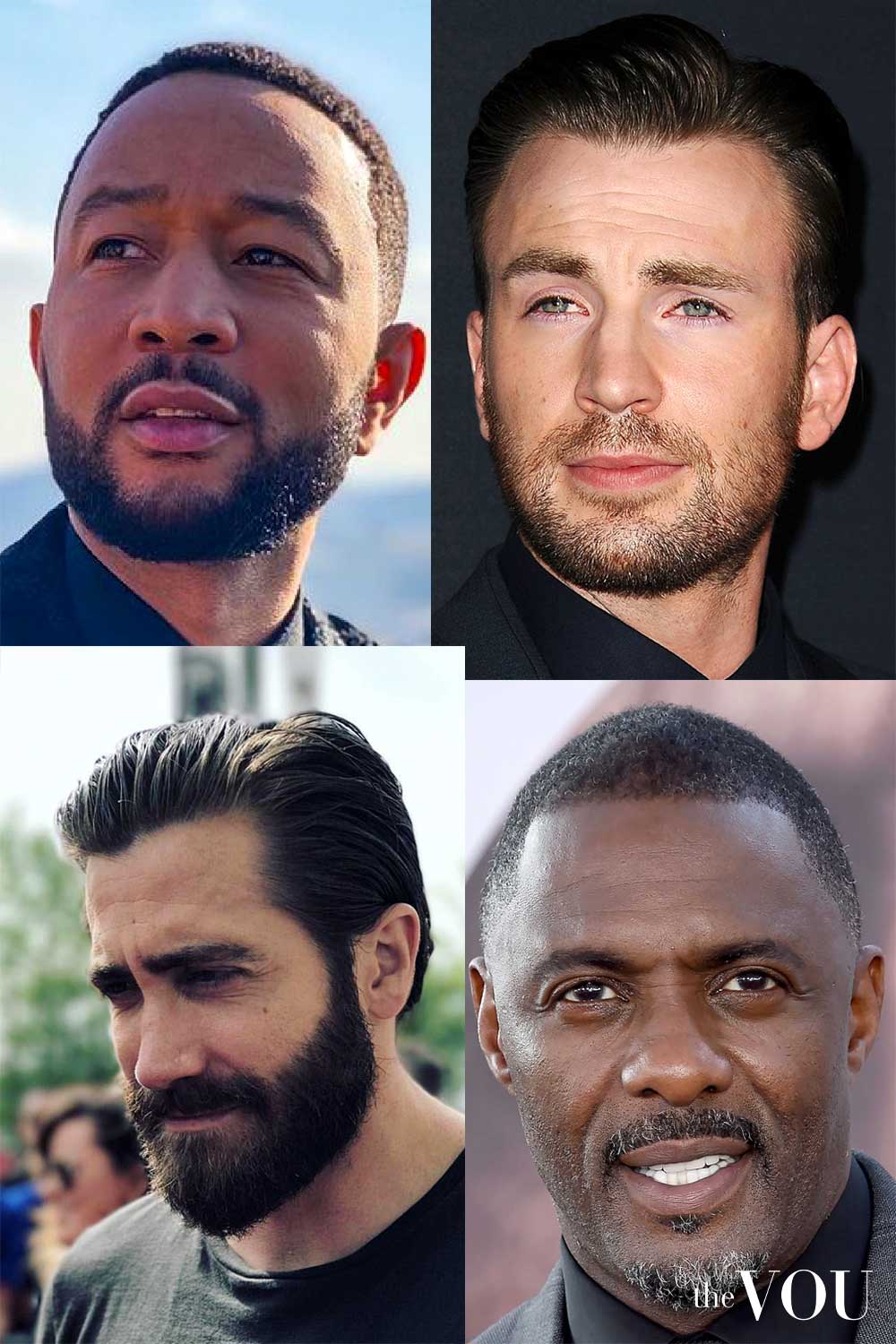
An oval face is close to balanced already, so most beard shapes sit on it without fighting the outline.
That makes the choice mostly about the look you want and how much upkeep you are willing to do.
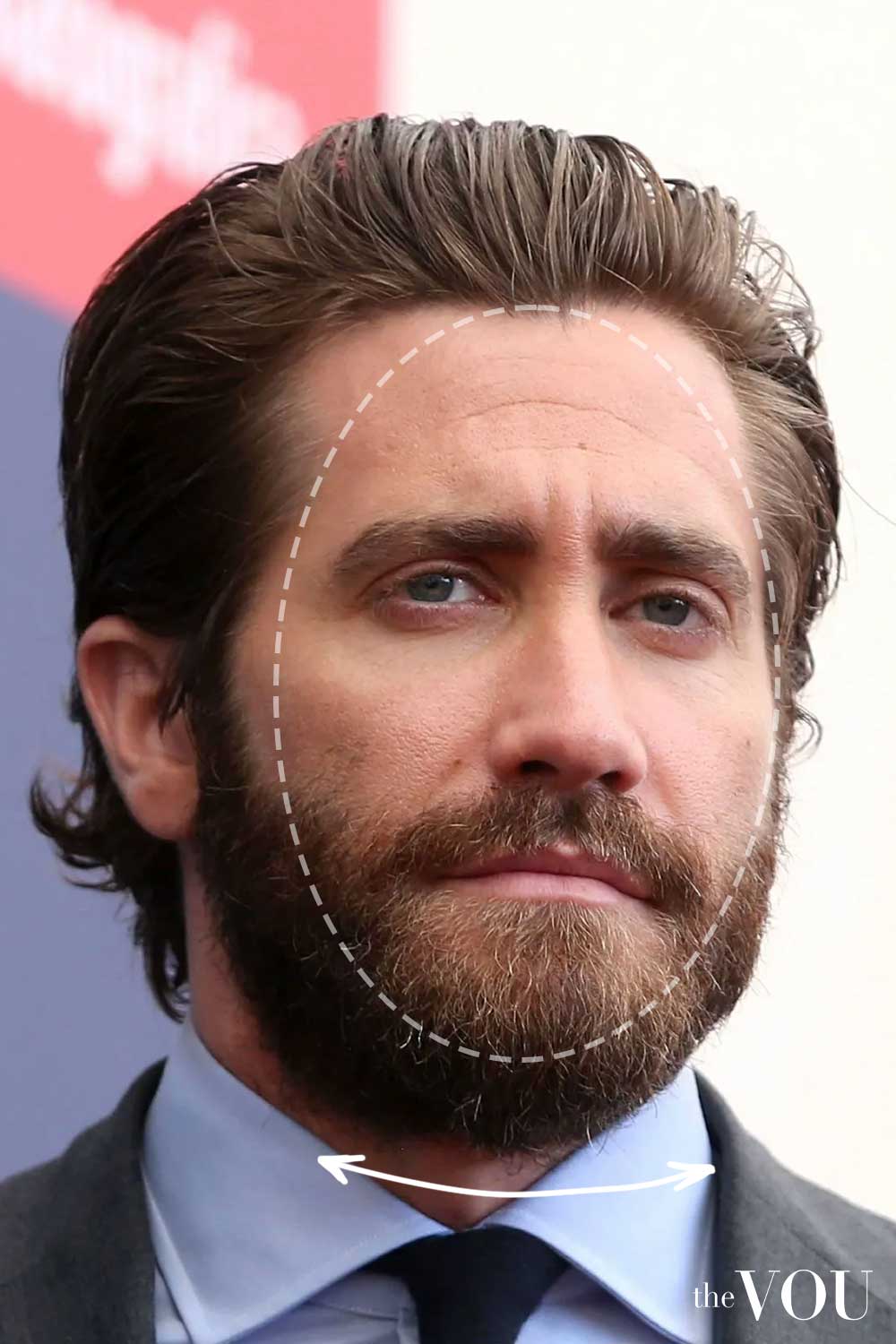
A Classic Full Beard, as Jake Gyllenhaal wears it here, carries roughly even length from cheek to chin, which adds weight low on the face. How much length that means is yours to agree with a barber.
The Short Boxed Beard, like John Legend’s precise styling, provides a refined, professional appearance that enhances natural features.
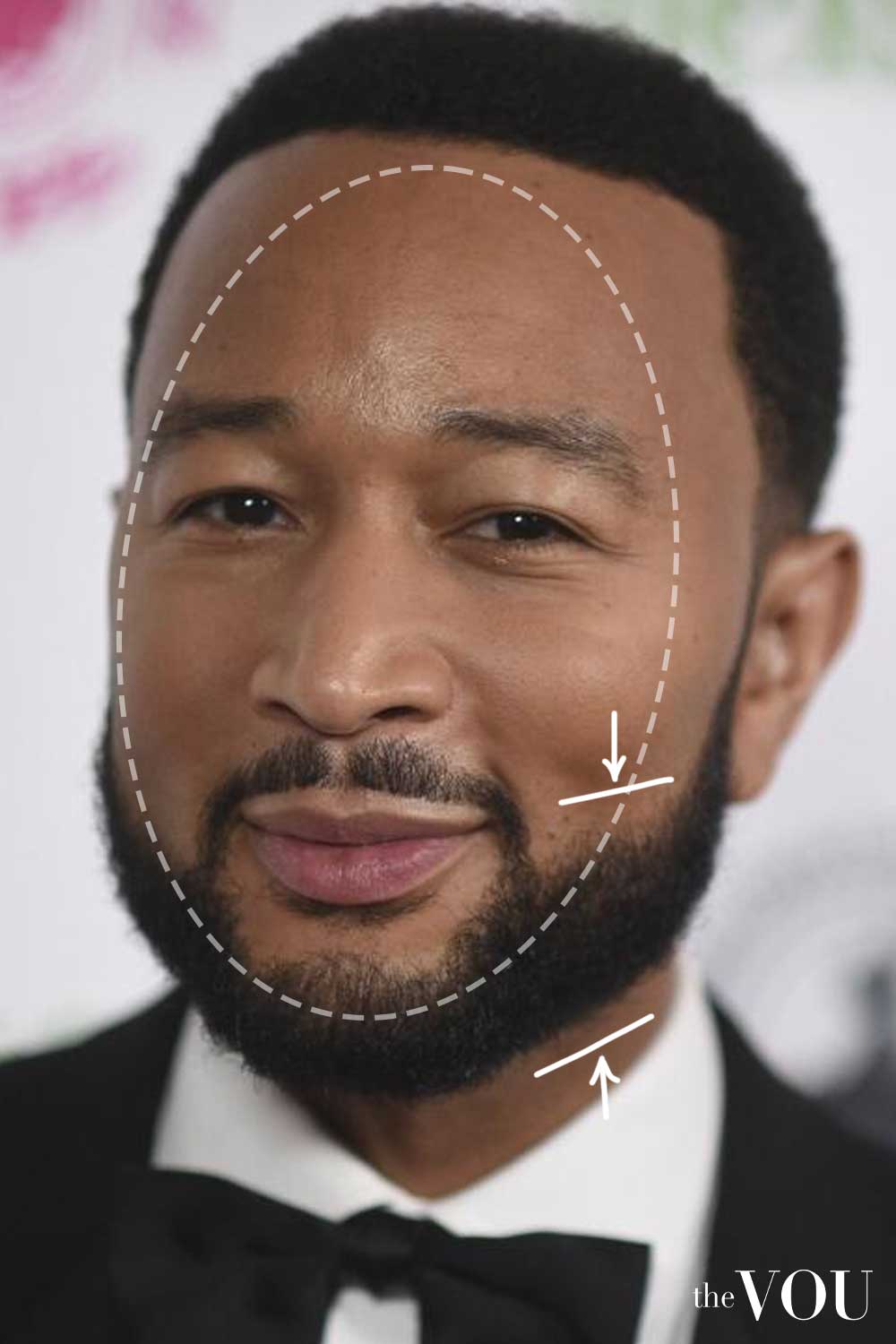
Heavy Stubble, a Van Dyke and a Corporate Beard are three other routes, and each keeps the jaw line visible rather than covering it.
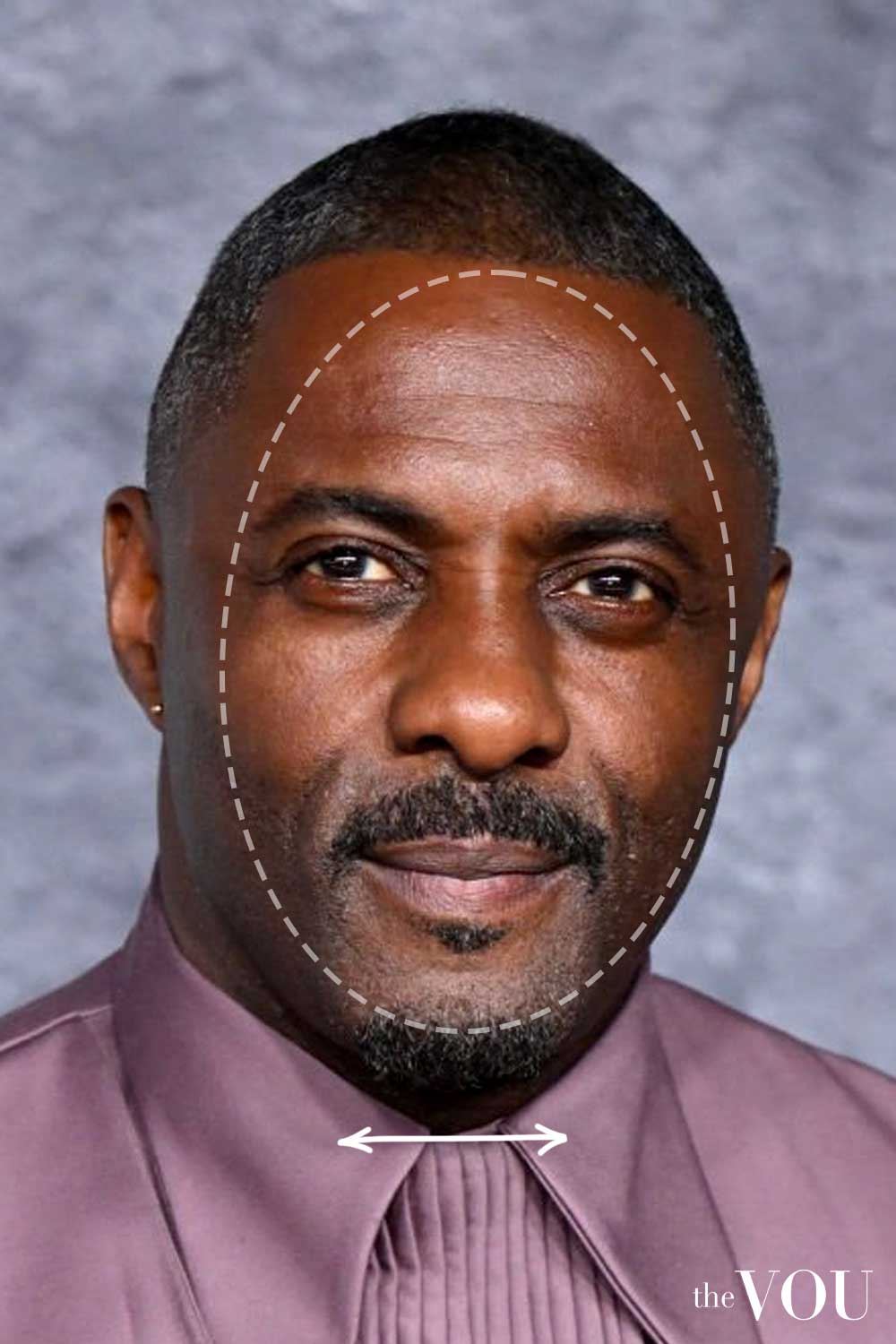
A clean edge along the cheek and the neck is what keeps any of these looking deliberate. Beyond that, how much you change the outline is up to you.
See more beard styles for Oval Face Shape
2. Round Face Shape
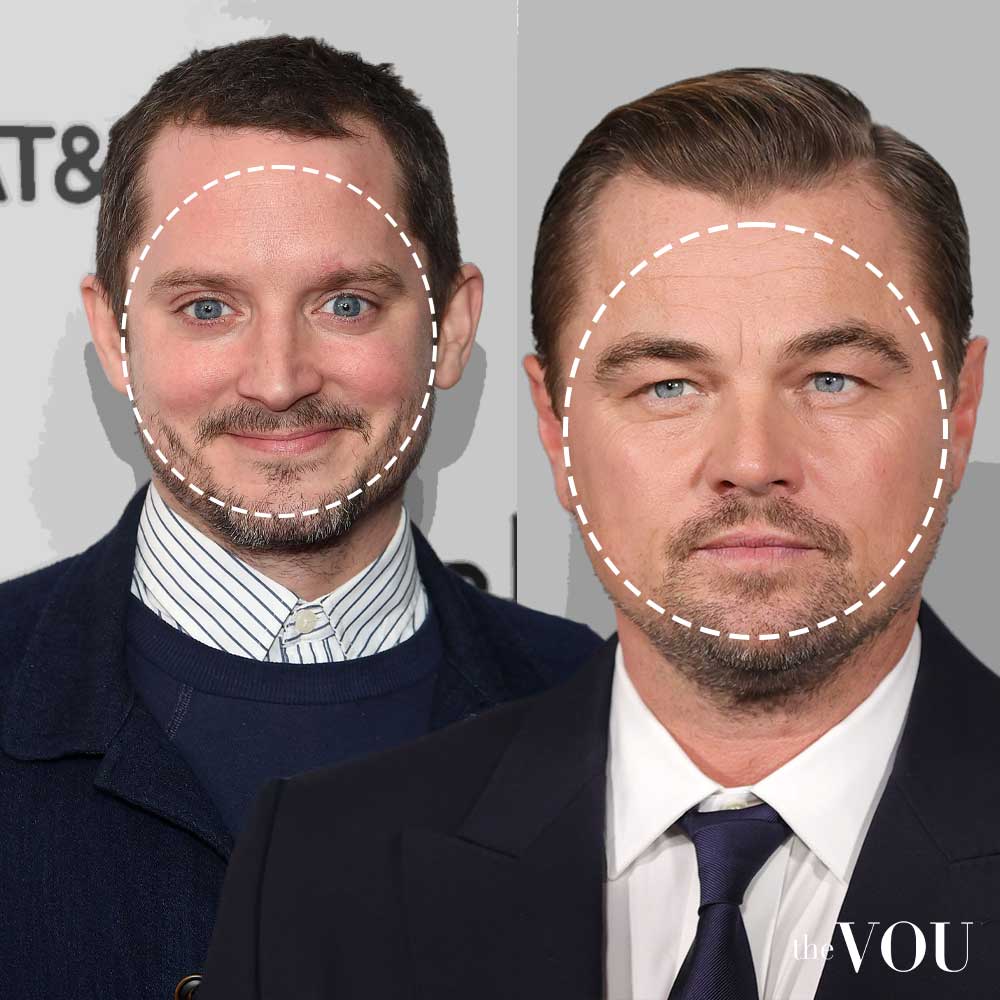
Picture a circle with softened edges; this represents the round face shape.
This shape is referred to as circular face, soft square, full face, curved face, cherubic face shape, moon face, or compact face shape.
A round face features similar width and length measurements, with soft curves rather than angles dominating the features.
The cheeks are typically the widest part of the face, with a gently curved jawline that lacks sharp angles.
Think of round face shape celebrities like Leonardo DiCaprio and Elijah Wood. Notice how their faces appear full without sharp angles.
The roundness doesn’t mean a lack of definition; it’s simply a different facial structure that can look equally masculine and appealing.
Facial fullness changes with weight and with age, so a face that reads as round at one point can read as more angular later. That is a change in fullness rather than in the underlying bone structure.
Haircuts That Tend to Suit a Round Face
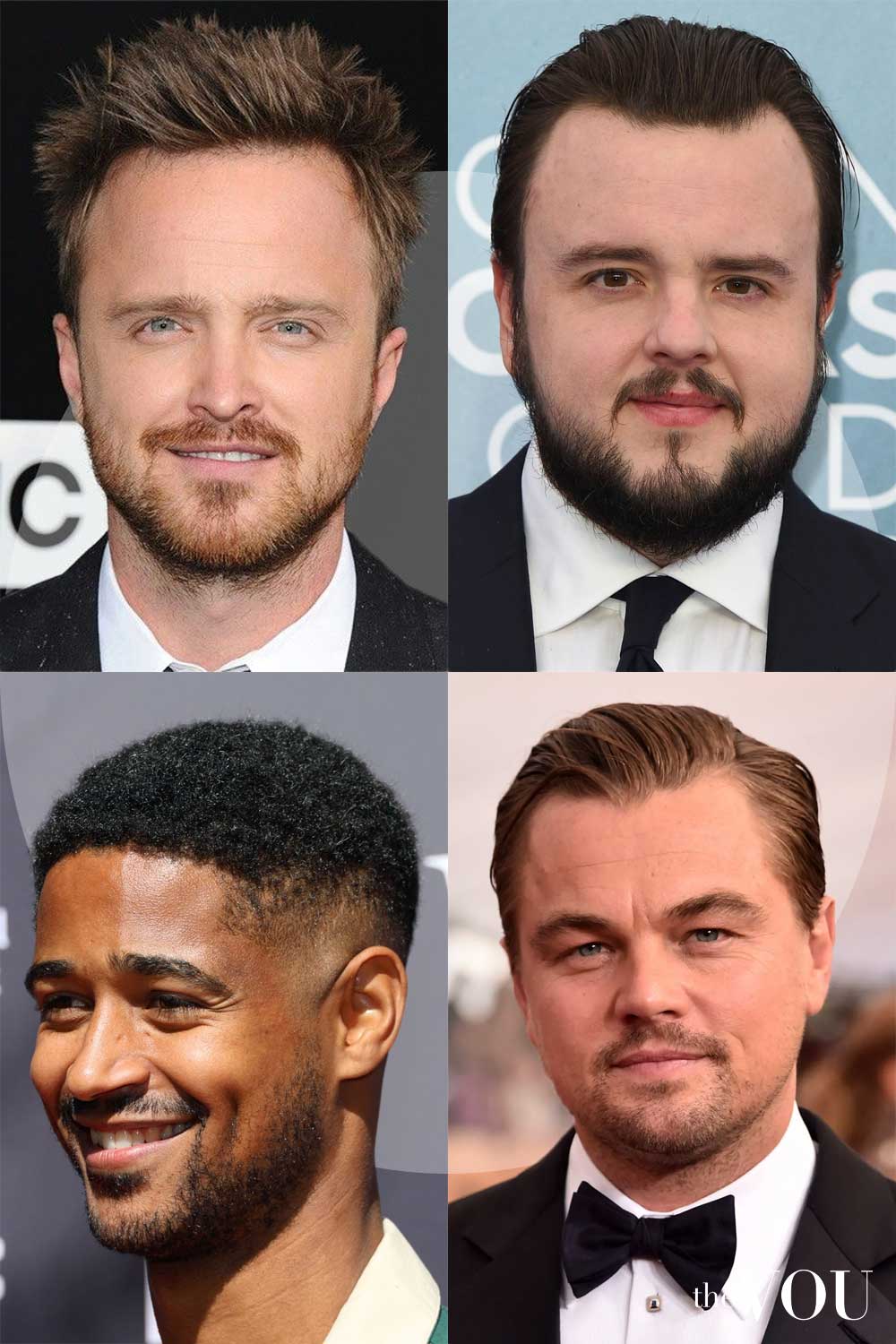
If you want a round outline to read longer or more defined, height at the crown and shorter sides are the two things that do it.
Styles that add height at the crown while keeping the sides shorter help elongate your face shape.
Consider following DiCaprio’s approach with a swept-back style that creates vertical lines, or take inspiration from Elijah Wood’s volume-focused cuts.

A cut whose sides finish level with your cheekbones tends to draw the eye across rather than down, so ask for it only if that is the effect you want.
See more haircuts and hairstyles for Round Face Shape
Beard Styles That Tend to Suit a Round Face
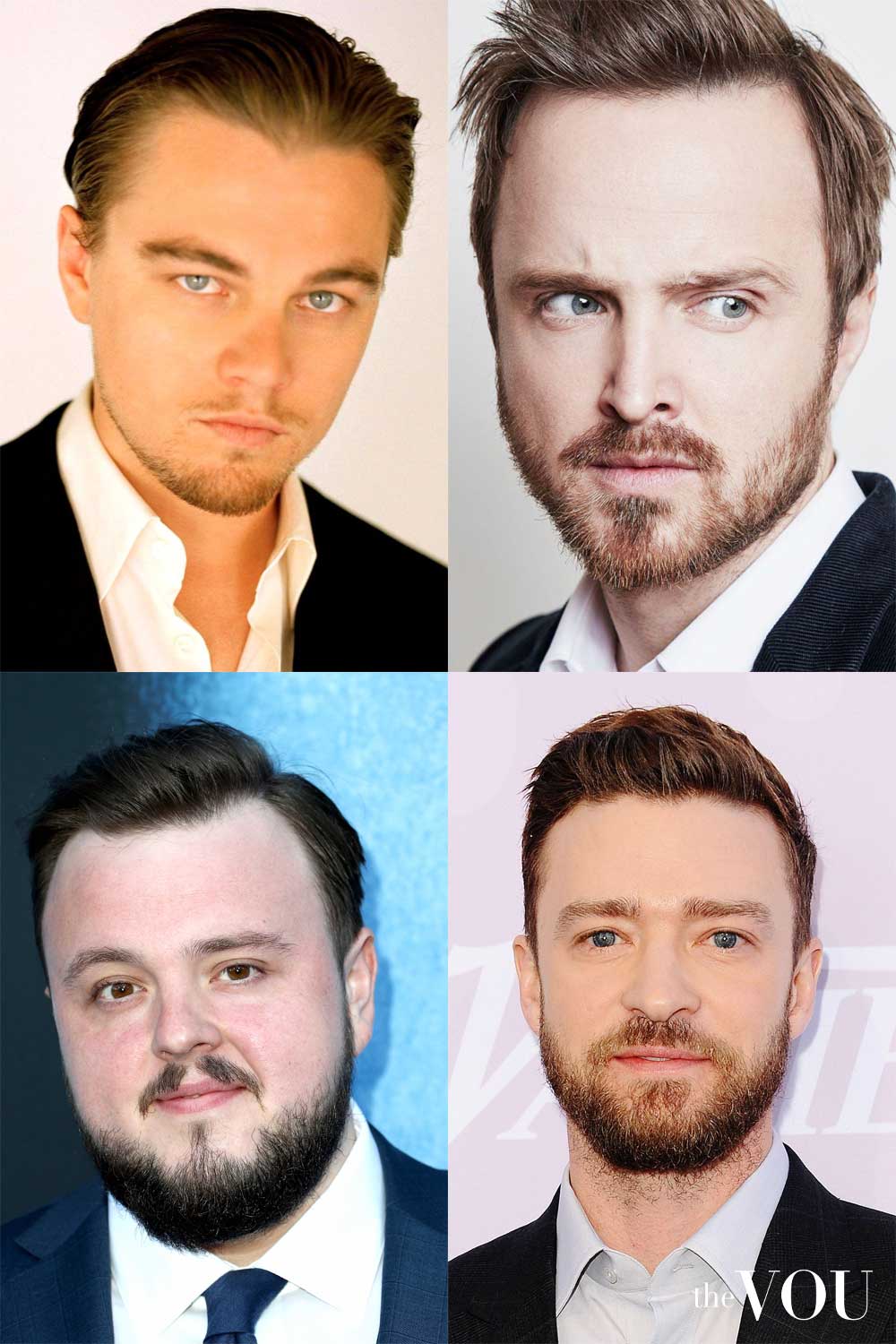
If your face is close to as wide as it is long and your jaw corners are soft, the beard styles worth looking at are the ones that put a visible line along the jaw or add a little length at the chin. Leonardo DiCaprio and James Corden both wear versions of that.
An Extended Goatee carries the beard down below the chin, which draws the eye vertically. Leonardo DiCaprio has worn one.
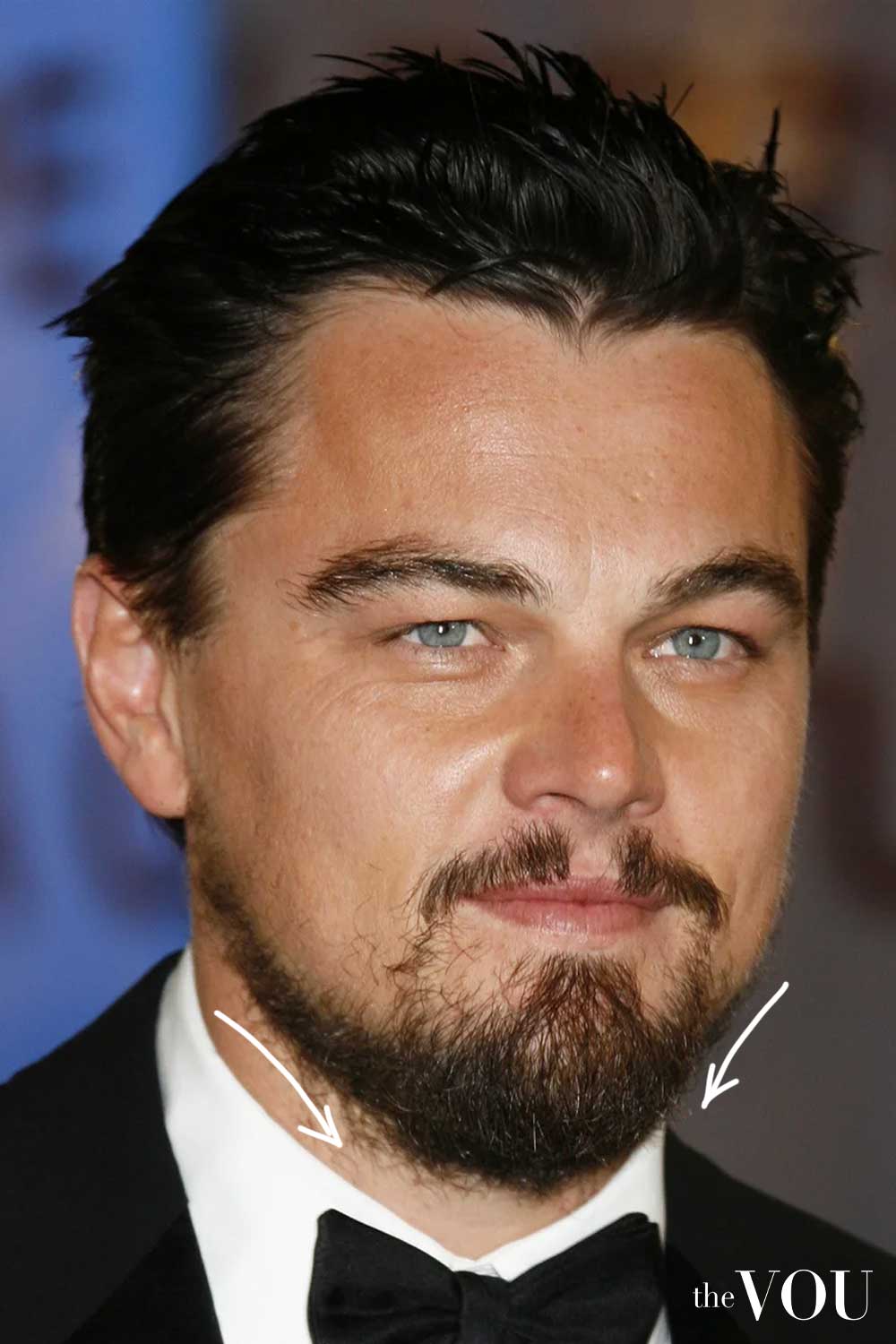
The Angular Full Beard, as worn by Aaron Paul, introduces beneficial definition to naturally curved features.

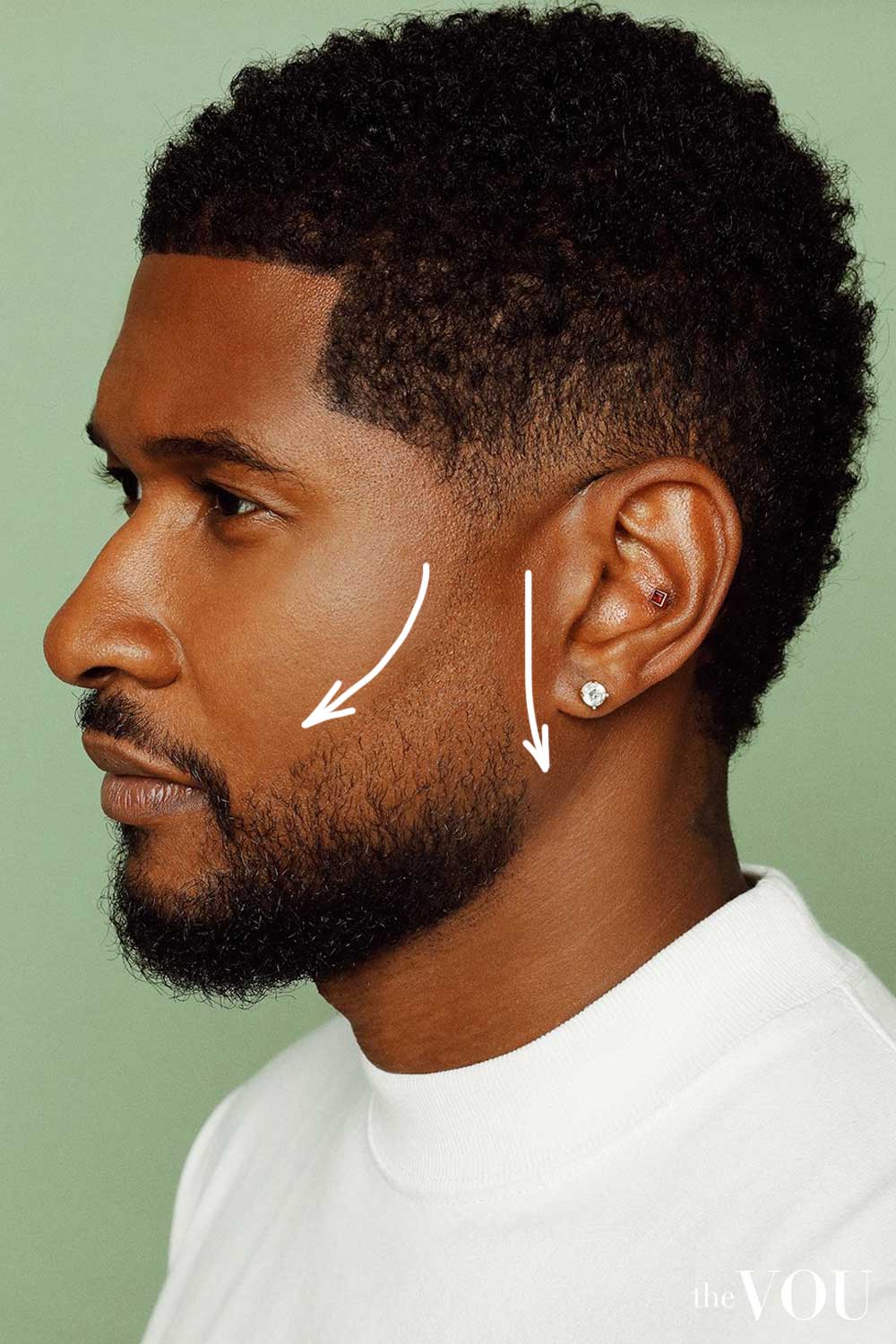
If you want more structure, a defined edge and a squarer line under the chin are what create it. If you are happy with a softer outline, you can leave both alone.
Three routes to ask about: a beard tapered shorter towards the ears, a short boxed beard left slightly longer under the chin, or a beard kept narrow at the sides so the length reads downward rather than outward.
See more beard styles for Round Face Shape
3. Oblong Face Shape

Picture a rectangular face with softer edges – that’s the essence of the oblong face shape.
This shape is also known as elongated oval, soft rectangular, extended oval face shape, or lengthened face shape.
The key characteristic is sharing similar width measurements across the forehead, cheekbones, and jawline, but with significantly greater length than width and softly rounded corners instead of sharp angles.
The face appears longer and narrower overall, with a prominently round chin rather than an angular one.
Shawn Mendes and Benedict Cumberbatch are the names this site’s oblong face shape gallery collects under this heading.
The main difference between oblong and rectangular faces lies in the edges – where rectangular faces have distinct angles; oblong faces feature softer, more rounded corners.
A long face takes most styling options; what changes is whether the cut adds to the length or works against it, and that is the decision this section is about.
Haircuts That Tend to Suit an Oblong Face
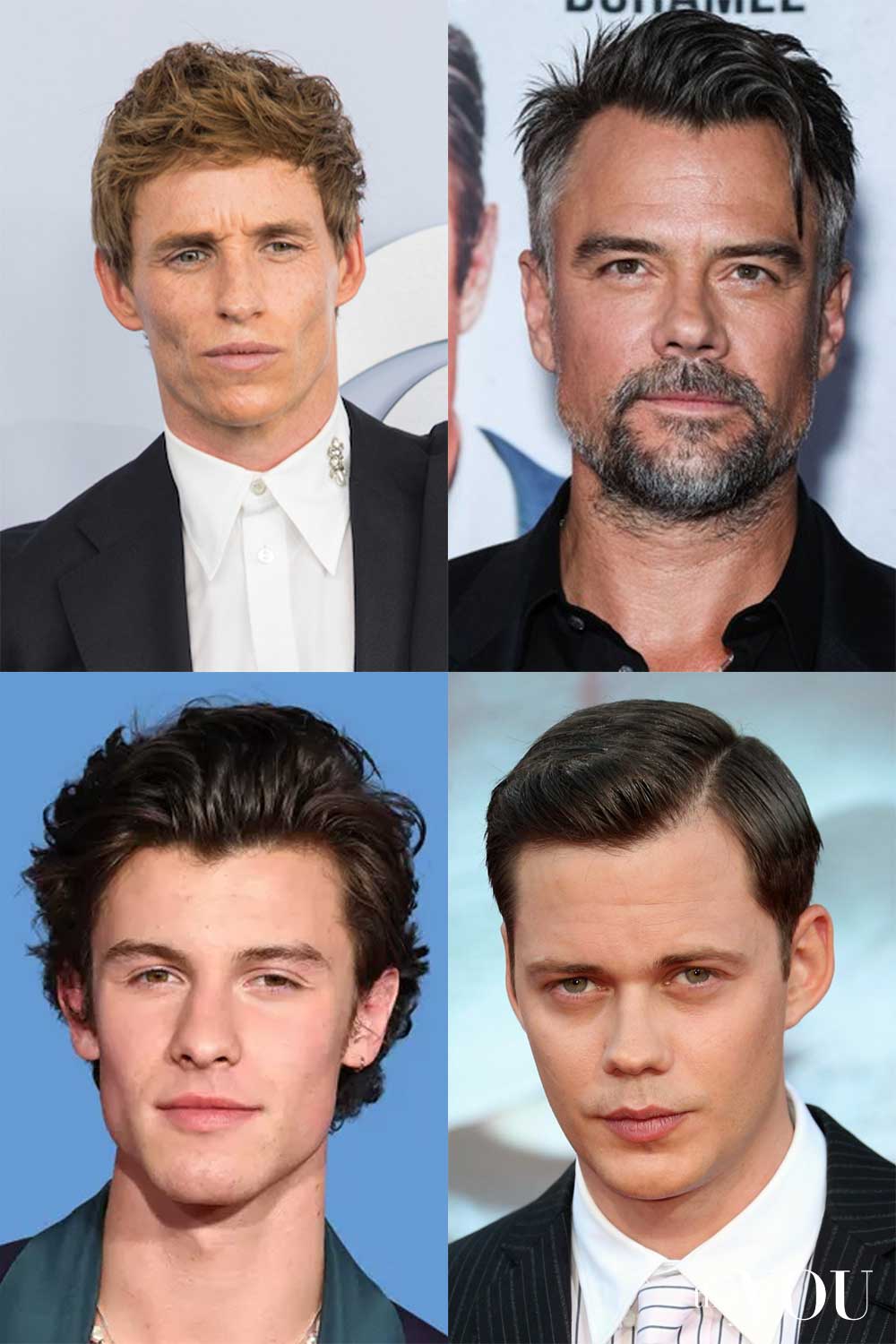
If your face is clearly longer than it is wide, the cuts worth looking at are the ones that keep height down and let a little weight sit at the sides. Shawn Mendes and Paul Rudd both wear cuts of that kind.
What does the work is volume at the sides with the height kept down, which is how Shawn Mendes wears his.

If you want to reduce the impression of length, ask your barber about a fringe and some fullness at the sides.
Use the Paul Rudd photograph as a styling reference, then agree the shape with your barber based on your own hair and preferred outline.

See more haircuts and hairstyles for Oblong Face Shape
Beard Styles That Tend to Suit an Oblong Face

If you want your face to read wider rather than longer, consider the beard shapes below.
Consider a Short Boxed Beard with fullness at the sides to create the illusion of a wider face.
Opt for styles that keep the length at the chin minimal while maintaining volume at the cheeks.
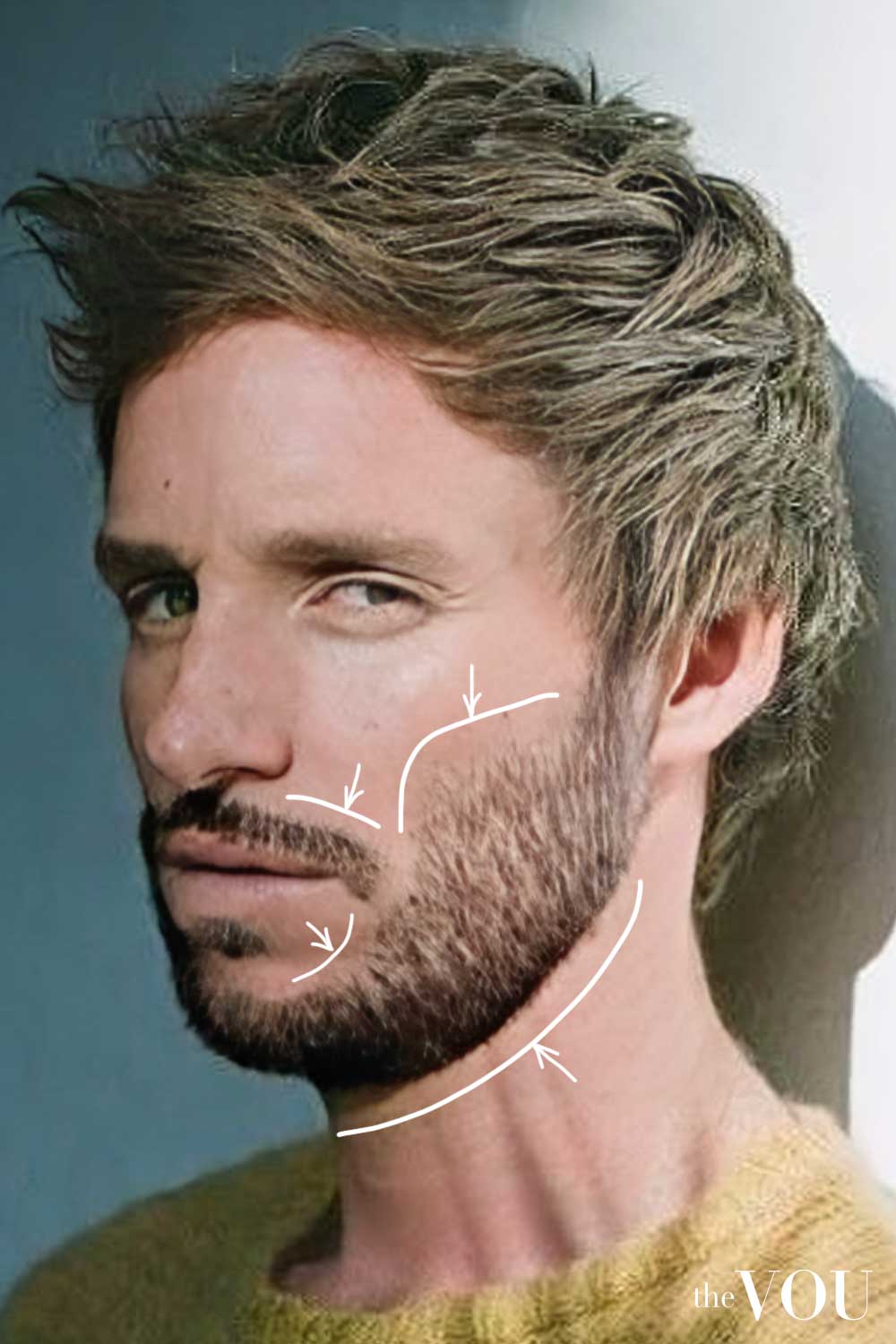
Stubble with defined lines along the cheeks can also help create the appearance of width.
If you prefer to emphasise length, you can keep more length at the chin instead.

See more styling tips for Oblong Face Shape
4. Square Face Shape
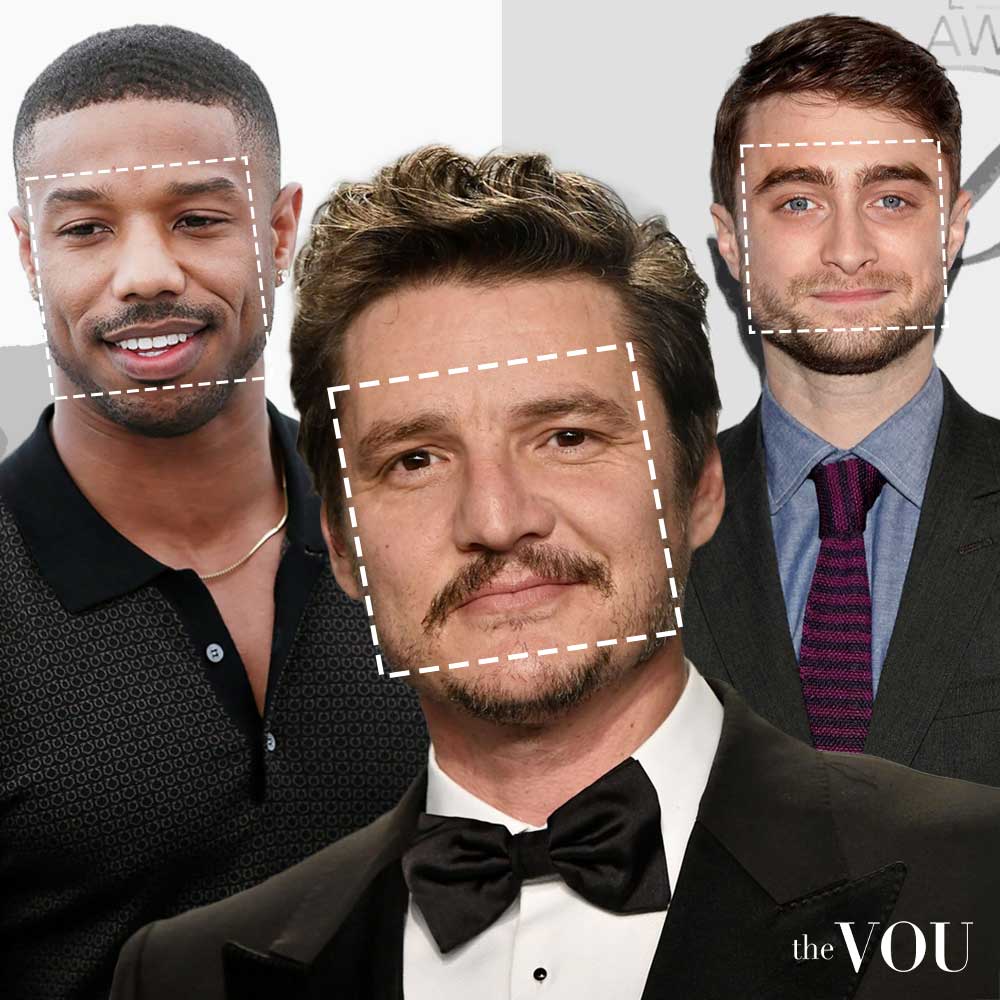
Think of a strong, evenly proportioned box – that’s the square face shape.
This shape goes by many names: angular face, strong jaw face, muscular face, boxed face, chiselled face, symmetrical square, or masculine face shape.
Square faces feature similar measurements across the forehead, cheekbones, and jawline, creating an even, powerful appearance.
The essential characteristic is the presence of sharp angles, particularly at the jaw, distinguishing it from the round face shape.
Look at square face shape celebrities like Pedro Pascal, Daniel Radcliffe, Michael B. Jordan, and Simu Liu – their faces showcase clear angles and similar width-to-length proportions.
The square face shape is often considered traditionally masculine due to its strong lines and defined features.
A square jaw reads clearly with or without a beard, so both routes are open and the choice is about which you prefer rather than which works.
Haircuts That Tend to Suit a Square Face
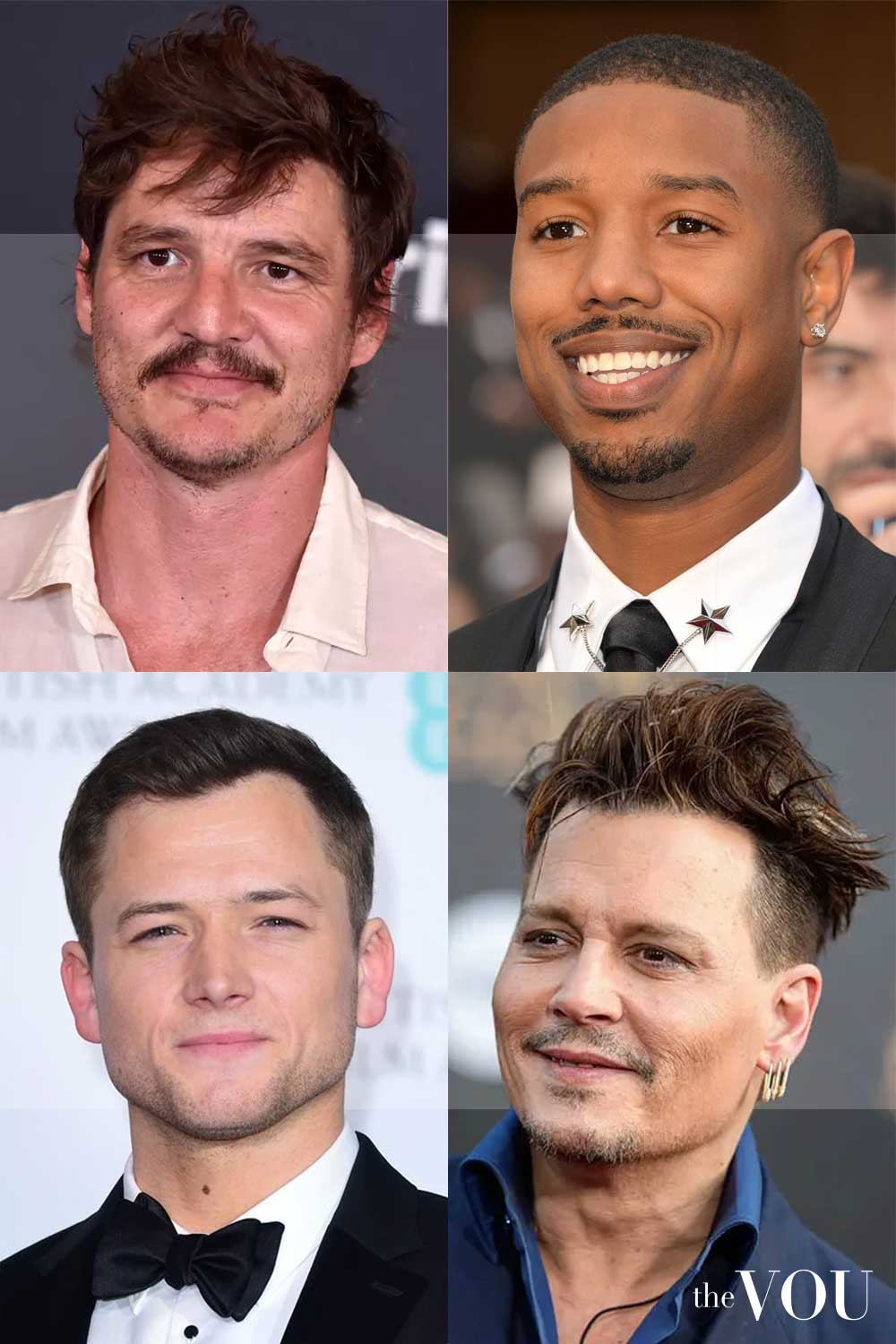
If your jaw corners are square and your forehead is about the same width as your jaw, you can leave the angles as they are rather than softening them. Pedro Pascal wears his that way.
Clean, sharp cuts enhance your natural geometry, while textured styles can softly complement your features.
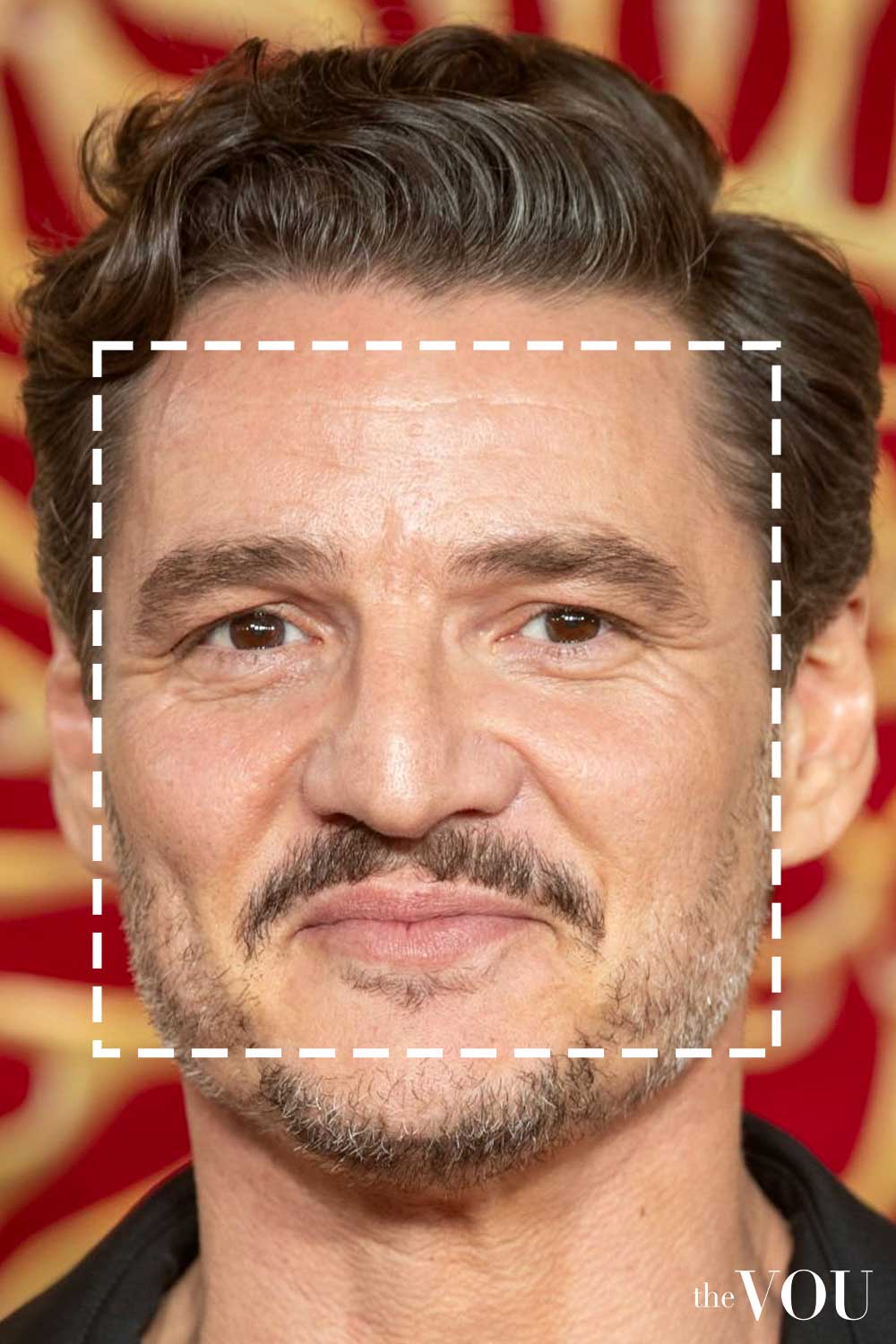
Short sides with a longer, less tidy top put movement above a square jaw, which softens the contrast without hiding it. Tom Hardy wears that combination.
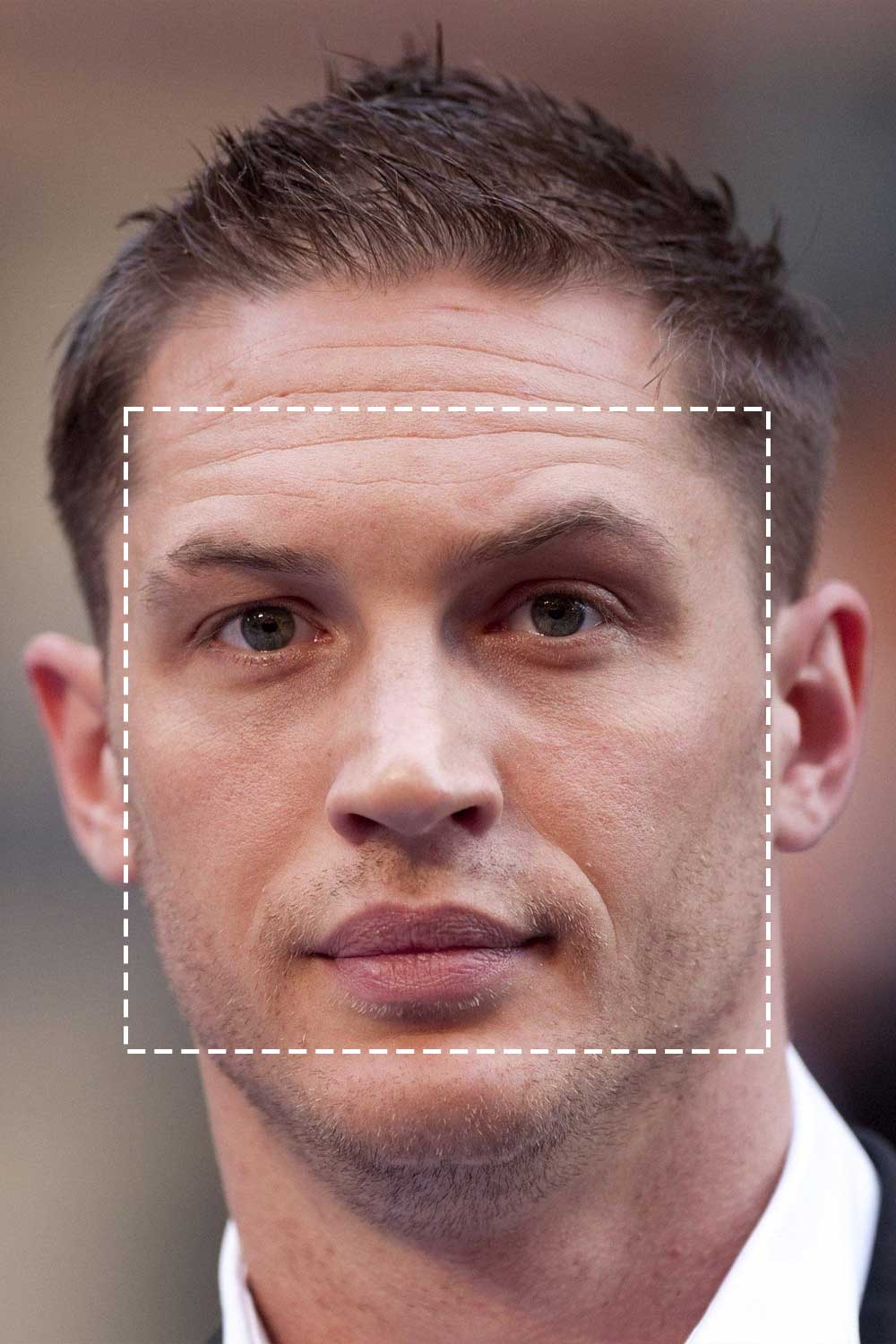
Your stylist should work with your natural structure while creating balanced proportions, highlighting your strong features.
See more haircuts and hairstyles for Square Face Shape
Beard Styles That Tend to Suit a Square Face
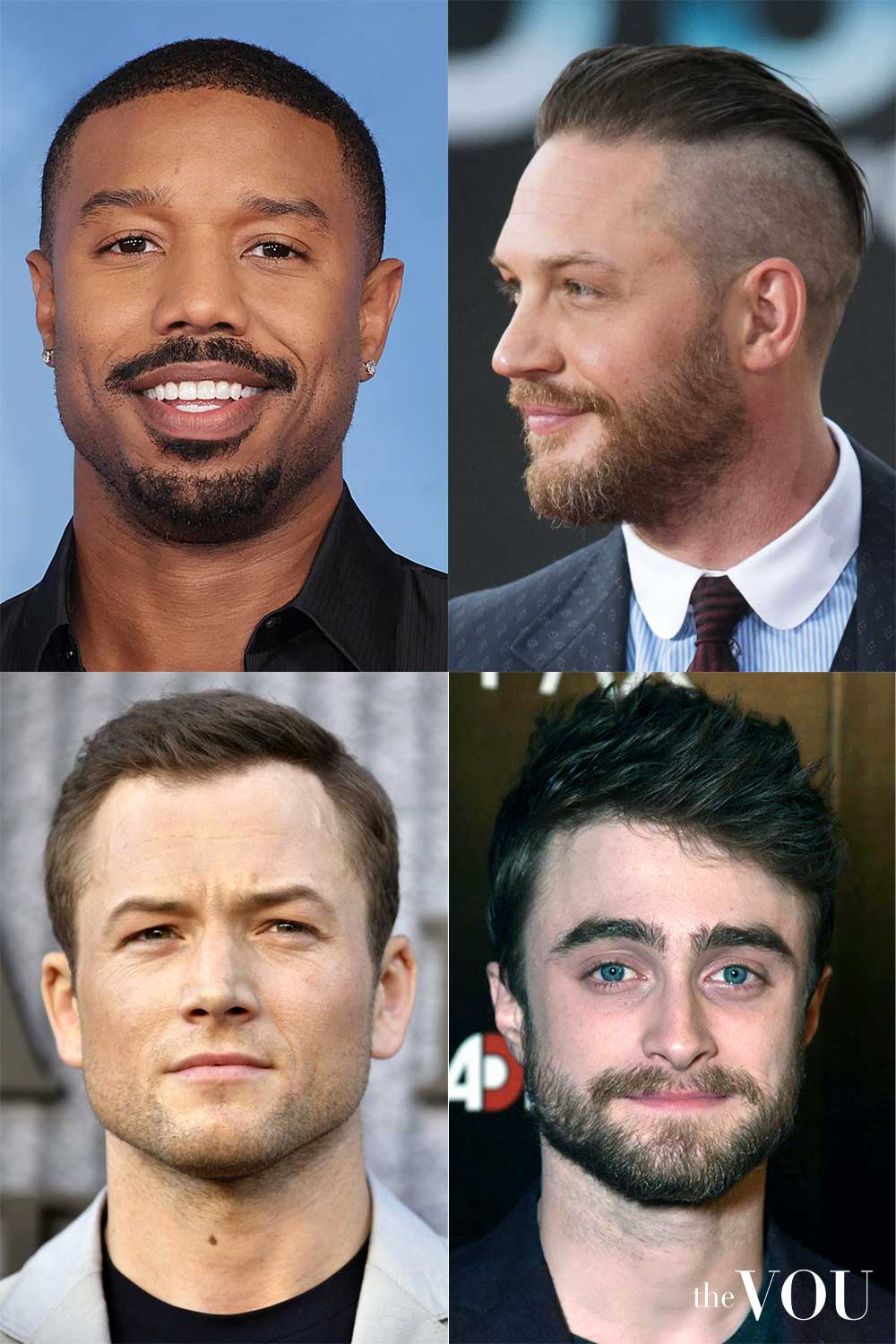
If your jaw corners are square, the beard styles worth looking at are the ones that follow the jaw line rather than blurring it, or the ones that round the corners off if you would rather soften them. Daniel Radcliffe and Tom Hardy wear examples of both.
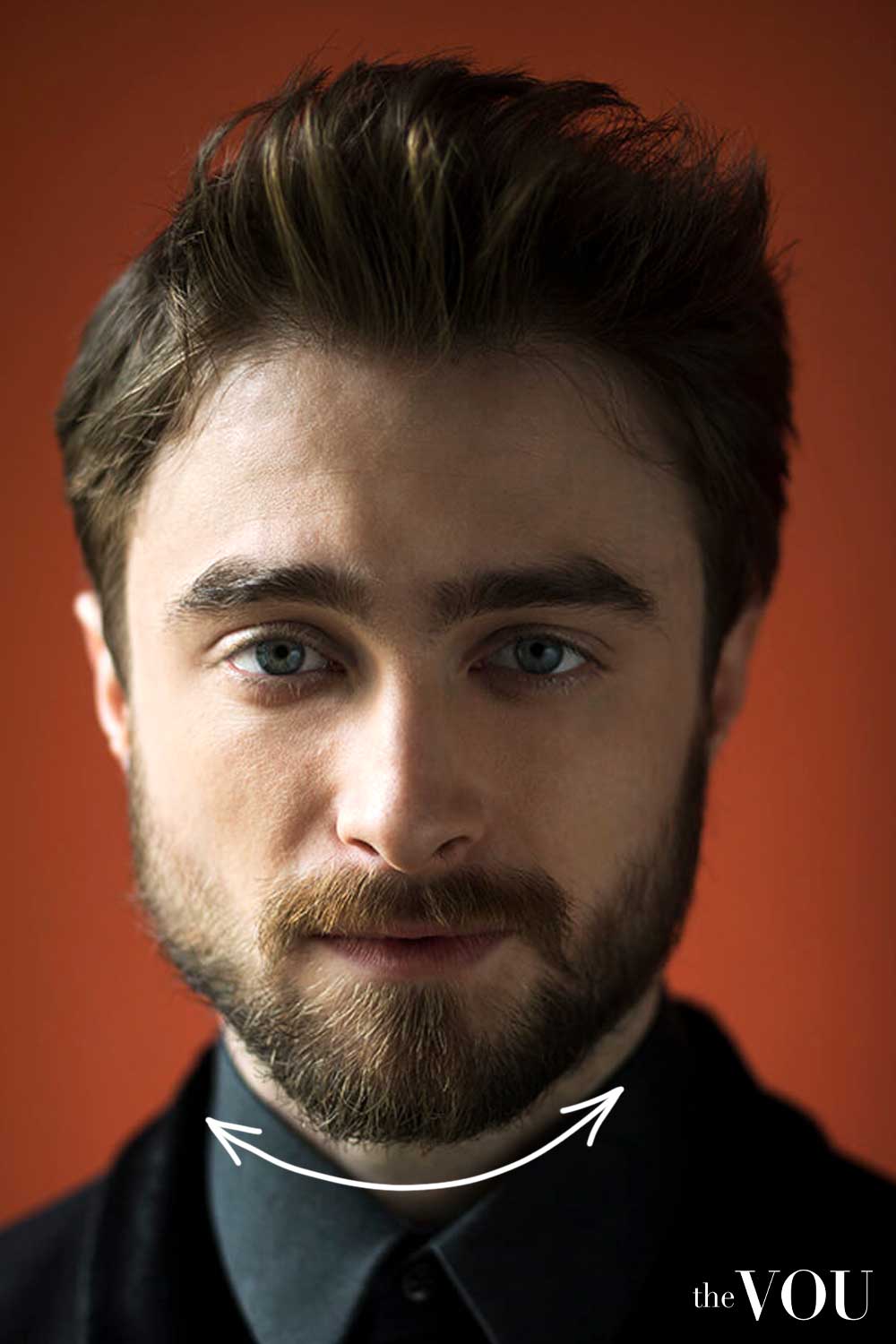
A Rounded Full Beard carries the length around the chin rather than squaring it off, which takes the corner off a square jaw. Daniel Radcliffe wears one.
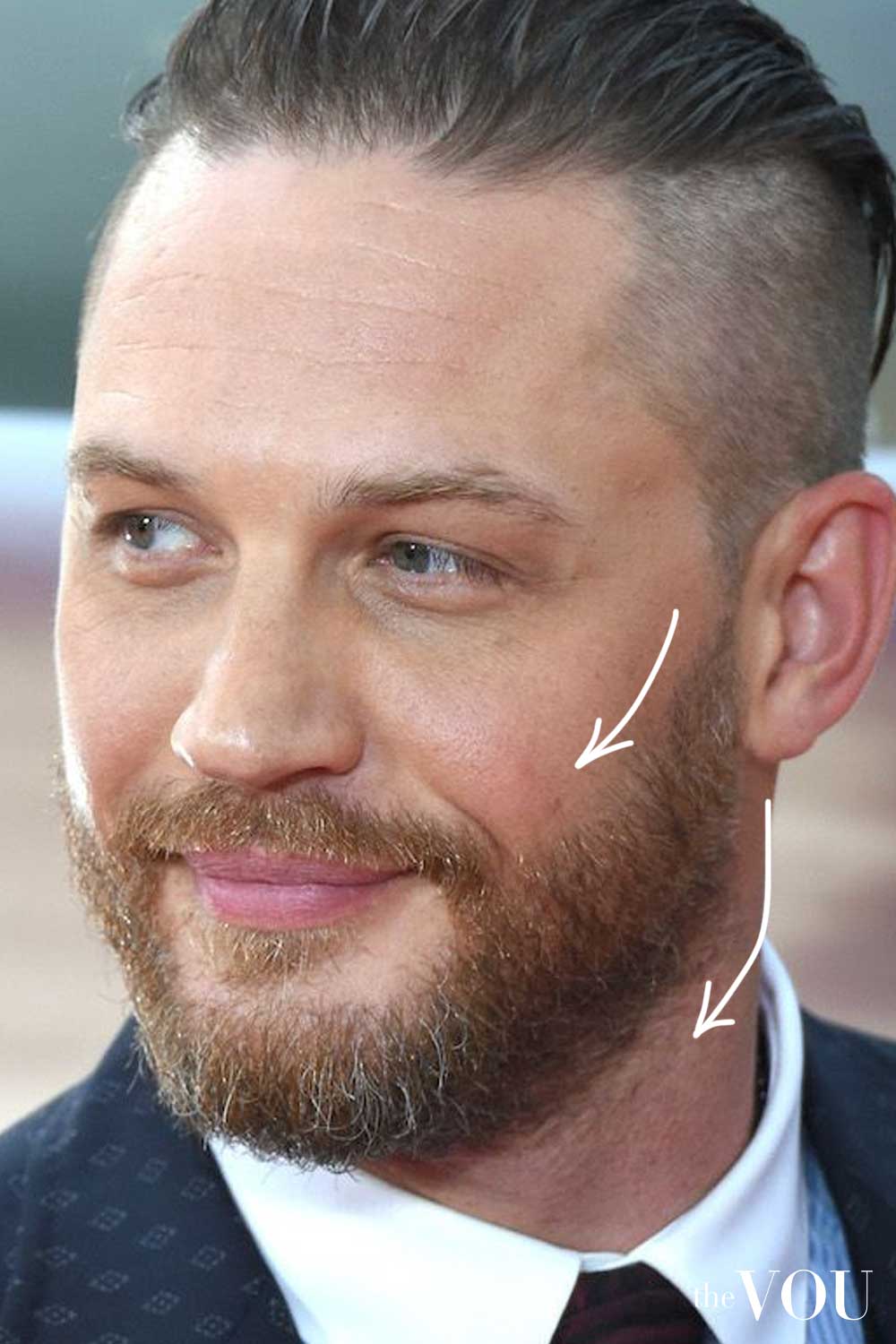
A Faded Beard is shortest at the cheek and longest at the chin, with no line where the two meet, so it softens a square jaw without hiding it. Tom Hardy wears one.
Focus on styles that maintain your natural strength whilst introducing subtle curves to offset angular features.
One route worth discussing with your barber is a Moustache with an Extended Goatee, Textured Medium Beard, Subtle Stubble, or Faded Beard.
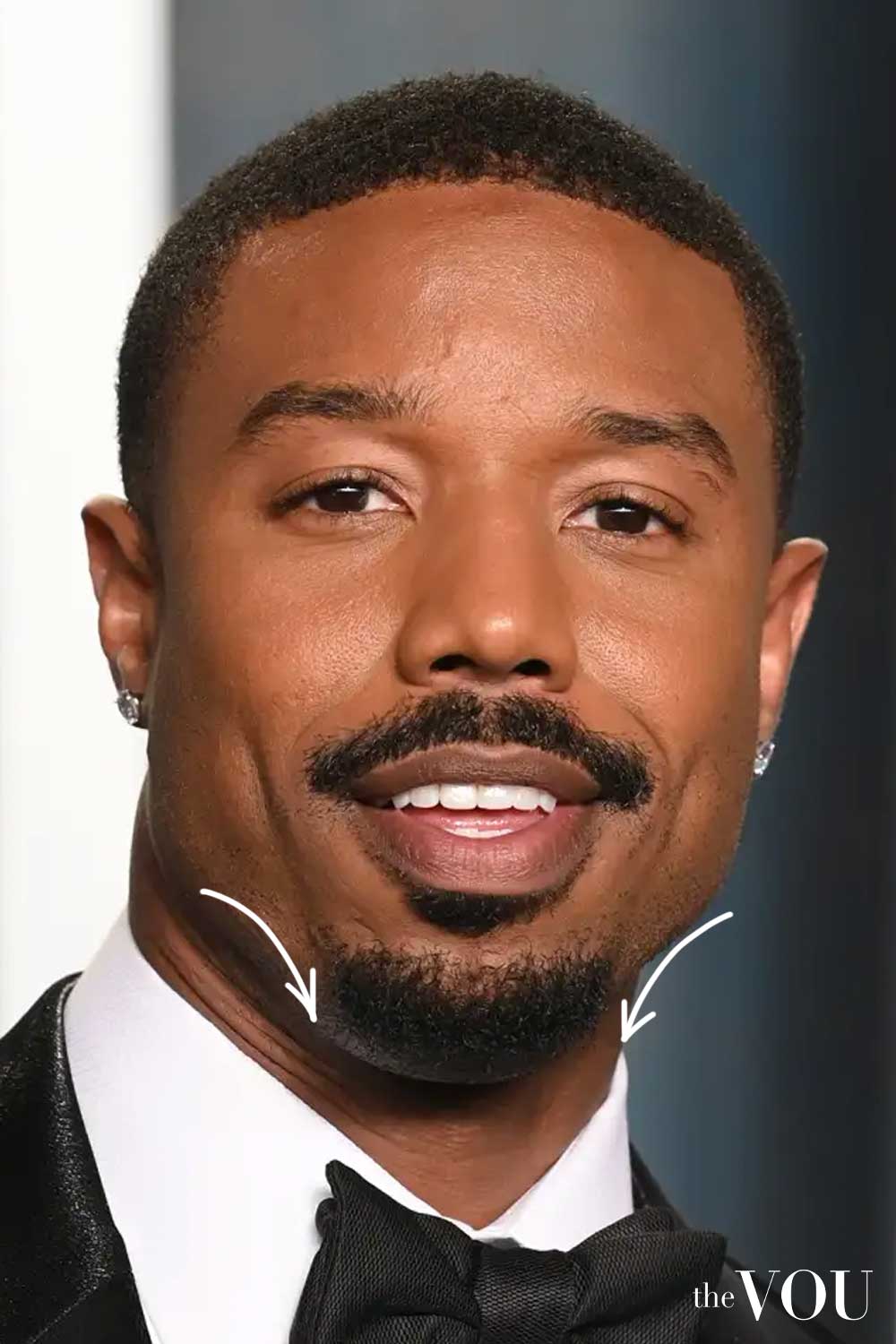
See more beard styles for Square Face Shape
5. Rectangle Face Shape
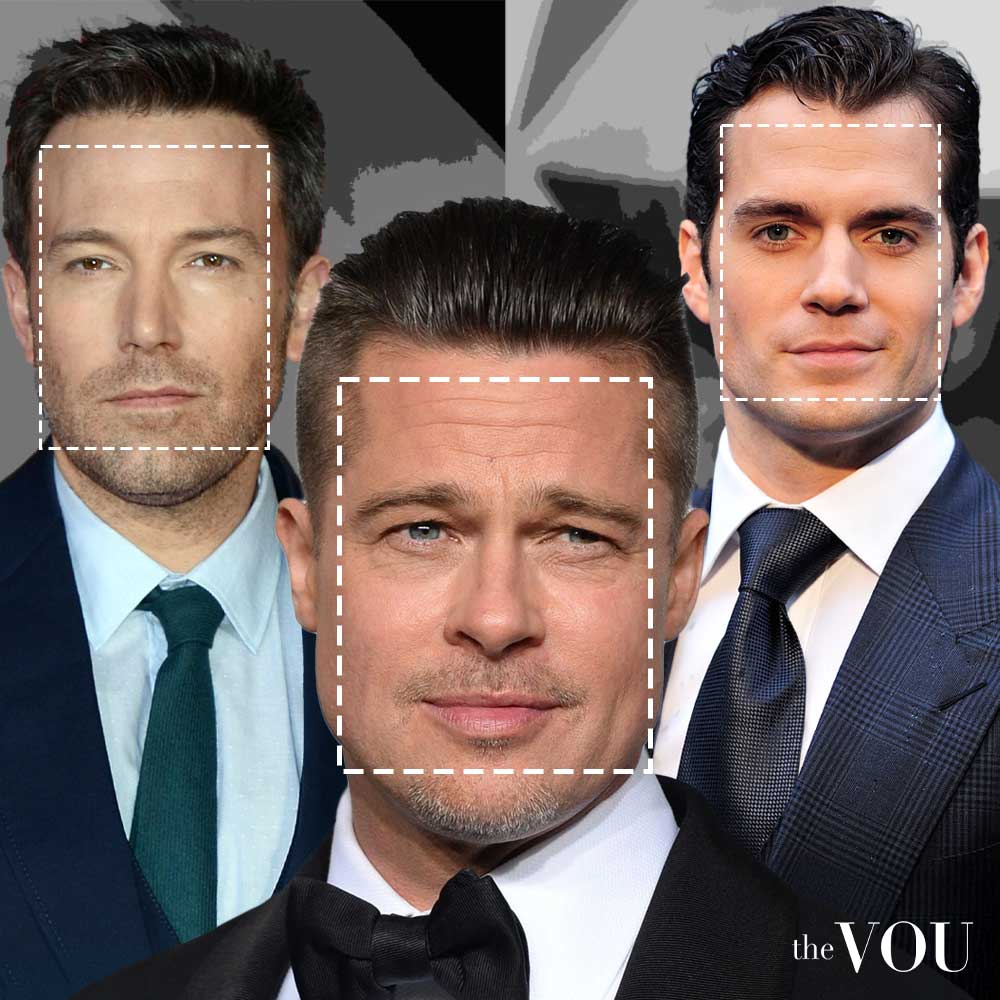
Envision a square face stretched vertically; welcome to the rectangle face shape.
You might hear it called oblong face, extended square, long face, linear face shape, stretched face, elongated face, or narrow face shape.
Rectangle faces maintain the angular features of a square shape but with notably greater length than width.
The forehead, cheekbones, and jawline typically share similar width measurements, creating straight, parallel sides.
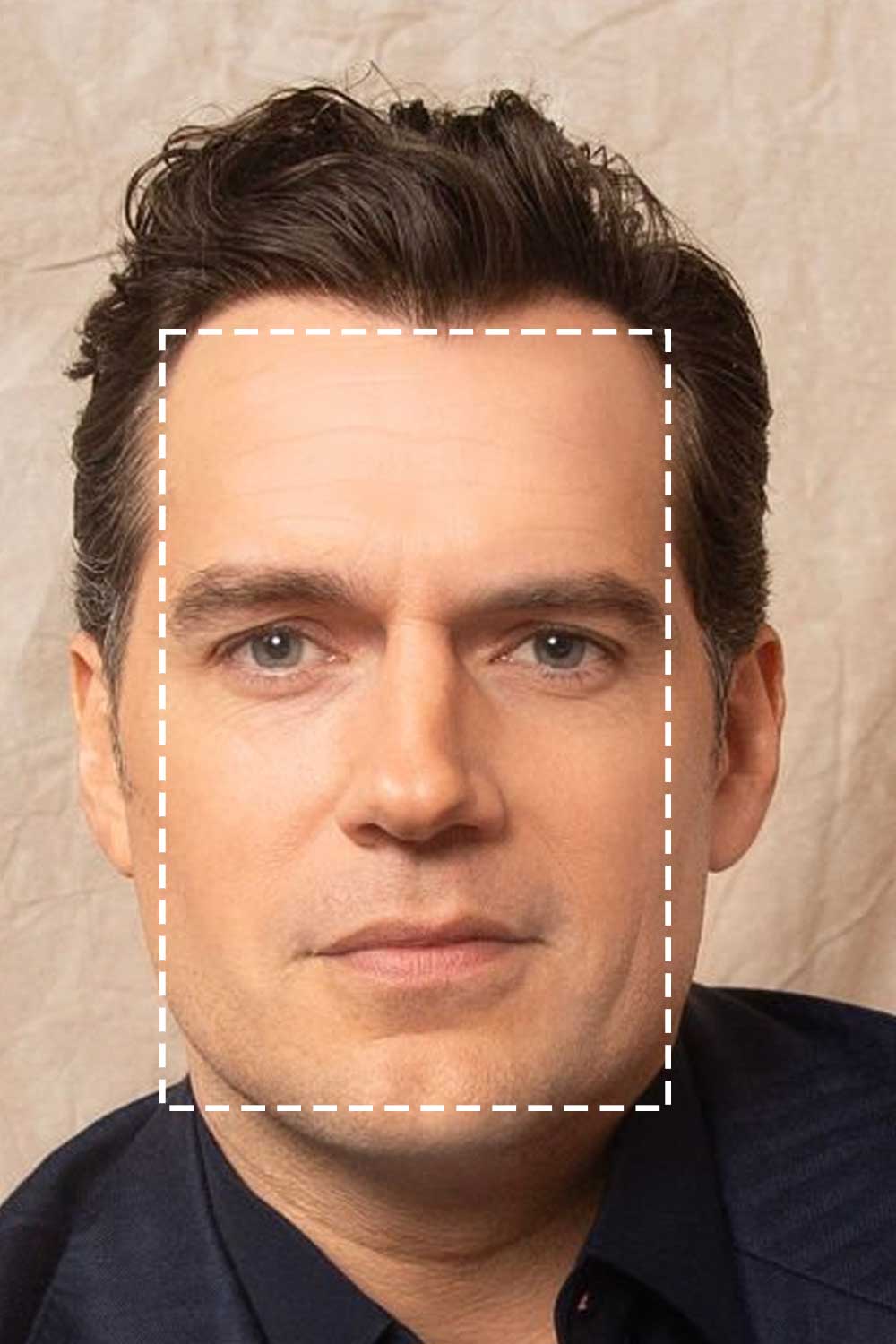
Henry Cavill, Brad Pitt, Ben Affleck and Russell Crowe are among the celebrities with rectangular face shape.
Some sources use “oblong” and “rectangular” interchangeably, though oblong faces might feature slightly softer corners.
Width rather than height is what reduces the impression of length on this shape. Whether you want it reduced is the choice; the cuts below go in that direction.
Haircuts That Tend to Suit a Rectangle Face
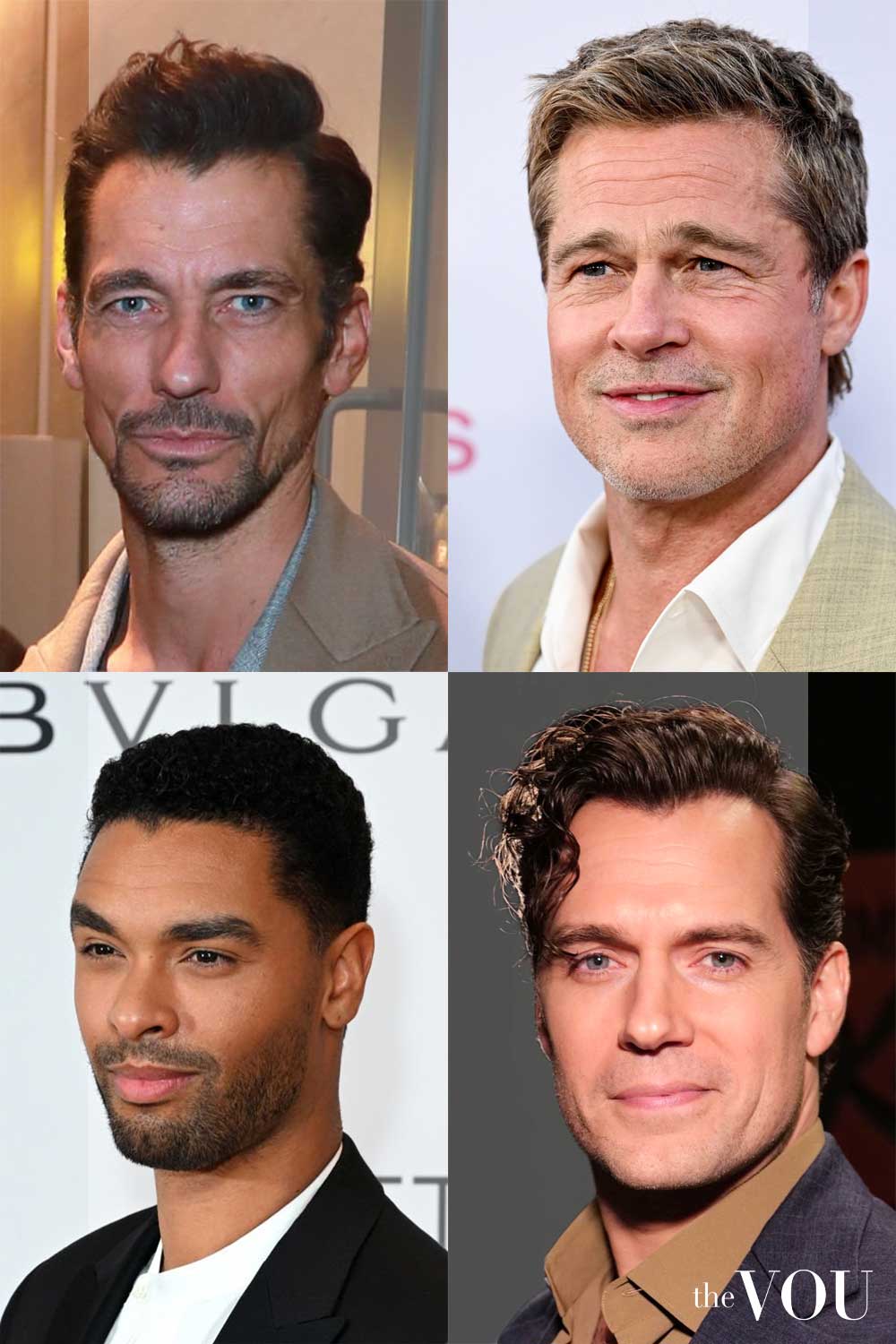
In the photograph below, Henry Cavill wears a mid-length cut swept to the side rather than straight up, which puts the volume across the face instead of upward.
That is the route to ask for if you want the length played down.
Layers break a long top into sections that fall at different lengths, which stops the whole thing reading as one drop. Brad Pitt wears a layered cut of that kind.
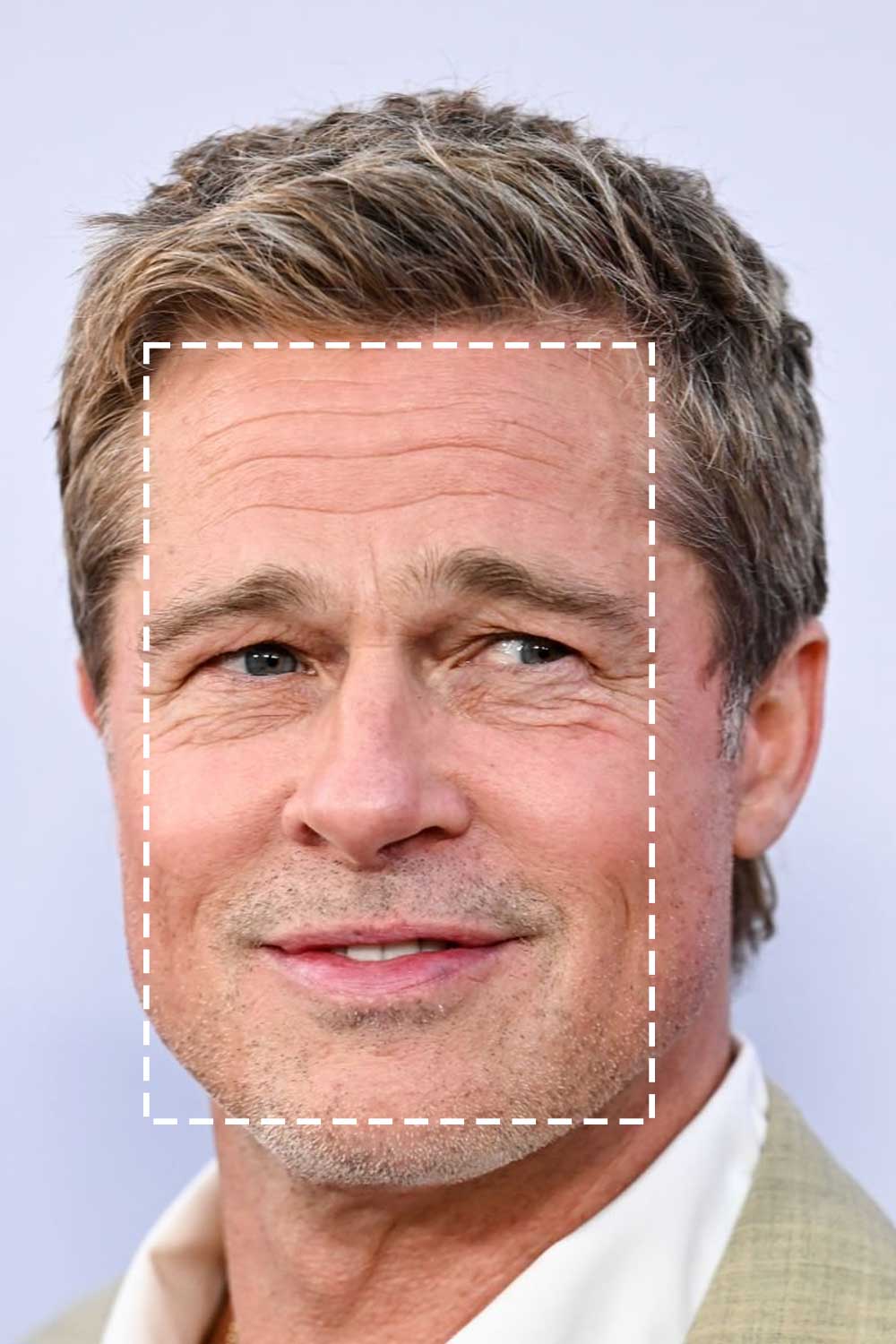
Height on top will make a long face read longer still. Whether you want that is the actual question, and a barber can go either way once you have answered it.
See more haircuts and hairstyles for Rectangle Face Shape
Beard Styles That Tend to Suit a Rectangle Face
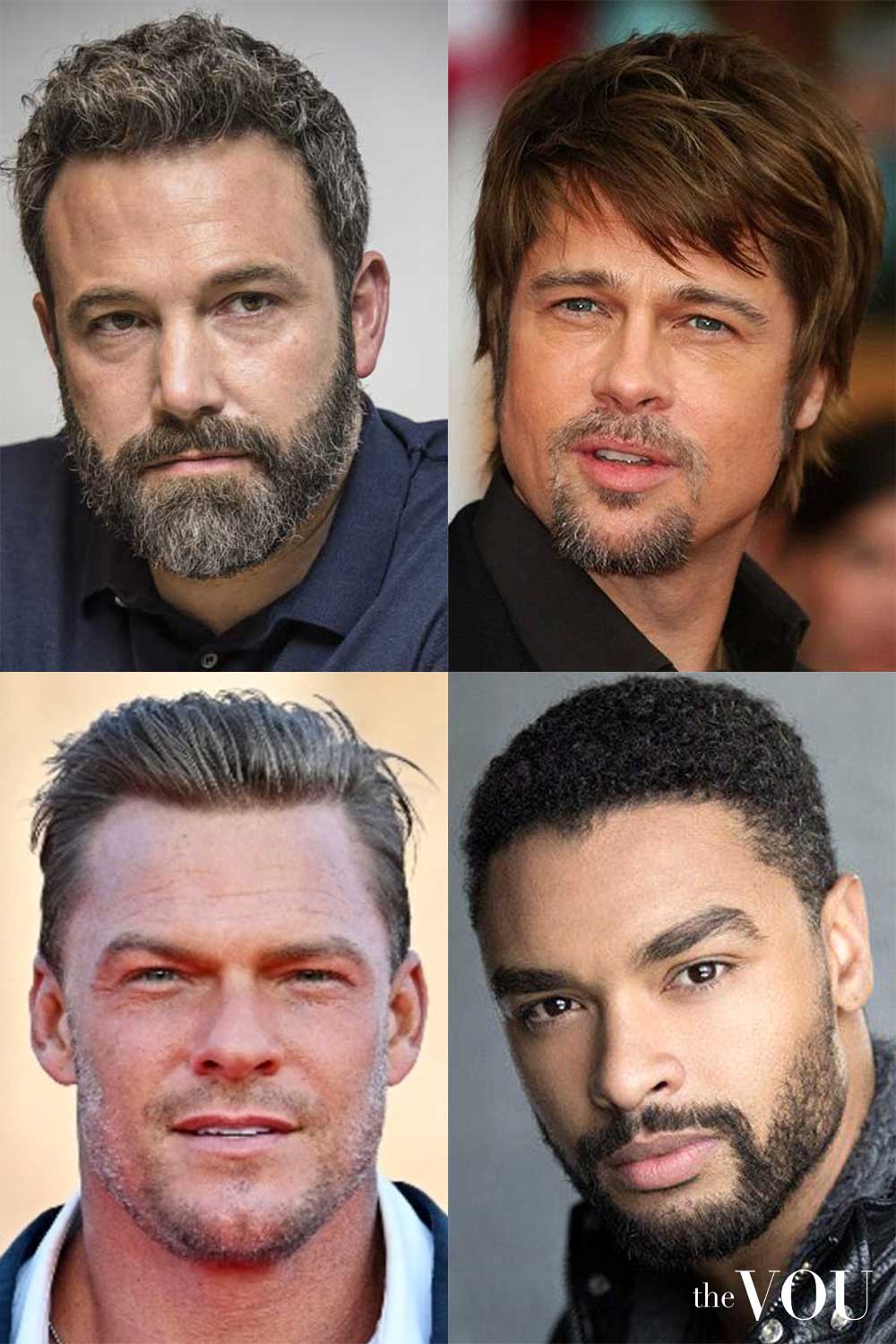
A beard on a long face mostly decides two things: how much length sits below the chin, and whether the corners of the jaw stay square or get carried round.
Length below the chin adds to the length of the face, and width at the sides of the beard works against it.
The two beards below sit at opposite ends of that, and neither is the correct answer for a long face.
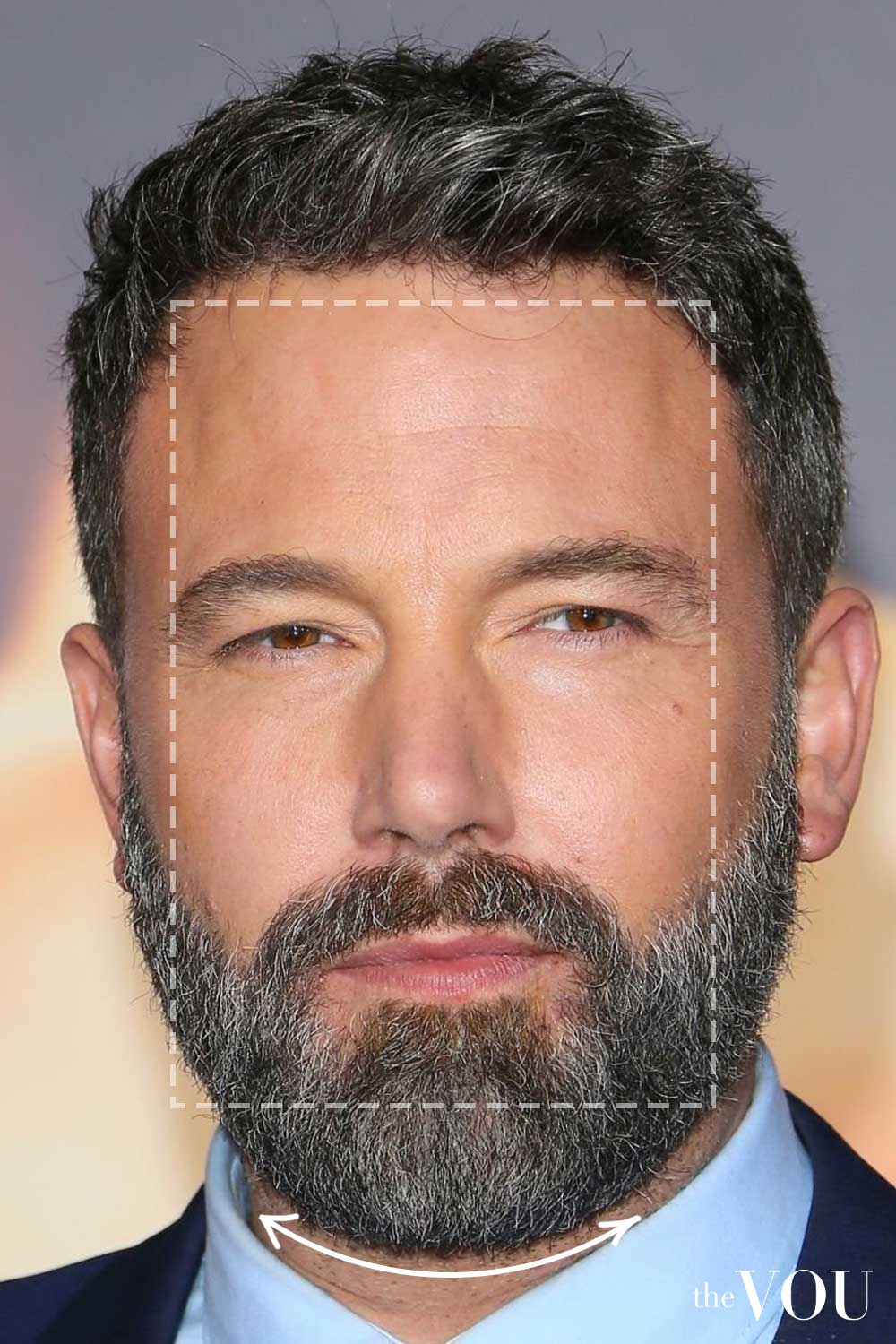
A Rounded Full Beard, as Ben Affleck wears it here, carries the length round the chin so the corners of the jaw read as softer.
The Full Beard with Angled Bottom keeps a defined line under the chin and carries the fullness out to the sides. Henry Cavill wears one.
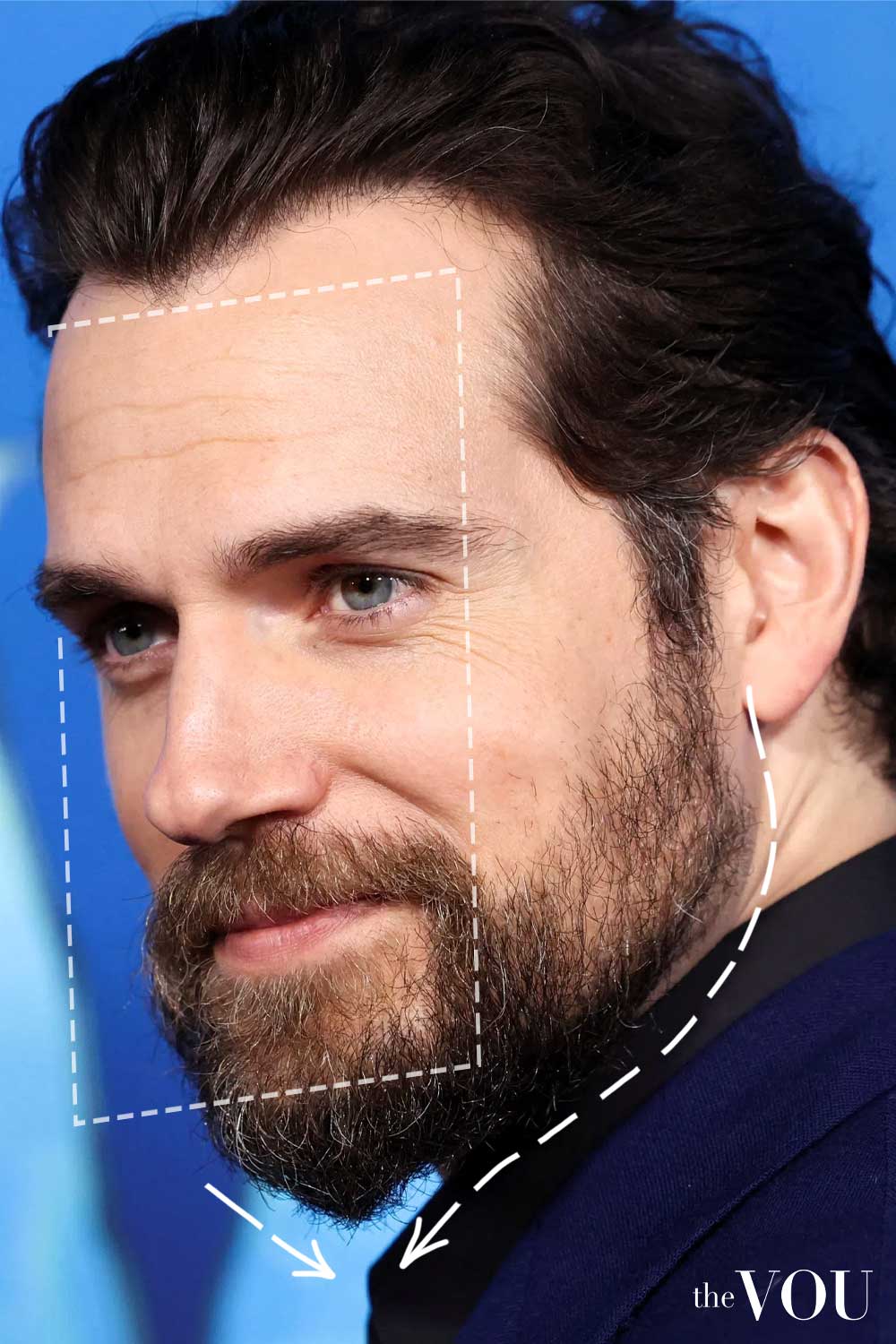
If you want the face to read wider, width at the sides of the beard is what does it; if you like the angles, a squarer finish keeps them.
Consider a Circle Beard, Short Boxed Beard with Fade, or Designer Stubble.
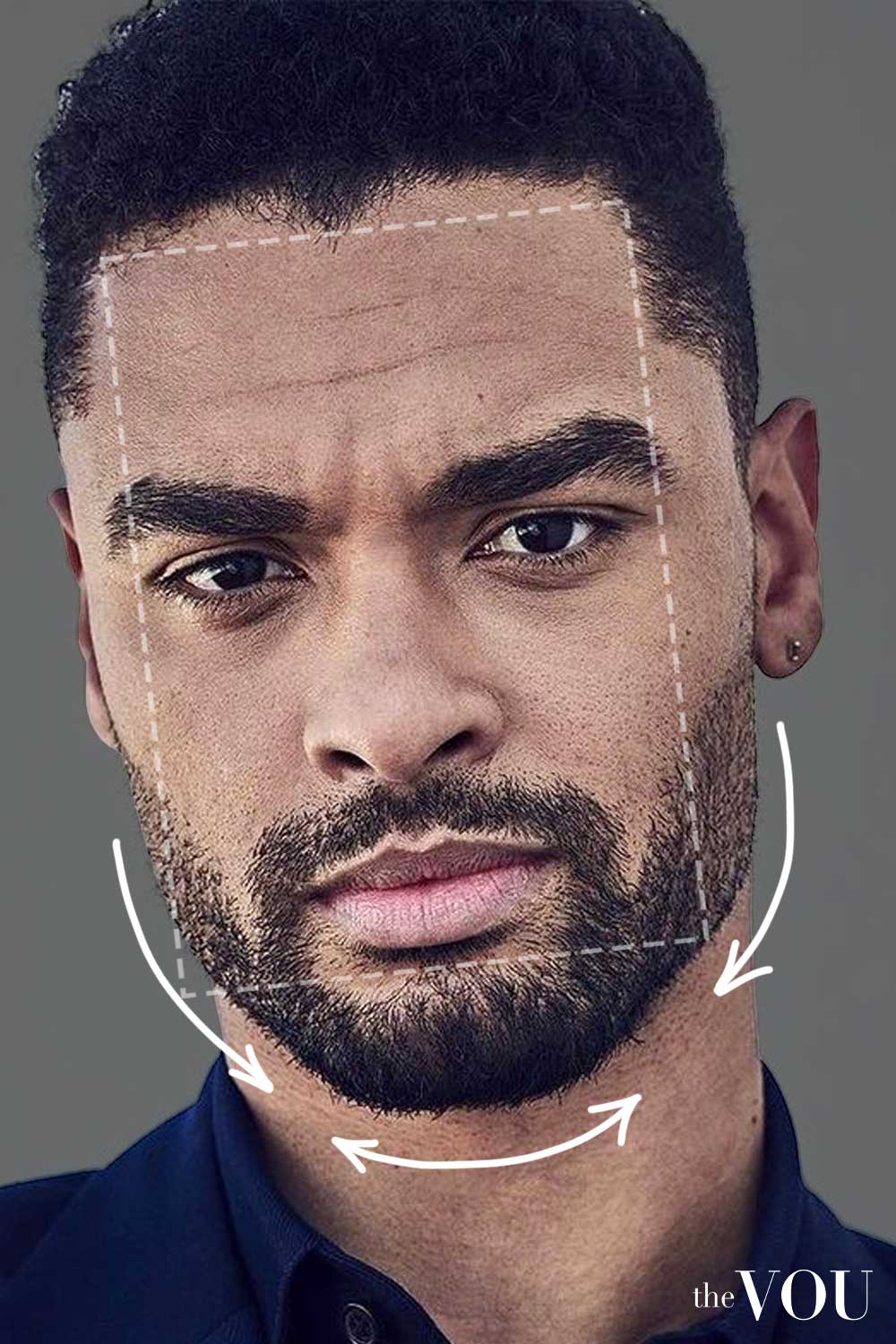
See more beard styles for Rectangle Face Shape
6. Triangle Face Shape
Visualise a triangle standing on its base, narrow at the top and wide at the bottom. That is the essence of the Triangle face shape.
Other names for the same pattern include pear, pyramidal, wide jaw and base-heavy. This guide keeps a separate Pear section below because some sources reserve pear for a more gradual widening, but the two describe the same face.
The defining feature is a jaw wider than the forehead, with the face gradually narrowing from bottom to top.
Unlike the diamond or heart shape, the widest point sits at the jawline rather than the cheekbones or forehead.
More examples are collected in this guide to triangle face shape celebrities.
Some guides file this pattern under pear instead. That is the same face under another name, as the vocabulary note above says, and the advice in both sections here is the same advice.
A jaw wider than the forehead reads as a strong lower face. Whether you leave that contrast alone or soften it with width higher up is a preference, and both routes are below.
Haircuts That Tend to Suit a Triangle Face
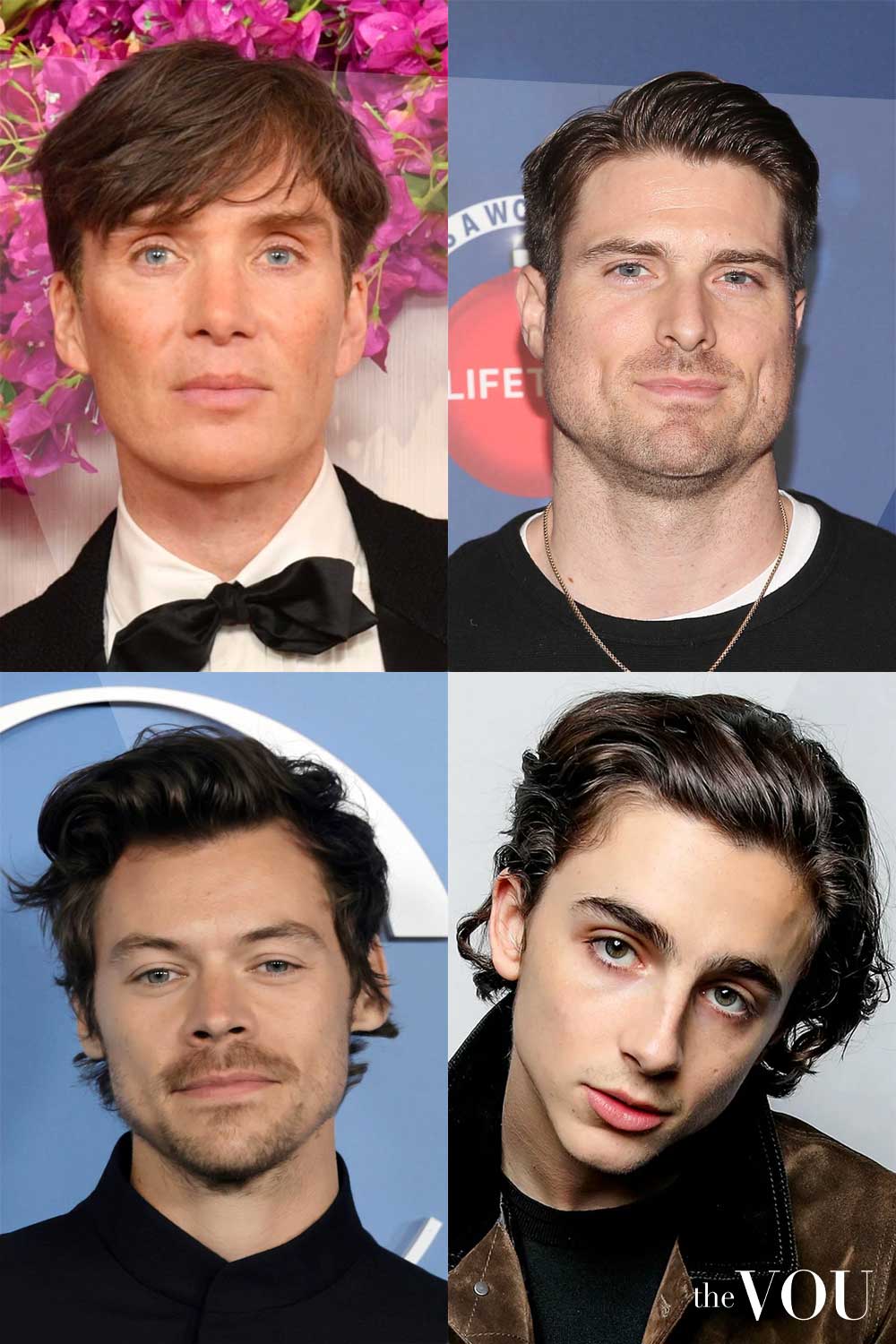
If your jaw is wider than your forehead, the choice in front of you is whether to add width or height at the top, or to leave the contrast as it is.
Volume on top and at the temples adds width higher up, which reduces the contrast with the jaw.
Very short sides do the opposite and leave the jaw as the widest thing in the outline.
Both are available, and which one you ask for depends on whether you want that contrast played down or left alone.
Consider textured styles with volume on top to create a more balanced appearance.
See more haircuts and hairstyles for Triangle Face Shape
Beard Styles That Tend to Suit a Triangle Face

If you would rather not add weight at an already wider jaw, the beard styles below keep length short along the jaw line and put what length there is at the chin. Tom Cruise and Tom Holland both wear close beards of that kind.
Minimal stubble with a defined line gives an edge along the jaw without adding bulk to it. Tom Cruise wears it that way.
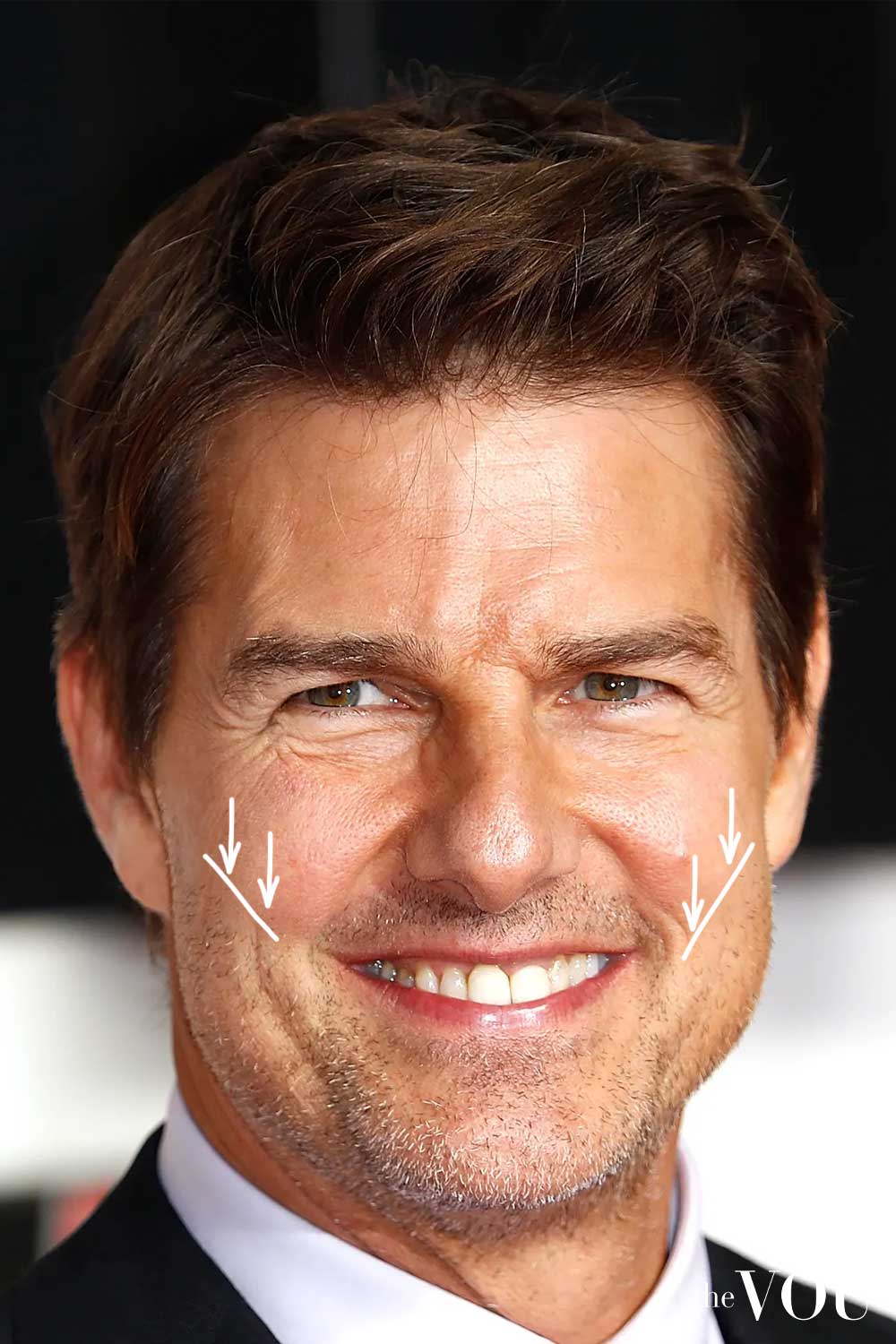
A Graduated Short Beard is kept shortest at the cheek and slightly longer at the chin, which moves weight away from the jaw corners. Taylor Zakhar Perez wears one.

Your focus should be on creating definition without adding unnecessary width to the jaw.
Three routes to ask about: a goatee kept to the chin, stubble taken up onto the cheeks so the beard reads higher on the face, or stubble left slightly longer at the chin than at the jaw.

See more beard styles for Triangle Face Shape
7. Heart Face Shape
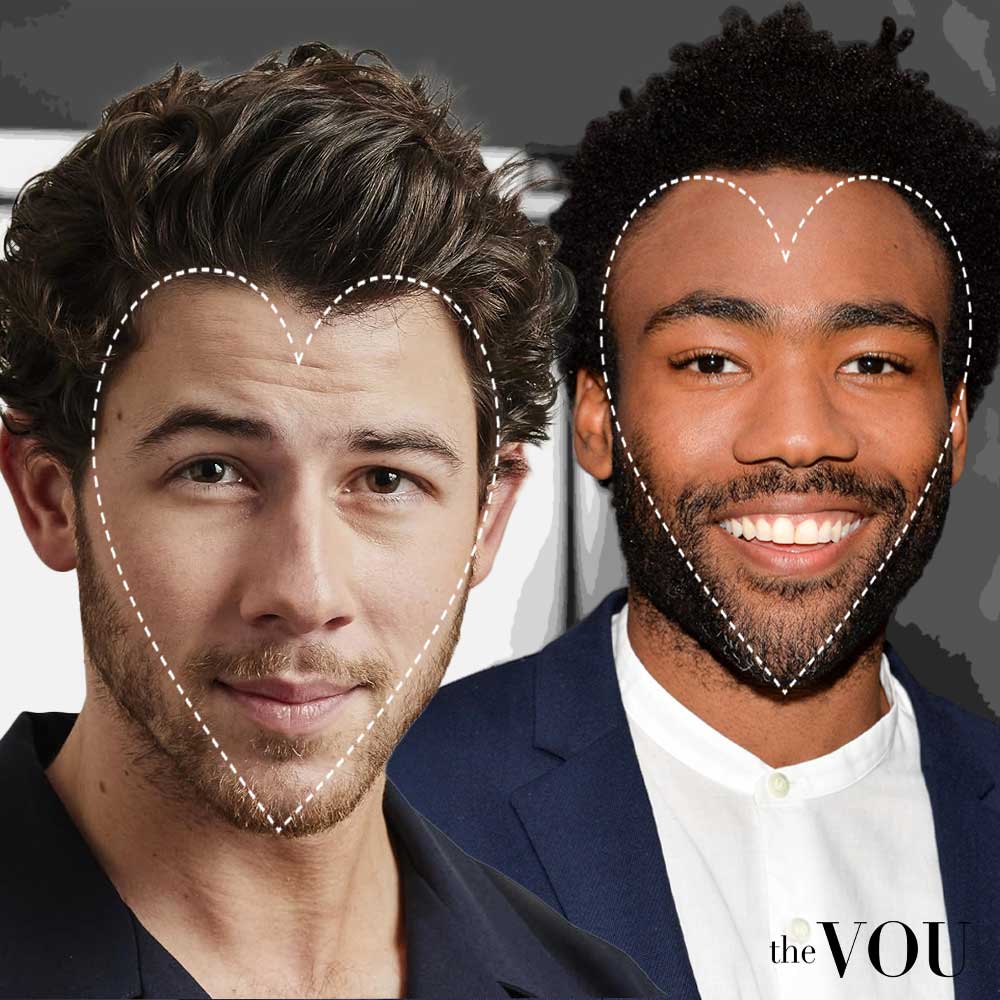
Visualise an inverted triangle – that’s the essence of the heart-shaped face.
Also known as Valentine face shape, inverted triangle shape, wide forehead shape, or tapering jaw shape.
The defining feature is a forehead wider than the cheekbones, with the face gradually narrowing down to a more pointed chin.
Unlike the diamond shape, where cheekbones dominate, heart shapes show their greatest width at the forehead line.
Bradley Cooper, Nick Jonas, Donald Glover and Chris Hemsworth appear in the photographs below with a heart outline drawn over them, and more are collected in this guide to heart face shape celebrities.
A widow’s peak hairline is common with heart shapes, though it’s not a required feature.
A tapering lower face reads as softer than an angular one, which is why the beard styles suggested here add a little width at the chin.
Haircuts That Tend to Suit a Heart Face
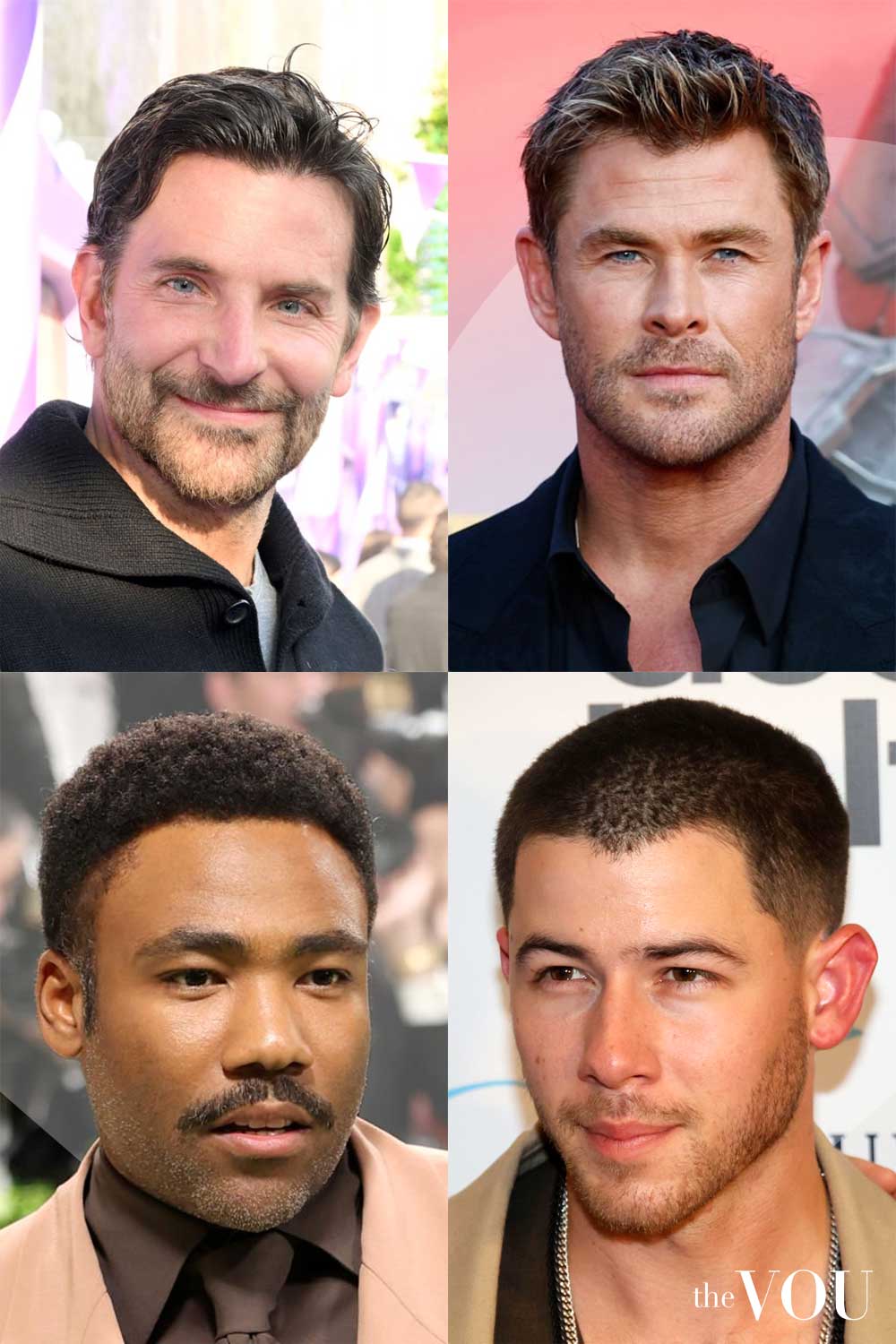
If your forehead is the widest part of your face, a cut that keeps width off the temples stops the top half widening further. Bradley Cooper wears his that way.
If you want to play down forehead width, ask about a style that keeps volume modest around the temples.

Henry Golding wears a short, closely cut top that keeps the volume off the temples.
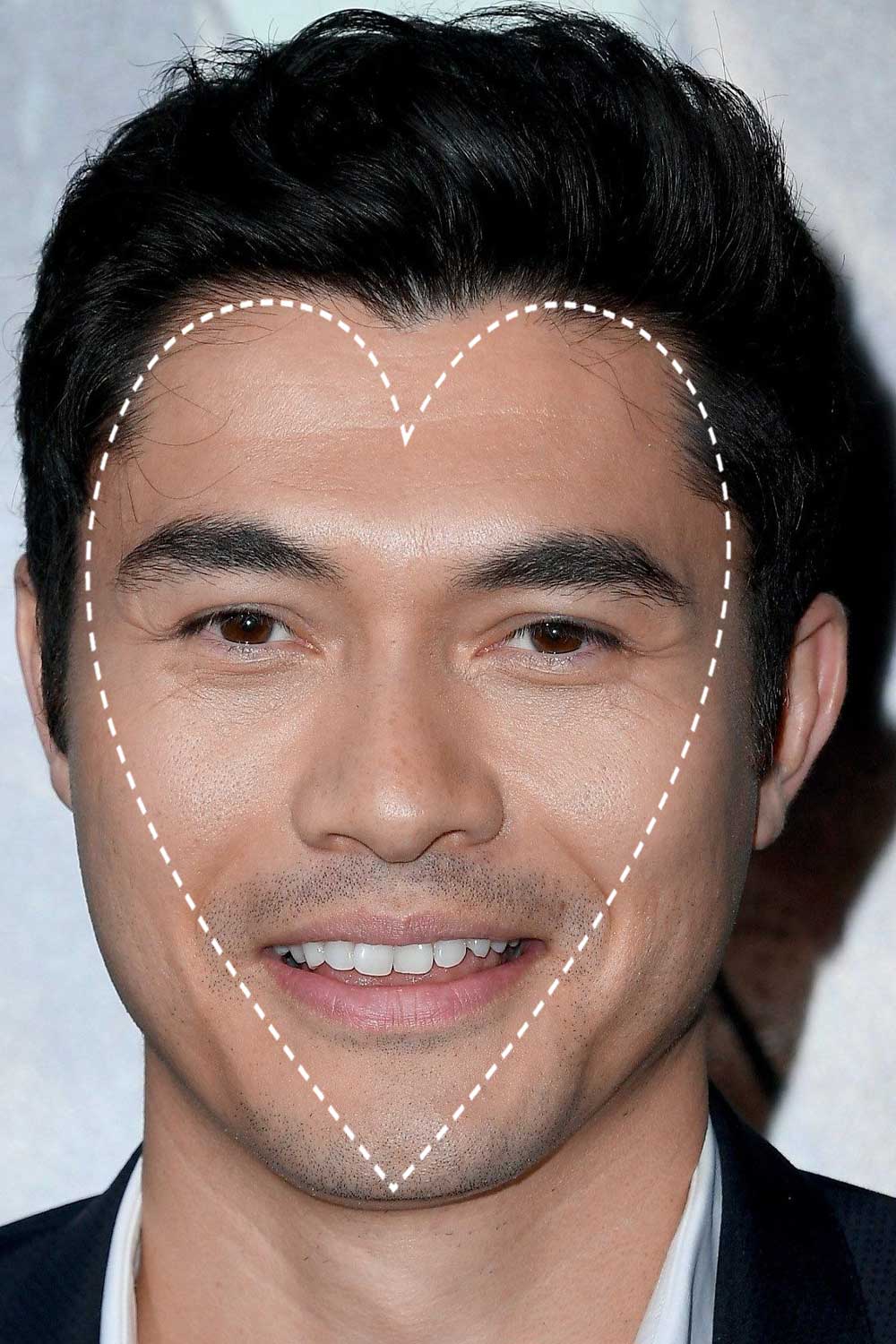
Consider styles with longer sides and textured tops to balance your natural features.
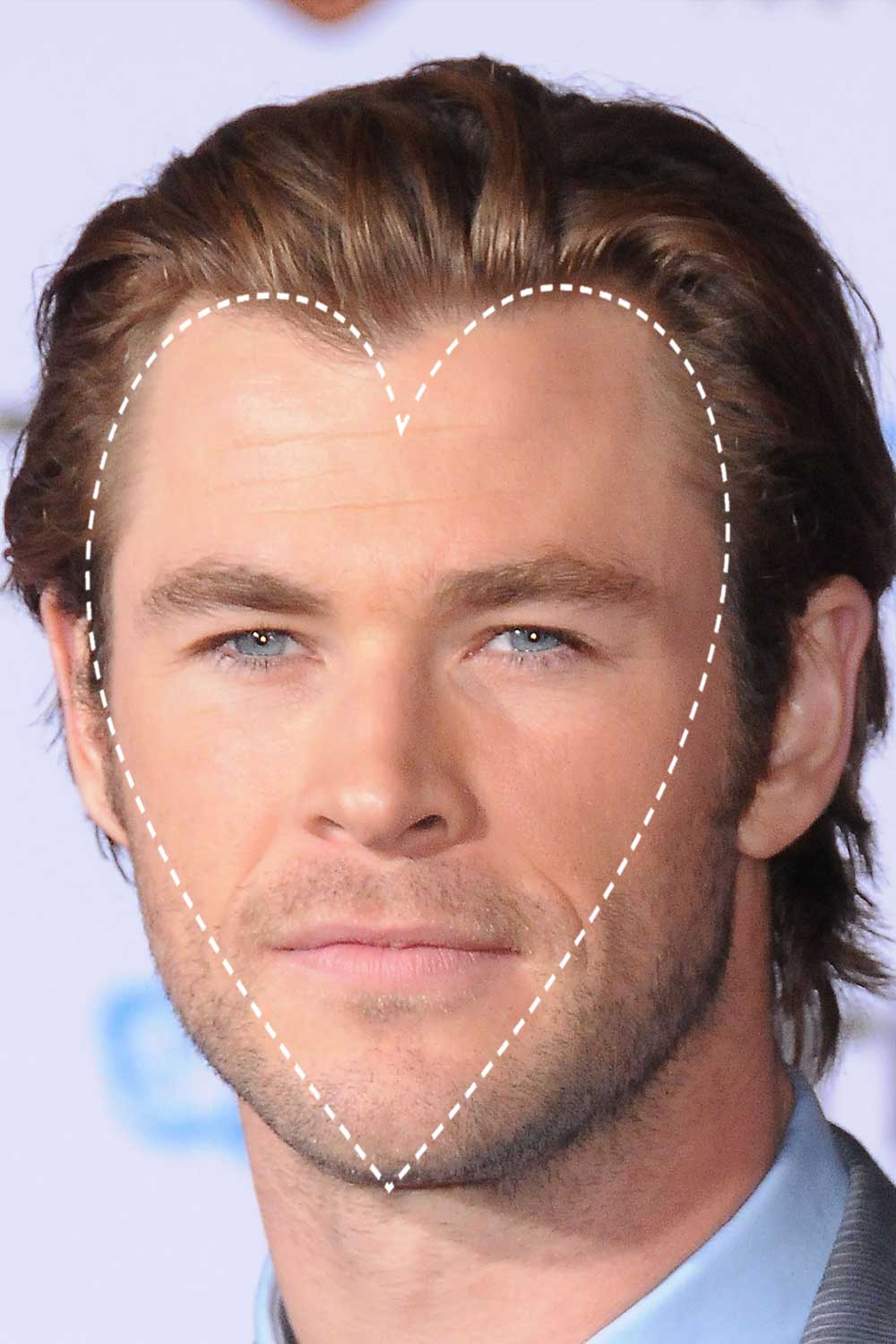
See more haircuts and hairstyles for Heart Face Shape
Beard Styles That Tend to Suit a Heart Face
If your chin is narrow against a wider brow, the beard styles worth looking at are the ones that put visible weight at the chin. Chris Pine and Chris Hemsworth both wear beards of that kind.
A Full Chin Beard concentrates the length at the chin and keeps the cheeks short. Chris Pine wears one.
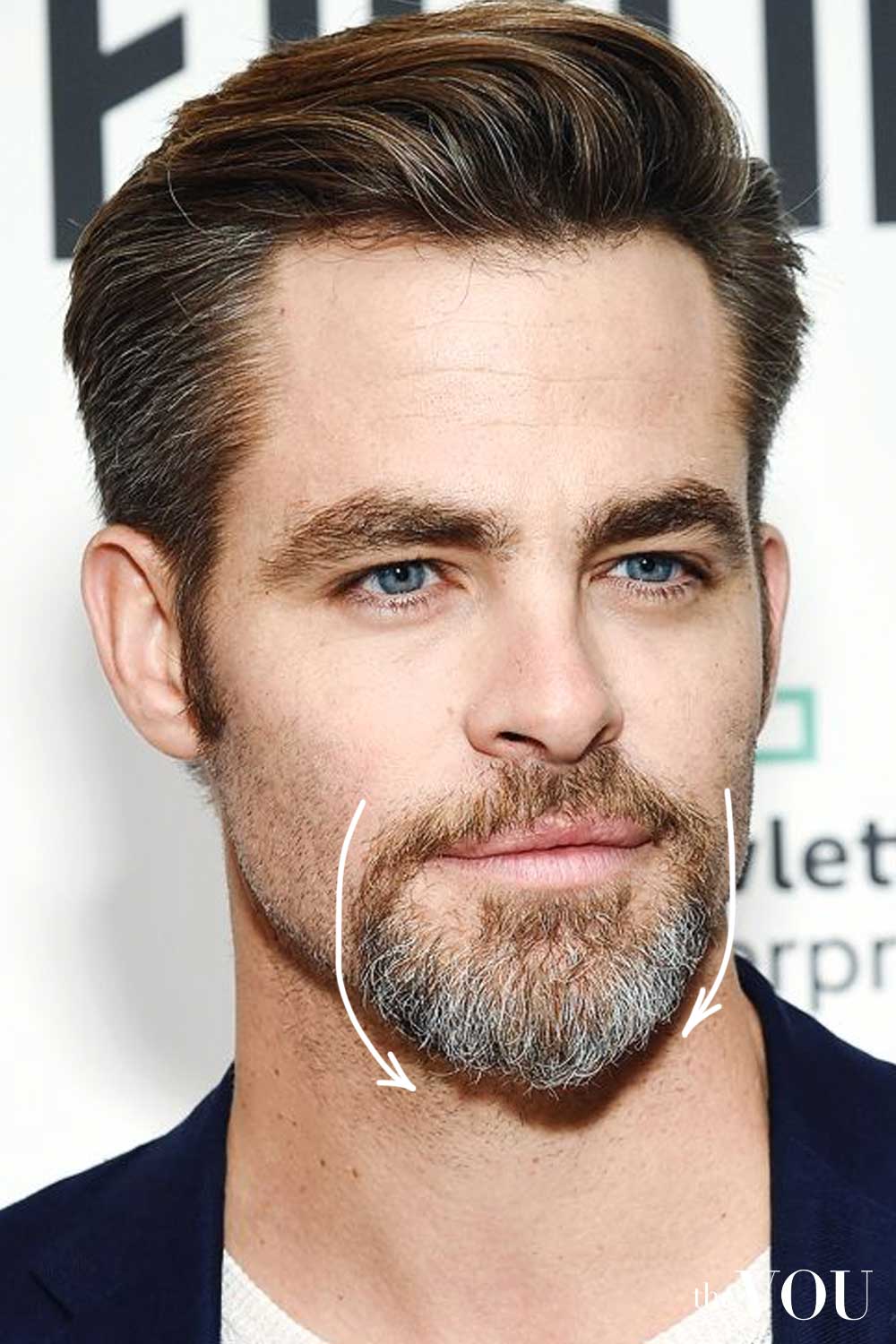
A Balbo keeps a moustache and a chin beard with the jaw line shaved clear between them, which puts weight at the chin without widening the jaw. Ethan Hawke wears one.
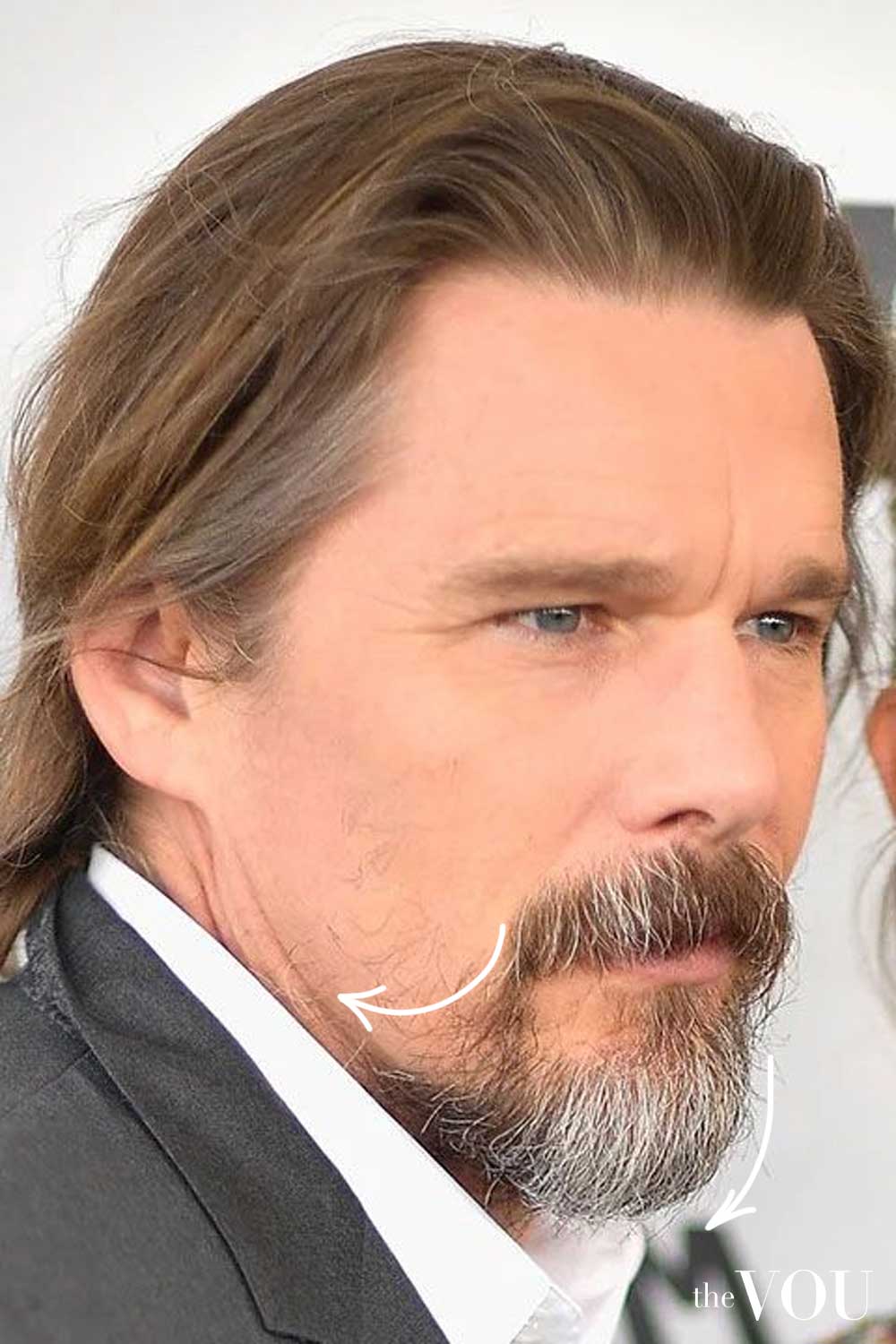
If you want a fuller-looking lower face, discuss chin length and side fullness with your barber. You can also keep the beard close if you prefer your existing outline.
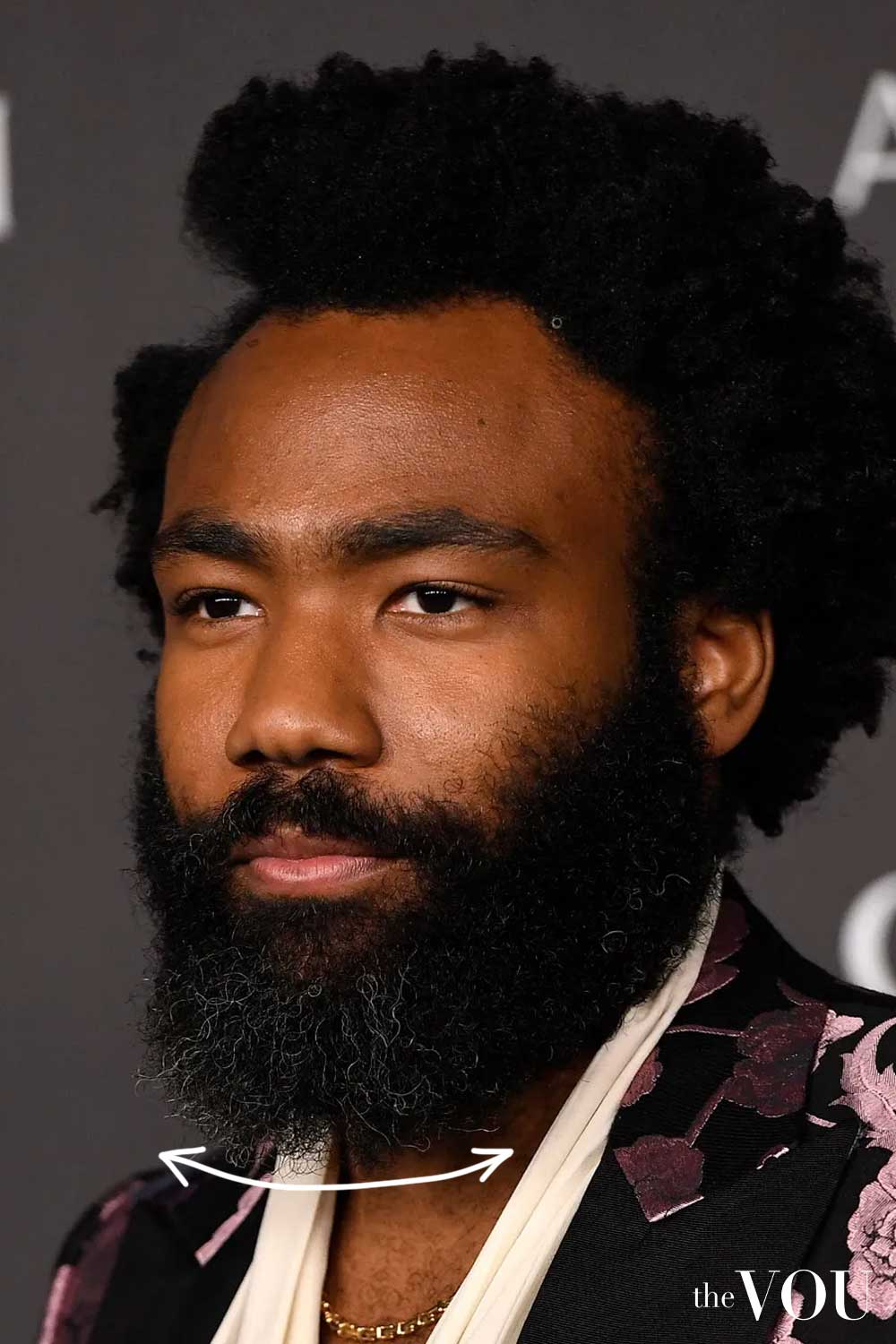
Consider a Full Beard with Tapered Sides, Defined Stubble with Fuller Chin, or Shaped Full Beard.
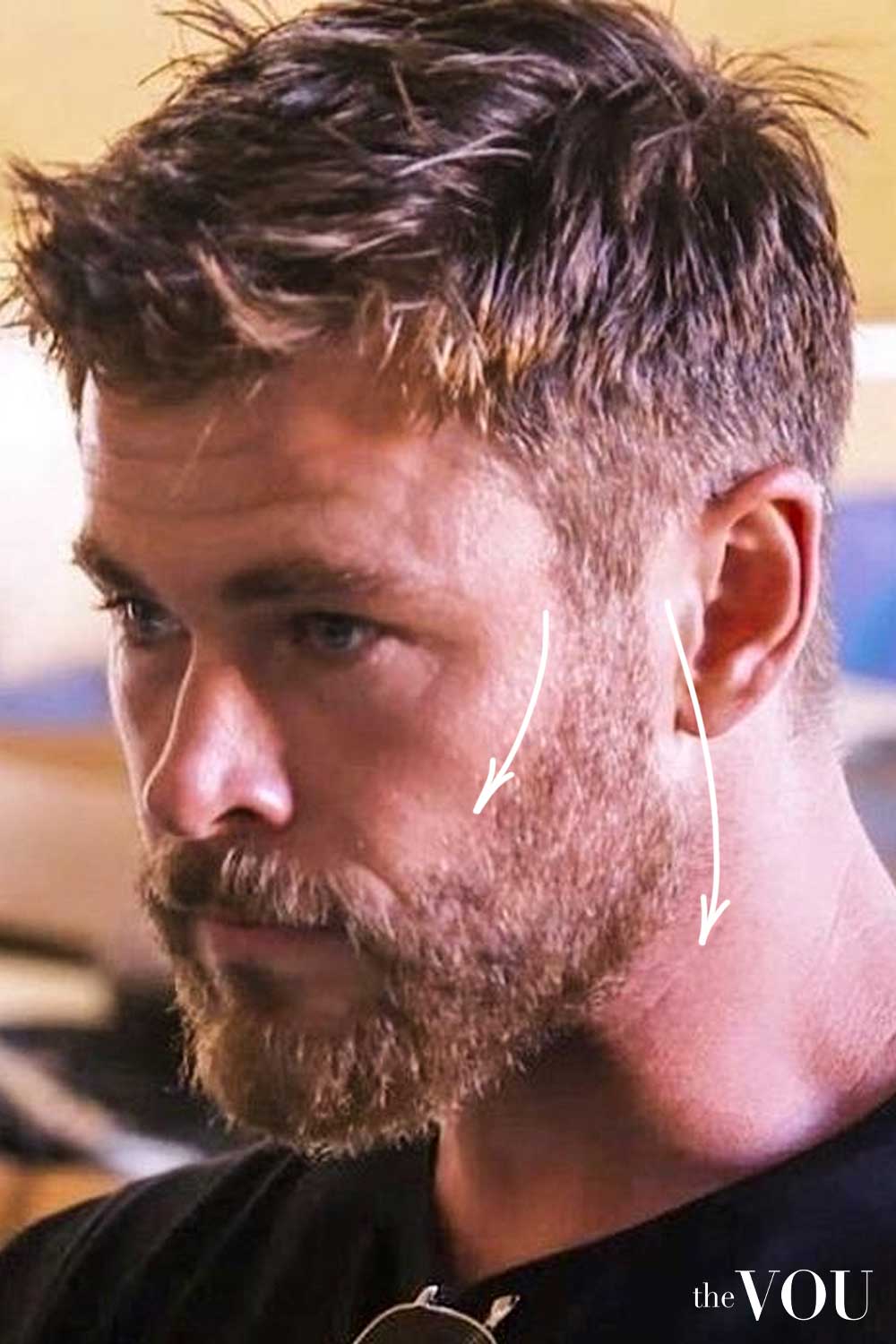
See more beard styles for Heart Face Shape
8. Pear Face Shape
Think of an inverted heart – that’s the essence of the pear face shape.
Also called a trapezoid or wide-base face. As the Triangle section above says, many sources use pear and triangle for the same face; the distinction claimed here is only that the widening is gradual rather than abrupt.
The defining feature is a narrow upper forehead that gradually widens through the cheeks to a broader jawline, creating a smooth transition from top to bottom.
Unlike the triangle shape, where the widening can be more dramatic, pear faces show a more gradual progression from the narrower forehead to the wider jaw.
If your face widens gradually from the forehead down and your jaw is the widest part, read this section and the Triangle section above together.
This shape differs from other angular faces in its smooth transitions rather than dramatic angles, offering unique opportunities for balanced styling approaches.
Volume at the crown with the sides kept close is the usual route if you want the top to carry more width than the jaw does.
Haircuts That Tend to Suit a Pear Face

If your jaw is the widest part of your face, the cuts worth looking at are the ones that carry some volume at the crown and temples while keeping the sides close. Édgar Ramírez and Jason Derulo both wear cuts of that kind.
If you want the upper face to read wider against the jaw, a little width at the temples is what does it.
Volume at the crown with the sides kept in proportion holds width higher up the face, if that is the balance you are after.
Textured cuts hold width at the temples more easily than flat ones. Matt Bomer wears a textured cut of that kind.
See more haircuts and hairstyles for Pear Face Shape
Beard Styles That Tend to Suit a Pear Face
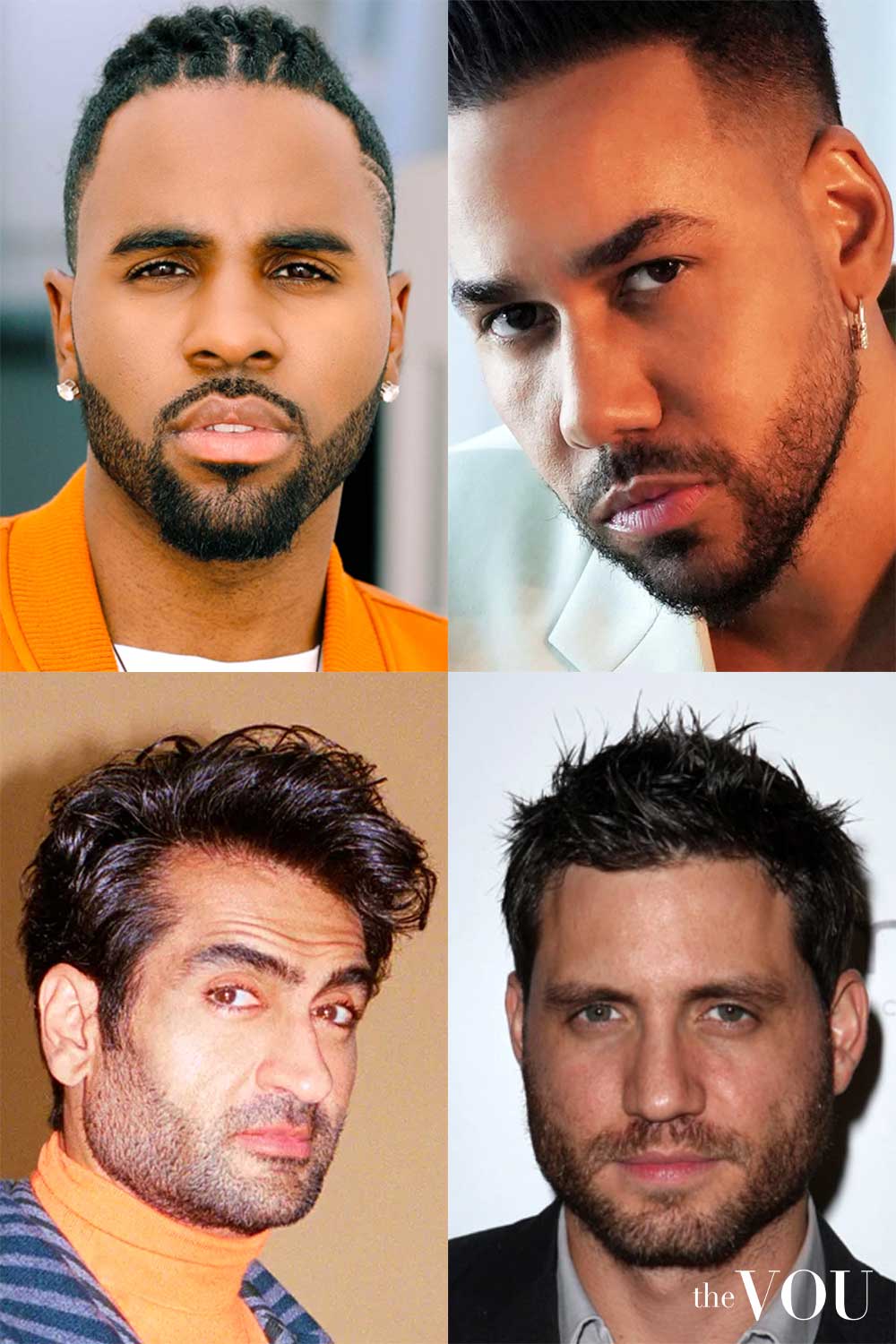
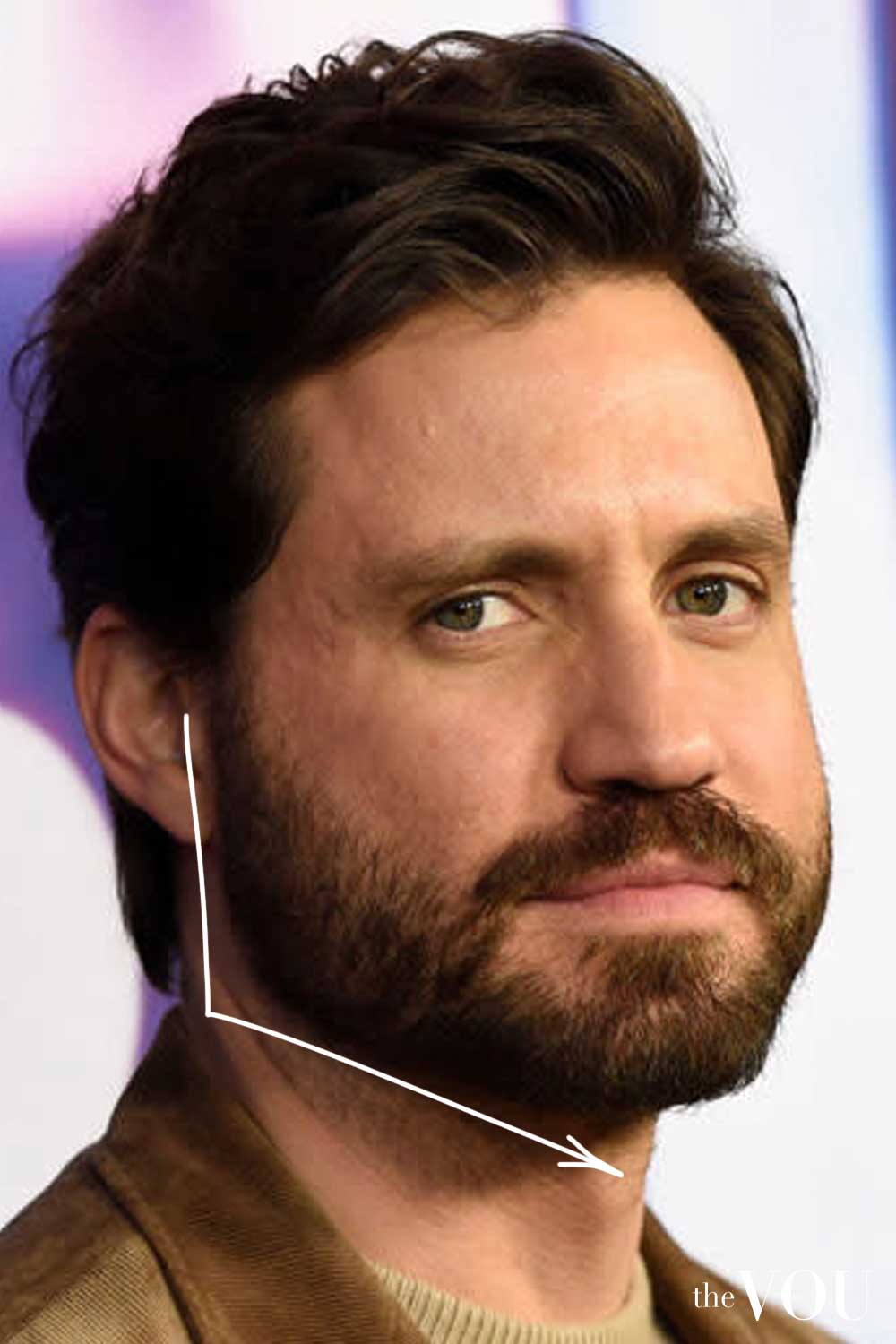
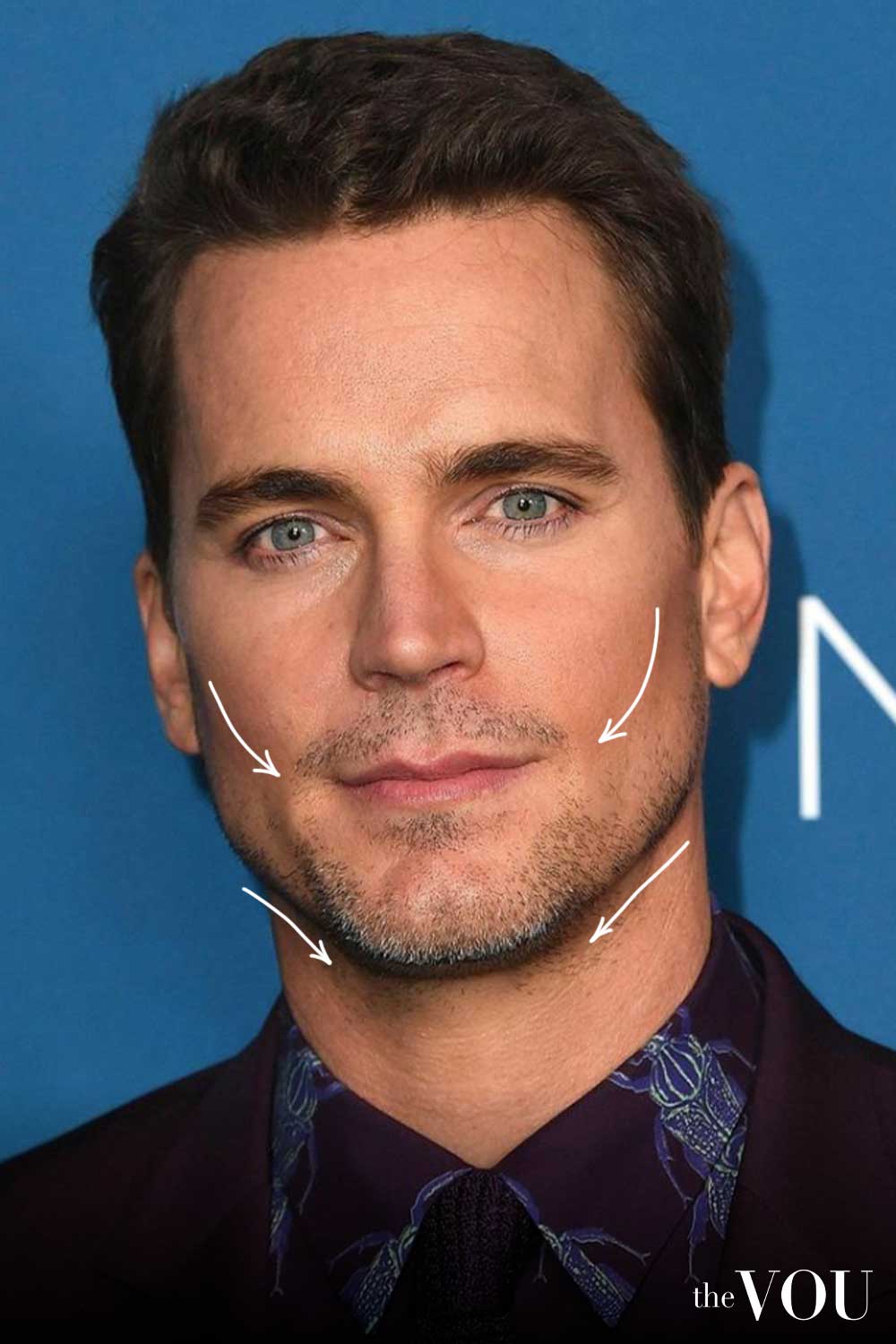
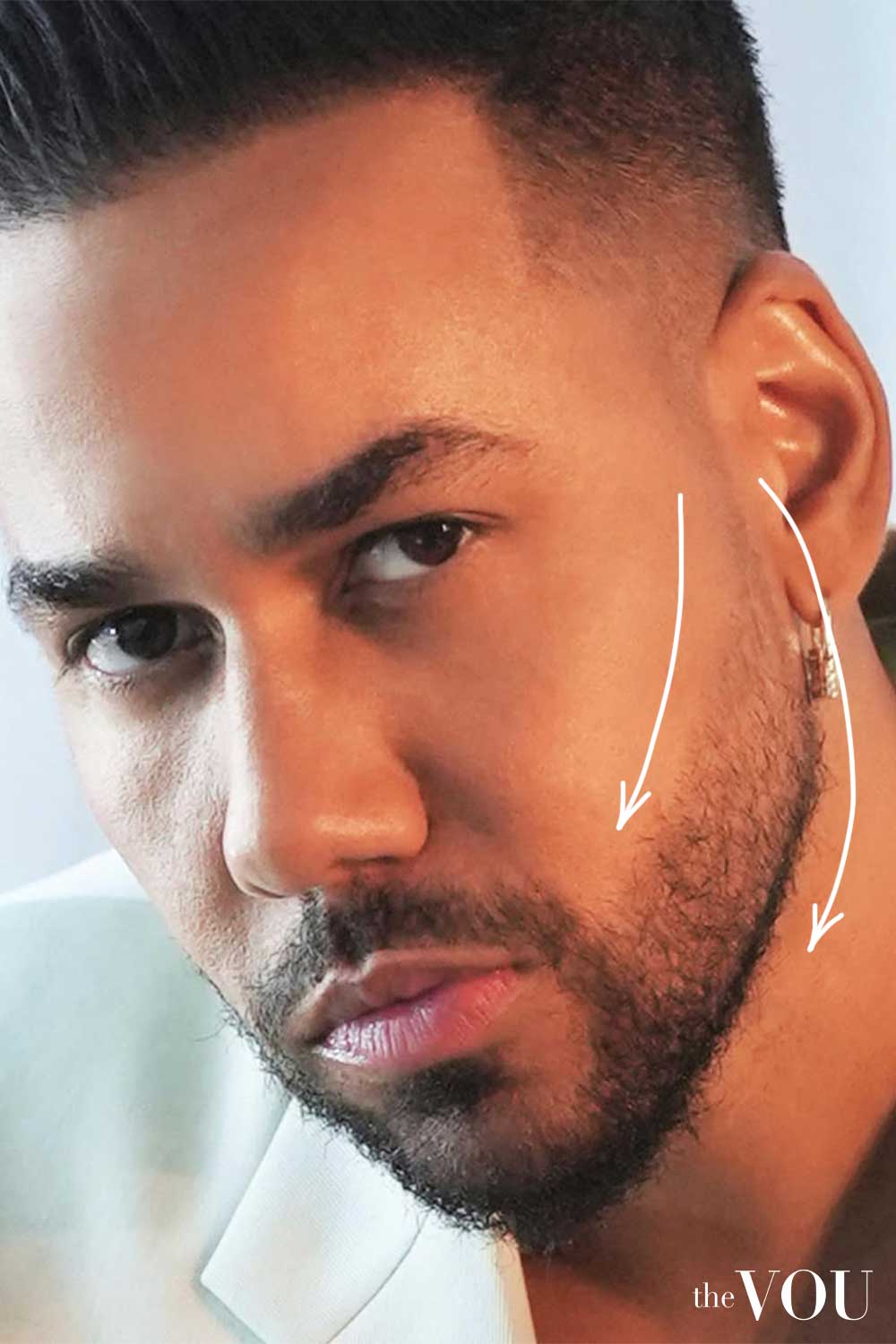
If your jaw is the widest part of your face and you would rather not draw attention to it, the beard styles below keep the sides close and the corners soft. Édgar Ramírez and Jason Derulo both wear close beards of that kind.
A Short Boxed Beard, in the photograph below, keeps a defined edge along the cheek and the neck with little length anywhere. Édgar Ramírez wears one.
Stubble kept short gives an edge along the jaw without any bulk on it. It is often called three-day stubble; how long it actually takes to reach that length depends on your own growth rate, and the photograph cannot tell you. Matt Bomer wears his at about that length.
Consider a Tapered Short Beard, Chin-Focused Growth, or Minimal Line Beard.
See more beard styles for Pear Face Shape
9. Diamond Face Shape

Picture a traditional diamond – this shape captures the essence of faces defined by prominent cheekbones.
Diamond faces are also known as angular pointed faces, cheekbone-dominant faces, narrow forehead shapes, or model faces.
The key characteristic lies in the cheekbones being the widest point of the face, with both the forehead and jawline tapering to create narrower points.
The defining feature is the angle at the cheekbones, which are the widest part of the face with both the forehead and the jaw narrower.
Robert Pattinson, Ezra Miller, Jared Leto and Zayn Malik are the names this site’s diamond face shape gallery collects under this heading.
Diamond faces usually read as most angular from the front, because the cheekbones are the widest point and both the forehead and the jaw taper away from them.
Cheekbones that are the widest point give a face a clear angle through the middle. Whether you leave that angle alone or soften it with width above and below is a preference.
Haircuts That Tend to Suit a Diamond Face
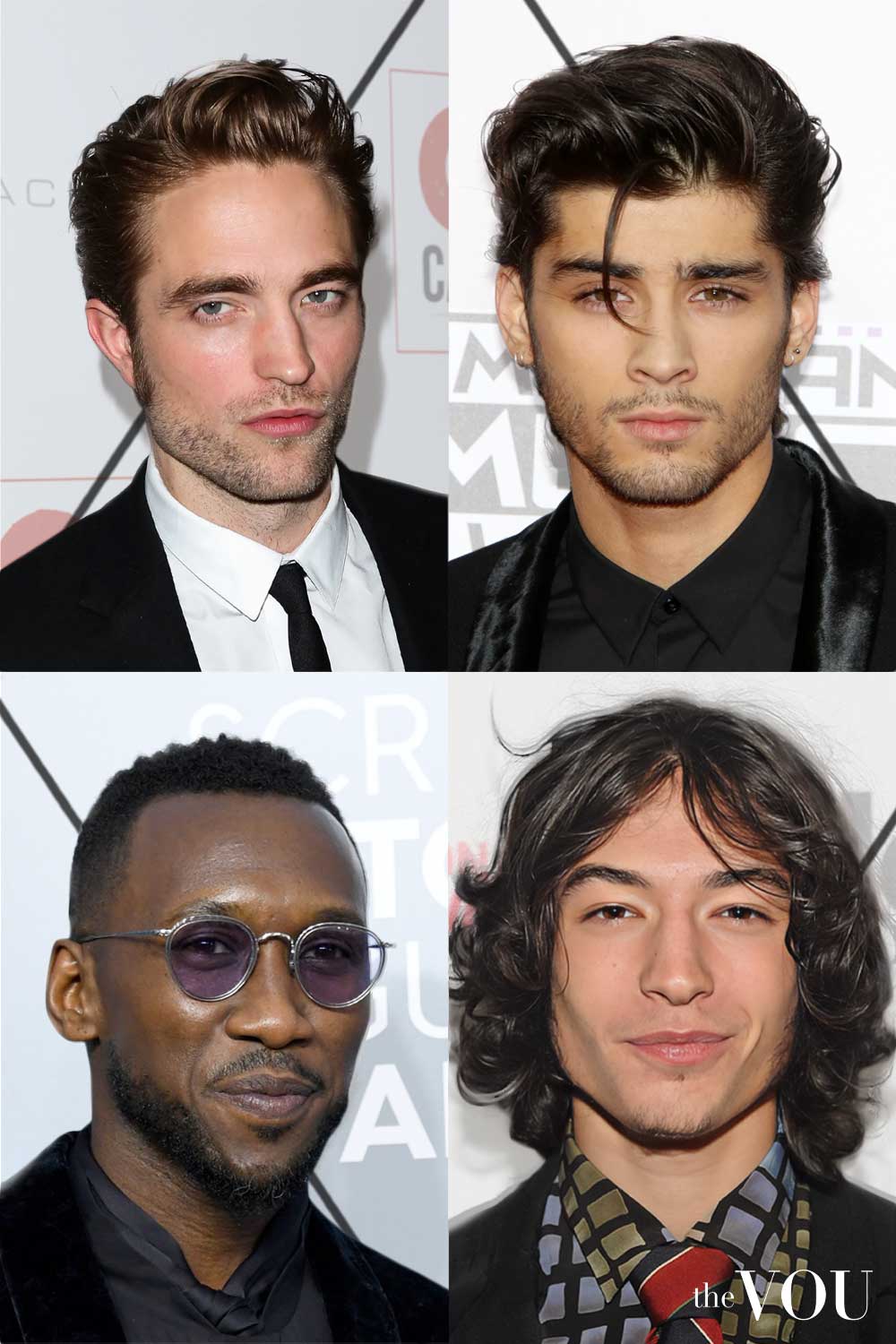
If your cheekbones are the widest part of your face, the cuts worth looking at are the ones that add a little width at the forehead so the middle is not the only wide point. Robert Pattinson wears cuts of that kind.
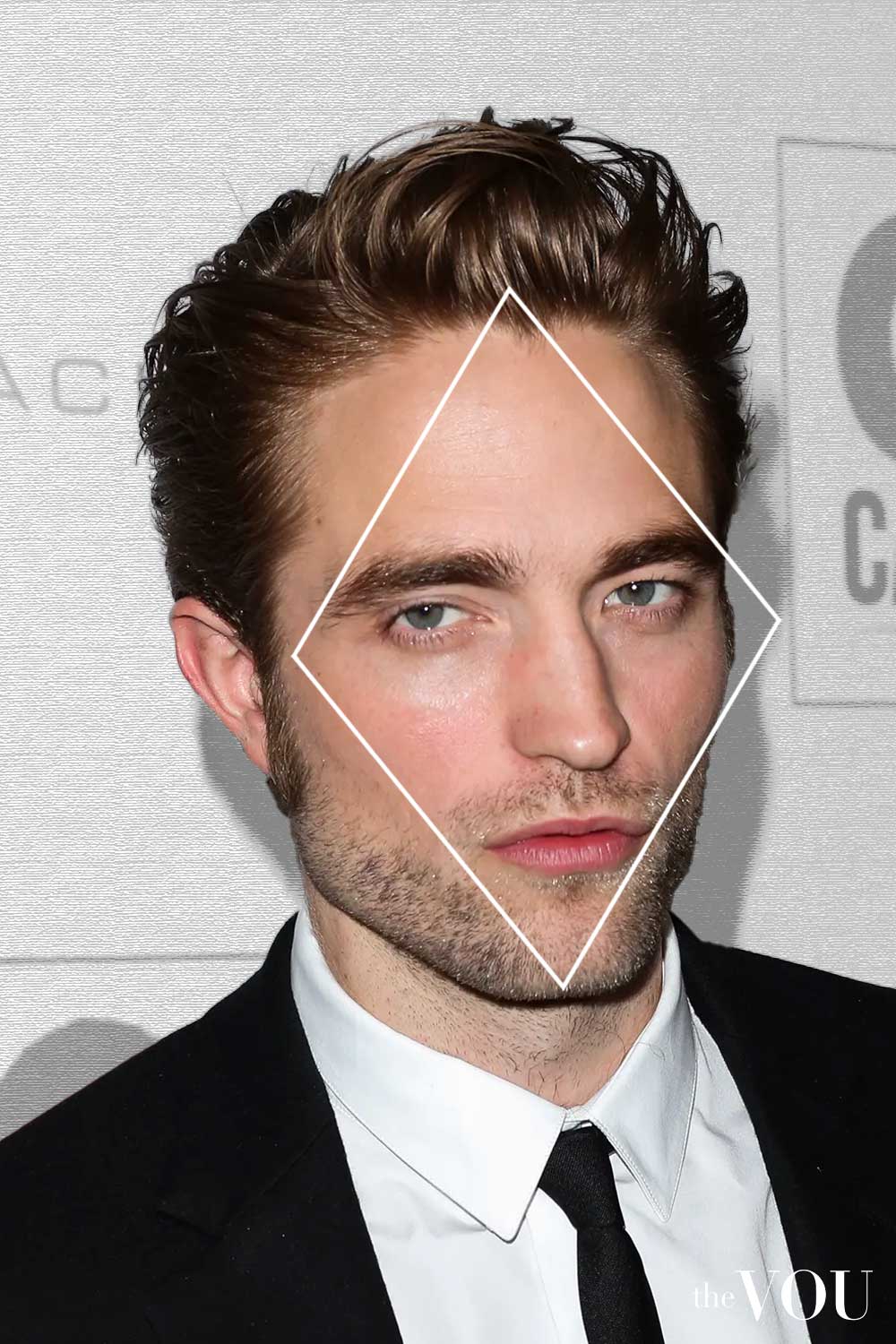
Cuts that add width at the forehead and temples create balance, while textured layers enhance your natural bone structure.
Zayn Malik wears a pompadour, which puts the volume high and forward rather than out at the sides.
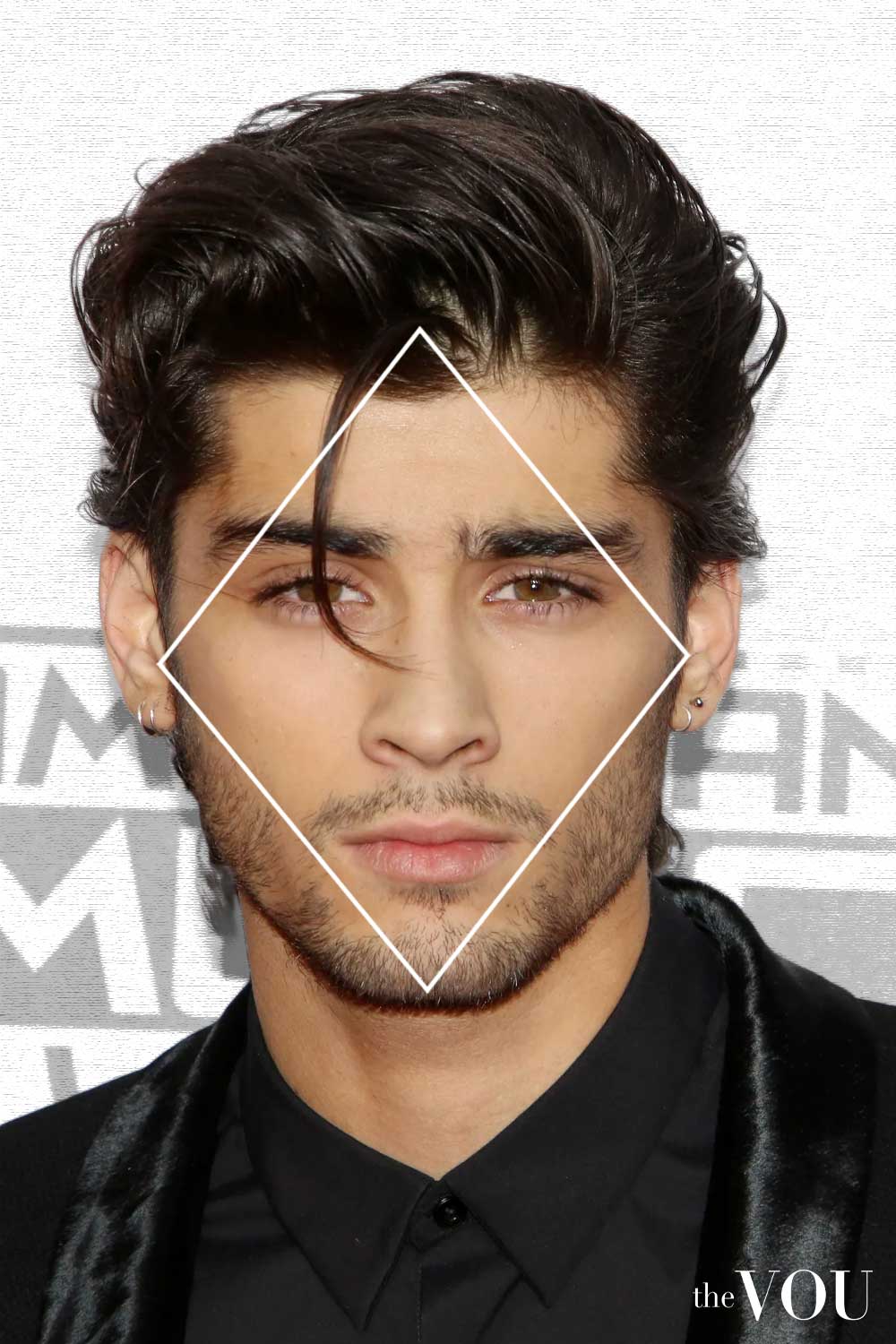
If you would rather soften the angle at the cheekbones than emphasise it, a cut with some length and movement around the temples does that.
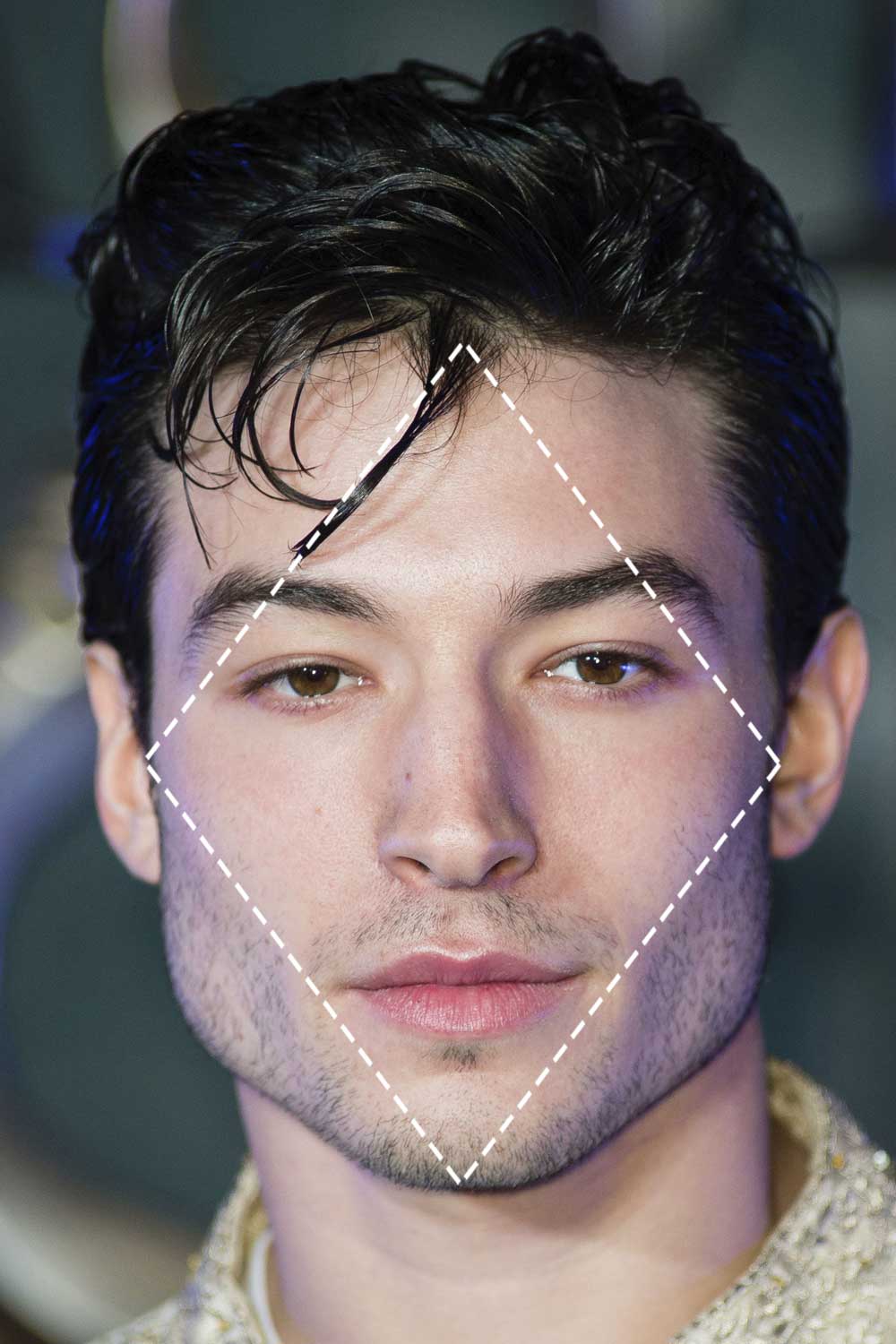
See more haircuts and hairstyles for Diamond Face Shape
Beard Styles That Tend to Suit a Diamond Face
If your cheekbones are the widest part of your face, with the forehead and chin both narrower, the beard styles worth looking at are the ones that add width low down at the chin.
A Full Square Beard carries length across the whole jaw and squares off under the chin, which adds width low down. Zayn Malik wears one.

A Graduated Full Beard is kept shorter at the cheek and longer under the chin, so the length builds downward. Robert Pattinson wears one.

Focus on styles that add width to the lower face to balance prominent cheekbones.
Three routes to ask about: a chin beard carried down below the jaw, stubble with a cut line along the cheek, or a boxed beard left wide at the jaw rather than tapered.

See more beard styles for Diamond Face Shape
Understanding Your Face Shape
Finding your face shape does not require measurements or a professional.
There is a face shape quiz on this site if you would rather answer questions than look in a mirror. It is optional, and the four observations above are enough on their own.
Your face may not match any one of the nine cleanly, and the notes below are written so that it does not have to.
Think of face shapes as guidelines rather than rigid categories, helping you make better styling choices rather than limiting them.
Where These Names Come From
Not from anywhere as settled as the word “analysis” suggests. The nine names are styling vocabulary: they come from barbers, stylists and grooming writing, and they are useful because they give you and your barber a shorthand for the same face.
There is a separate field, facial anthropometry, which measures named points on the face and is used in surgery and in orthodontics. It works with individual distances and angles rather than with categories, and it is not where these nine names come from.
This guide does not rest on it, and does not rest on any study. What it rests on is the four observations at the top, which are things you can see in a mirror, and the effects of height and width described in the Key Points, which are what a haircut actually changes. Everything below is written from those.
When this guide says facial length it means the distance from your hairline to the bottom of your chin, and when it says facial width it means the distance across your cheekbones. Those are the two measurements the notes refer to, and they are stated here so that nothing further down depends on you guessing which distance is meant.
Importance of Face Shape Analysis
Knowing roughly what your face does is practically useful in a few places: hairstyles, facial hair, eyewear, and the collars and necklines you choose.
This knowledge influences decisions regarding hairstyles, facial hair, eyewear selection, and clothing choices, particularly necklines and collars.
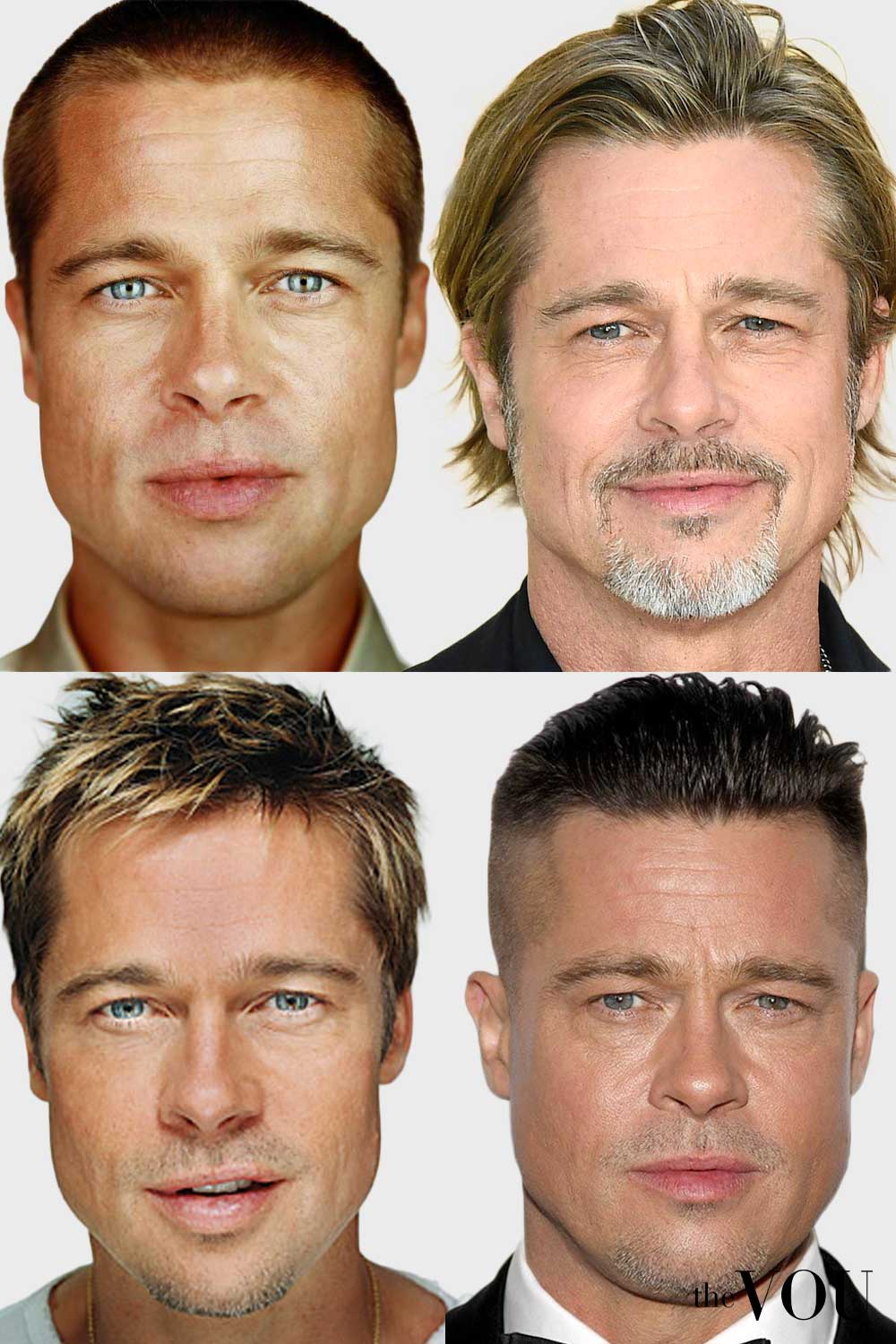
Stylists use the same vocabulary when they explain why a cut that suited a photograph will sit differently on you. That is what it is for: a shared way of describing what you want to emphasise and what you would rather draw less attention to.
Despite its significance, face shape analysis suffers from several persistent misconceptions.
Many gentlemen incorrectly believe they must conform strictly to one category when in reality, combination shapes prove common.
Others mistakenly think face shapes remain static throughout life, overlooking the influence of age, weight fluctuation, and other factors on facial structure.
Perhaps the most pervasive misconception suggests that specific face shapes prove inherently more desirable than others.
Each shape presents unique advantages and styling opportunities, so the aim is not to attempt to alter your natural shape but to understand how to enhance it through informed styling choices.
How Face Shapes Change
Your face shape isn’t permanently fixed; it can change throughout your life for several reasons.
A change in weight tends to show in the face, and it changes fullness rather than bone structure: fuller cheeks read as rounder, less full cheeks let the underlying angles read more clearly.
Age naturally impacts face shape as we lose facial volume over time; this is why some men find their round faces become more angular as they mature.
Facial hair can dramatically alter how your face shape appears to others; a well-groomed beard can reshape a pointed chin, balance a wide forehead, or add width to a narrow jaw.
Dental work, swelling and how you hold your head in a photograph can also change how the lower face reads from one year to the next.
Working with Combination Face Shapes
Faces commonly carry features from more than one of the nine; a face can read as oval overall and still have cheekbones that stand out like a diamond’s.
Oval with diamond cheekbones, square with rectangle length, and round with oval proportions are all combinations people report; which are most common is not something this guide can tell you.
Instead of trying to fit strictly into one category, identify your strongest characteristics and use these as your primary styling guide.
Consider which features you’d like to enhance or balance rather than worrying about fitting perfectly into one face shape category.
The Role of Proportion
What your forehead, cheekbones and jaw actually do relative to each other is more useful than the label you land on.
That is why this guide opens with looking rather than with naming.
Think about your face’s width-to-length ratio, as this helps determine which styling approaches will work best for you.
Remember that your hairstyle, beard, and accessories can adjust your face proportions and help you create a desired effect.
Styling by Feature, Without a Label
This is the route to use if none of the nine names fits you cleanly, or if you would rather not choose one. Work from the feature you actually notice:
Strong jaw? You might benefit from styling tips for square and triangle face shapes, regardless of your overall face shape.
High cheekbones? Look at recommendations for diamond face shapes, even if that’s not your primary shape.
Wide forehead? Heart shape styling tips might work well for you, even if the rest of your face follows a different pattern.
Long face? Incorporate advice for rectangle shapes while still considering your other features.
Where to Go Next
Once you know what your face does, the next decision is the haircut itself, and that is a conversation with a barber rather than a category.
The VOU’s guide to choosing a men’s haircut by face shape takes the same four observations further.
If the look you are after is the classic, restrained one, the Old Money hairstyle references show fifteen finished cuts with the hair type and upkeep each one needs, and the Old Money barber guide covers what to actually say in the chair. Both are about that one aesthetic rather than about face shape in general.
Hailing from Miami Beach, Sean Flynn is a NY-based celebrity professional hairstylist specializing in classic haircuts for men but in custom colors. Drawing on a lifetime of hair salon moments of combining fashion, art, and style, Sean is often featured in prestigious styling magazines, including GQ, Forbes, New York Times, and of course, The VOU.
With years of expertise in high-end fashion collabs and a PhD in Sustainable Fashion, Ru specialises in eco-luxe wardrobes for the modern gentleman seeking understated refinement.
With over twenty years of front-row fashion and styling events, collabs with haute-couture houses, and a PhD in Luxury Fashion, Laurenti is an expert in crafting personalised looks that depict old-money sophistication.
Cool
Here’s a true story! I got my exact face shape thanks to your free quiz and told my barber which corresponding hairstyle to do. Then, got the recommended glasses shape and a purchased a jacket for my exact body shape. Then, went back home. My wife started crying and said that she just had a glimpse of our student days when she fell in love with me. The lot costed me less than 100 USD and shaved off 15 years of my look! Thank you guys, really indebted to you!
Just found out which type hair cut and beard style shoot best for my face
I did this via a visual AI and got the same exact results, thanks guys. Here’s what I prompted.
CRITICAL REQUIREMENT: Maintain 100% exact likeness of my face from the input photo in all generated images. Only the hair should change. Perform a precise analysis of my face shape, hair texture, and density from the upload. Recommend trending hairstyles for three scenarios: Professional, University, and School. Then, visualize these recommendations by generating a realistic 3×3 hairstyle grid (9:16, 4K). Ensure all styles are wearable, modern trends that match my hair type, applied photorealistically to my unchanging face.