
Start here
What’s This About
An all-black outfit looks deliberate when the blacks match closely, the textures and finishes vary, and the fit is right.
This guide gives eleven practical guidelines, such as
mixing textures such as knit, wool and leather
keeping blacks close in shade and checking them in daylight
choosing a fit that suits you, with room to move
keeping shine and patent leather for evening
and many more!
Treat the guidelines as starting points rather than fixed measurements.
Key Points
01Faded or brown-black garments show next to fresh black, so compare them in daylight
02Mixing textures and finishes keeps an all-black outfit from looking flat
03Black shows the cut clearly, so fit matters more than a particular slim or relaxed style
04Black suits clearer, deeper palettes most easily; if softer colours suit you, try charcoal near the face
An all-black outfit, black from head to toe, might seem like the simplest style choice, but without some care it can look flat or like a work uniform.
In this guide, you’ll find eleven practical guidelines for the monochrome look, from mixing textures to keeping your blacks close in shade.
1. Combine Different Black Textures Within One Outfit
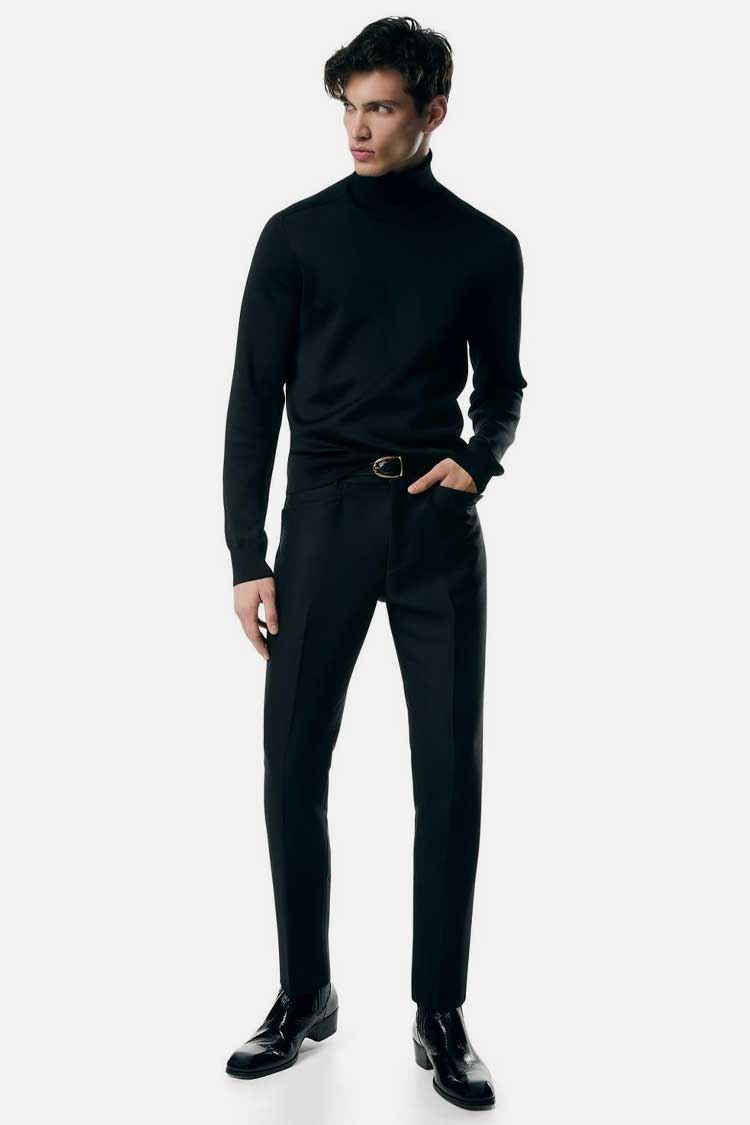
A successful all-black outfit relies on the interplay of different textures and fabric finishes.
Rather than appearing as one flat block of colour, the outfit gains depth from a mix of materials; two or three textures are usually enough.
For example, pair a silk-blend shirt with a matte wool blazer and raw denim jeans, so that each garment brings a different surface.
2. Keep Your Blacks Close in Shade
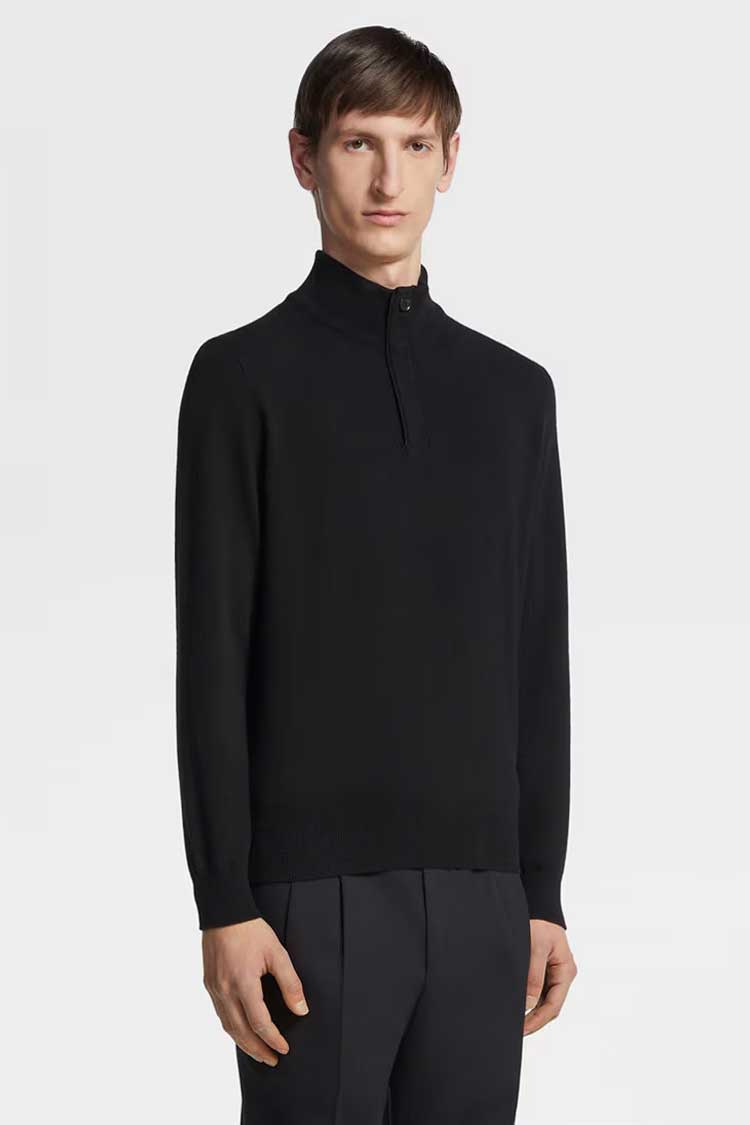
When combining multiple black garments, the shade variation works best when it is small.
Compare garments in natural light; if one black looks clearly faded, greenish or brownish next to the others (imagine fresh against well-worn black socks), the combination can look accidental rather than tonal.
The check matters most when matching blacks in different fabrics, such as a wool suit and a cotton shirt, because each fabric takes dye differently.
A deliberate step to charcoal is a different, tonal choice.
3. Get the Fit Right
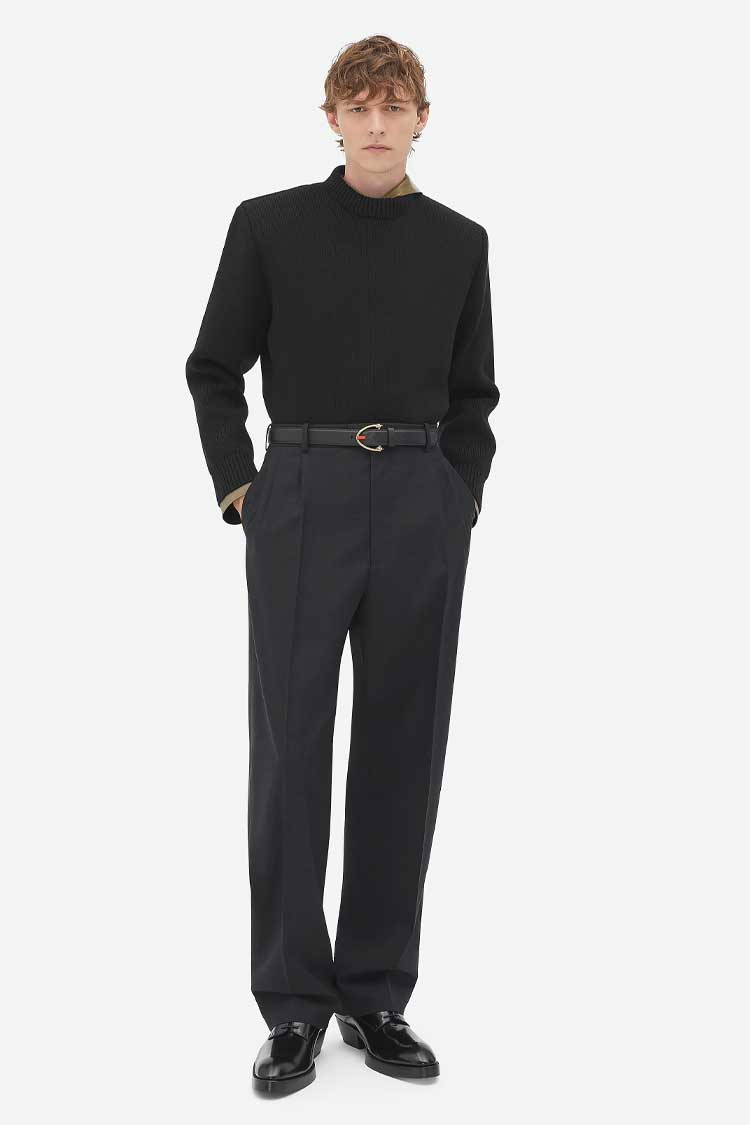
When working with a monochromatic palette, the precision of each garment’s fit matters even more.
Black shows the strengths and weaknesses of a garment’s cut clearly, because there is no pattern or colour change to distract the eye.
A clean slim fit and a deliberately relaxed cut can both work; what spoils the look is excess fabric where it was not intended, such as a billowing shirt waist, or trousers that pool heavily at the shoe.
A slight break at the shoe is a common choice for tailored trousers.
4. Allow Stretch and Room for Movement
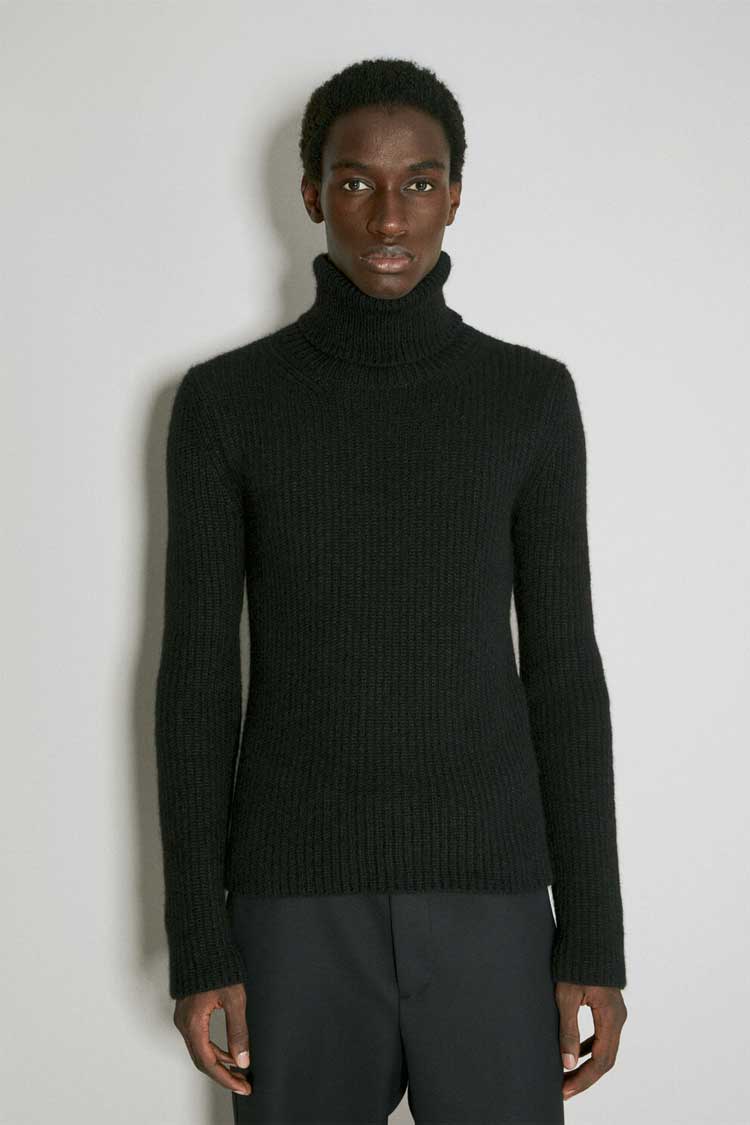
Strain and wear show readily on black, particularly where fabric stretches.
When fitting black garments, check that you can move freely at the shoulders, thighs and elbows; a little room to pinch the fabric at those points is a useful test.
Fabric pulled tight wears and rubs faster, which can create shiny patches at the stress points.
5. Choose Garments That Stay Black
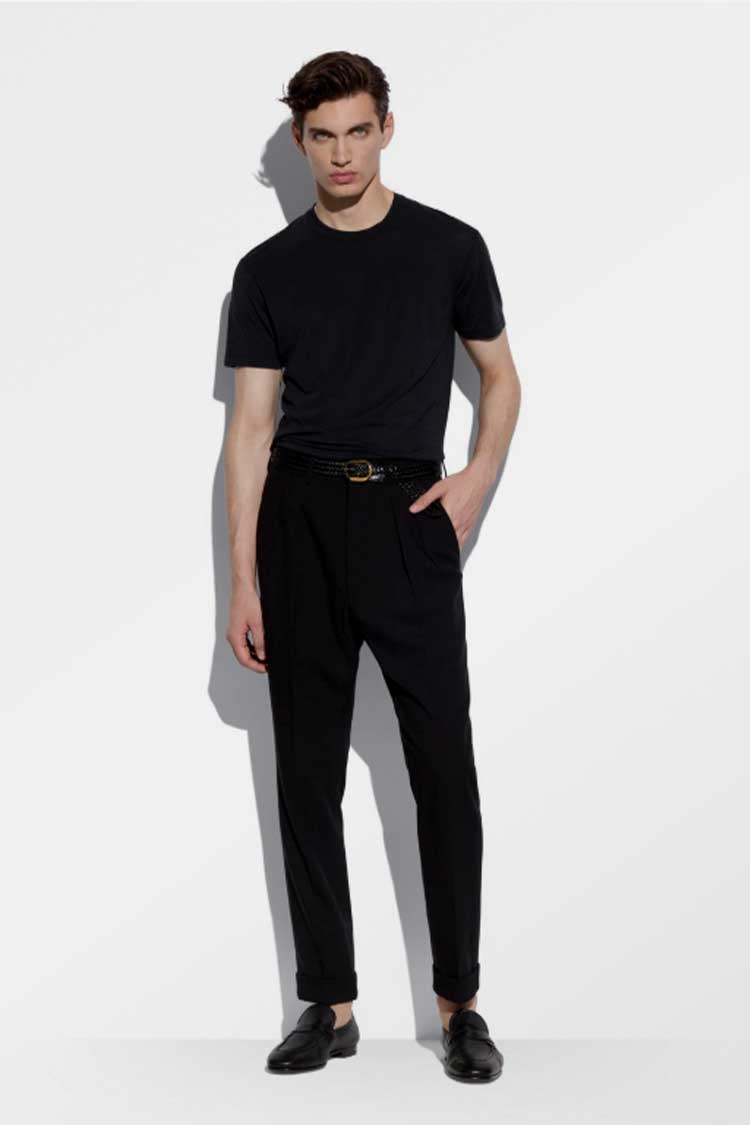
An all-black outfit depends on garments that keep their depth of colour.
Well-made garments are worth considering for black basics you wear often, but price alone does not guarantee colourfastness; check reviews and care labels, and wash black garments carefully.
Retire or re-purpose garments that have faded to charcoal. Next to a new black T-shirt, a garment you want to wear as black should look very close.
6. Keep Shine Levels Simple
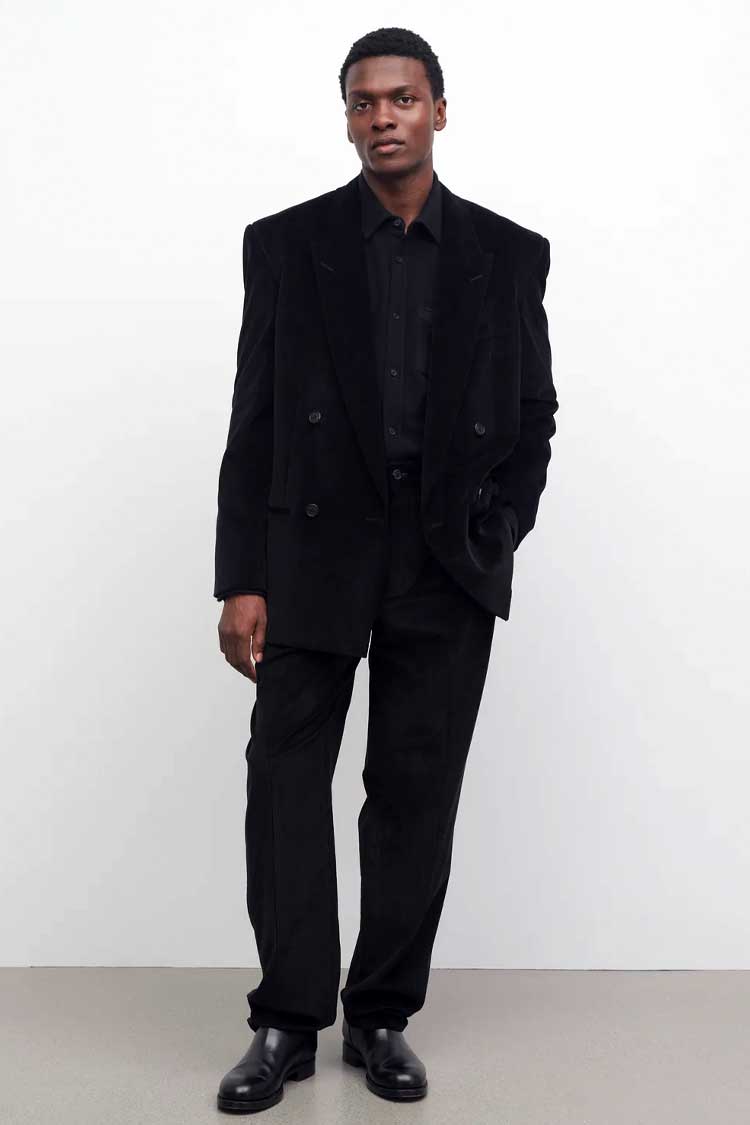
When combining black garments, one or two levels of shine usually look calmer than several.
For example, pair matte wool trousers with a slightly sheen blazer (think the difference between printer paper and photo paper), but keep your shirt matte to maintain harmony.
Footwear counts too, and patent leather shoes look best with mostly matte garments above them.
7. Keep Layers Purposeful
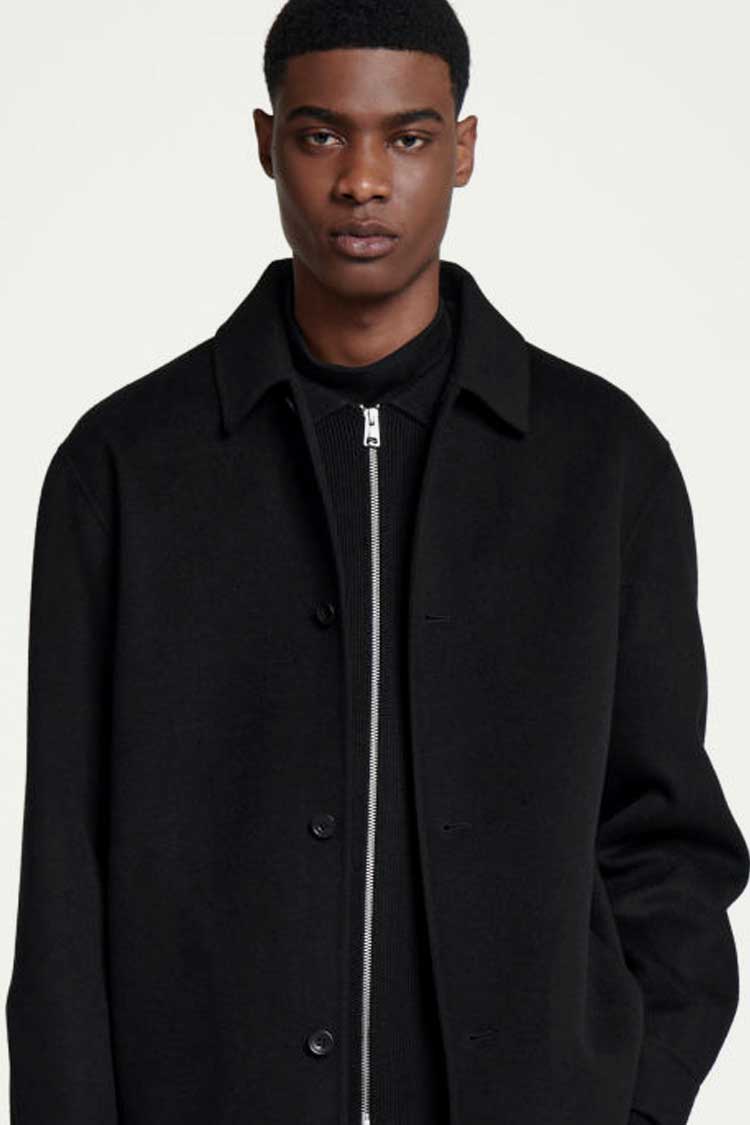
When layering black garments, a few purposeful layers read more clearly than many.
A T-shirt, shirt and blazer is a typical three-layer combination; a scarf or coat in cold weather is fine, as long as each layer has a different texture or length so the outfit does not read as one block.
Purposeful layers keep the layered look refined rather than cluttered.
8. Limit Metallic Accessories
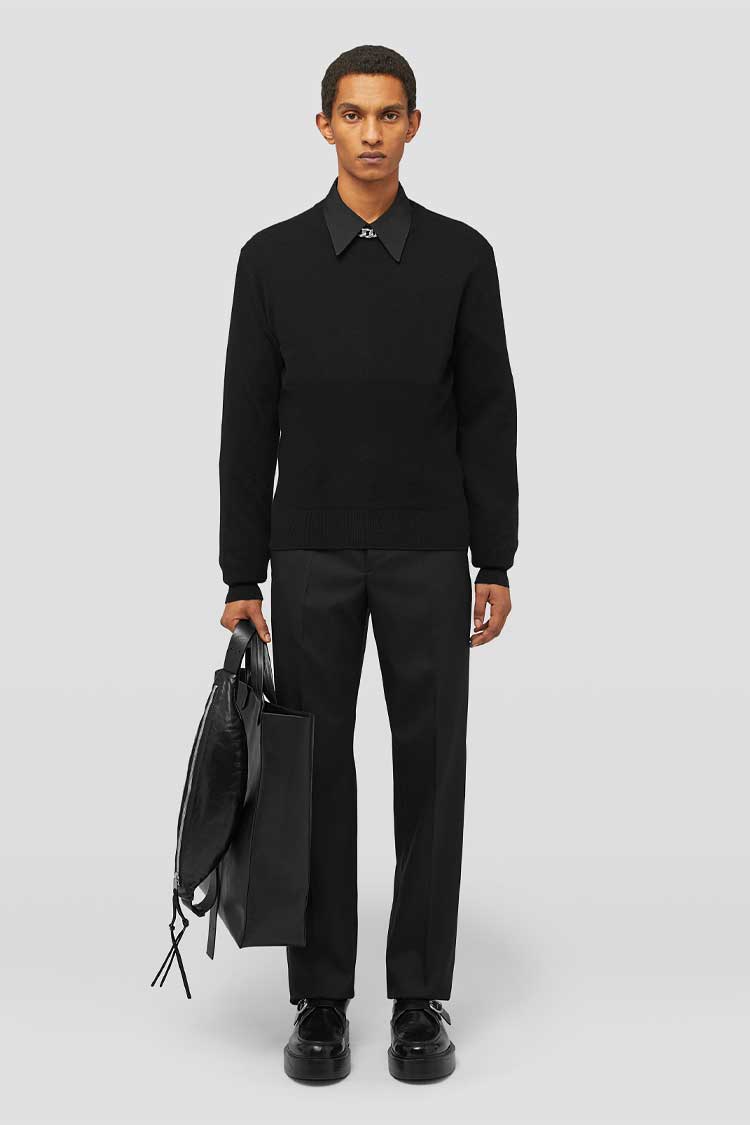
Accessories add personality to an all-black outfit.
Keep metal details, such as watch cases, belt buckles and jewellery, small and few, so they stand out as accents against the black.
For instance, pair a modest silver watch with a brushed metal belt buckle, and add more only if you like the effect.
9. Match Socks to Trousers
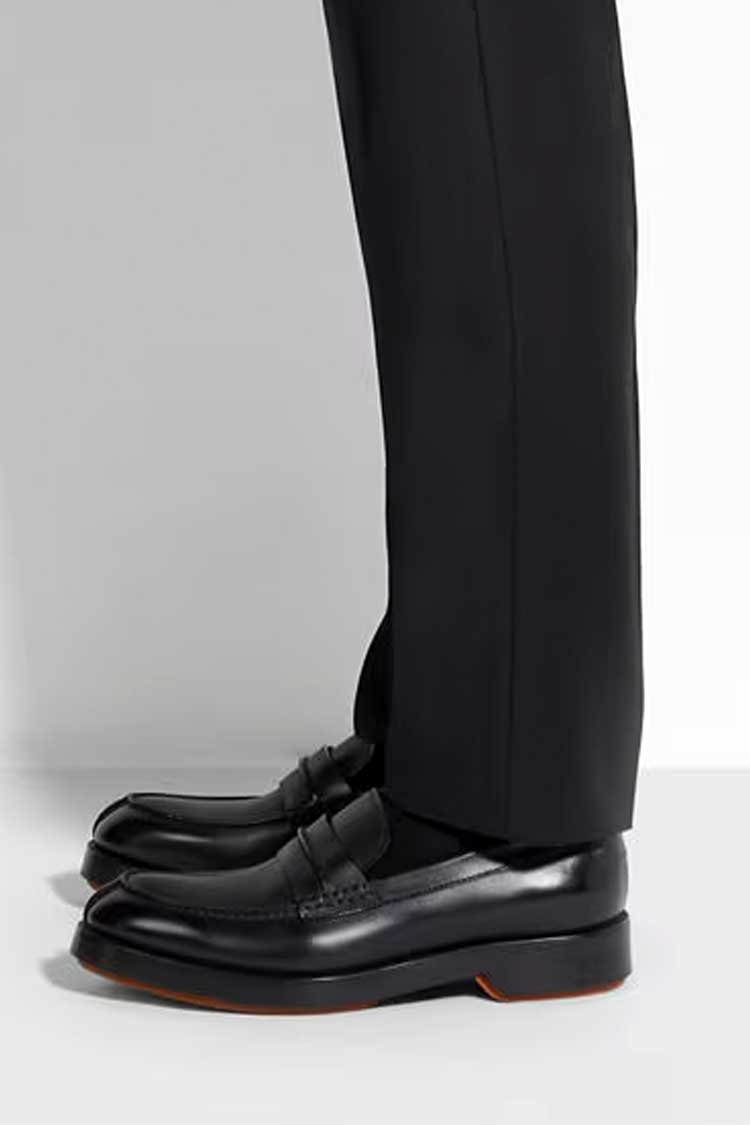
The transition between trousers and shoes demands particular attention in an all-black ensemble.
Your socks should be nearly indistinguishable from your trousers when standing (if you have to question whether they match, try another pair).
This subtle detail prevents the eye from catching unintended contrast points in your outfit.
10. Keep Patent Leather for the Evening
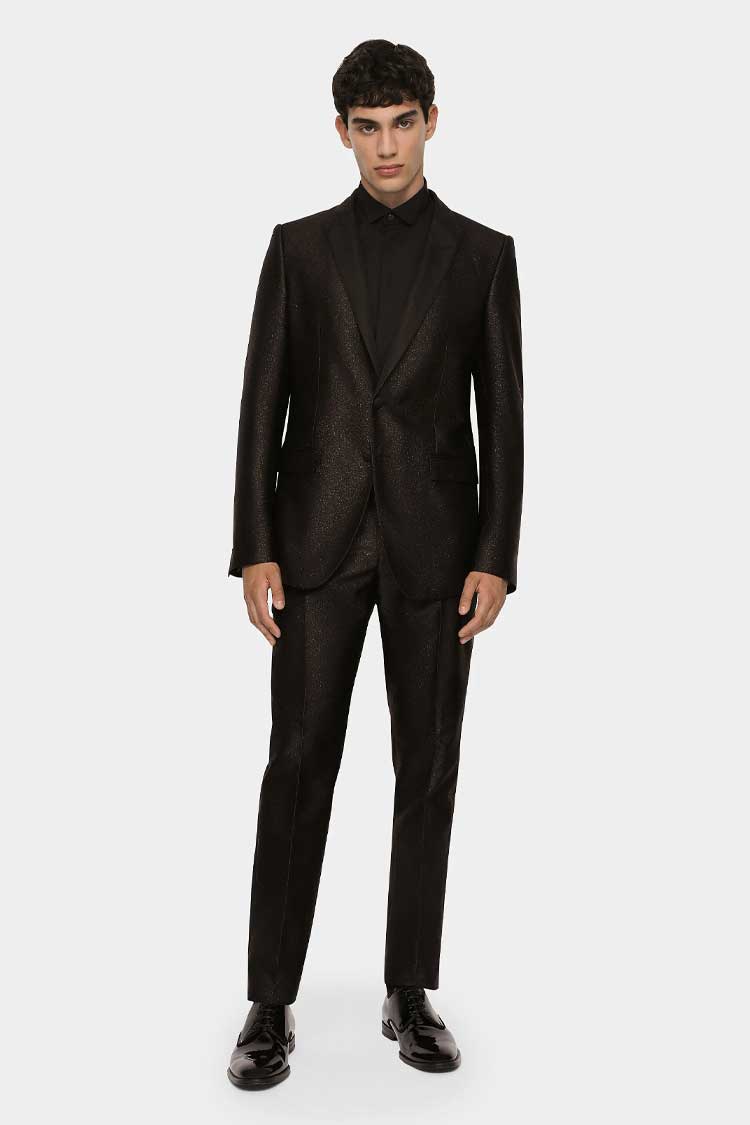
The formality of your black footwear should align with both the occasion and time of day.
Apply the traditional evening wear rule to your all-black outfits by keeping high shine and patent leather for evening occasions, as convention suggests; patent shoes are the traditional choice with a dinner suit.
During daylight hours, opt for matte or minimal-shine footwear such as nubuck Chelsea boots or leather trainers.
11. Avoid Logos or Keep as Minimal as Possible
Brand visibility should be minimal in a sophisticated all-black ensemble.
Small or no visible logos keep the attention on the outfit’s shape and textures.
Logo-free garments maintain the clean, uninterrupted flow of the monochromatic palette.
Related Questions
Q. Is it OK for men to wear all-black?
Yes, it’s acceptable for men to wear all-black.
In fact, it’s one of the most versatile and sophisticated choices a man can make.
The key is care with shade, texture and fit, which makes an all-black outfit look deliberate.
It’s particularly popular among fashion industry professionals, creatives, and those who appreciate minimalist aesthetics.
Q. Is an all-black outfit attractive?
Many people find all-black outfits attractive, though taste varies.
They create a sleek silhouette with a timeless quality that transcends seasonal trends.
The single colour keeps attention on shape and texture, which many men find polished.
Q. Can I wear an all-black outfit to a summer wedding?
All-black outfits are often fine for year-round evening weddings; for summer ceremonies, choose lightweight fabrics such as tropical wool or silk-cotton blends.
Check the dress code first, as some daytime summer weddings might specify lighter colours.
Q. Does wearing all black make you look slimmer?
A well-fitted all-black outfit creates an unbroken vertical line that can make you appear slimmer.
However, this effect is lost if garments are too tight or too loose.
Focus on proper fit rather than relying solely on the slimming properties of black.
Q. How do I prevent my black clothes from fading differently?
Wash black garments inside out in cool water with a detergent for dark colours, and avoid tumble drying where the care label allows; washing them together helps them fade at a similar rate, though different fabrics still age differently.
Q. Can I wear brown or navy shoes with an all-black outfit?
While possible, introducing brown or navy shoes breaks the monochromatic effect.
If you choose them, dark shades with a clear texture contrast look intentional rather than mismatched.
Q. Is it appropriate to wear an all-black outfit to a job interview?
Yes, but consider your industry.
All-black outfits work well for creative, luxury, or fashion-related positions.
For conservative industries, a navy or charcoal suit with a white shirt is the safer choice, or break up the black with a white shirt or grey knit.
Does All-Black Suit Your Colouring?
In seasonal colour analysis, pure black sits most comfortably in the Winter palettes, which favour clear, deep or high-contrast colours; men who suit softer palettes may prefer charcoal or a dark navy near the face and keep black for trousers, shoes and outerwear.
That is a preference, not a rule, and black remains correct whenever the dress code calls for it.
Our seasonal colour palettes guide explains the families.
Final Thoughts
Mastering the all-black outfit is about applying these guidelines while keeping your personal style.
Whether you’re dressing for a formal event or creating a sophisticated casual look, these guidelines help your monochromatic outfit look intentional rather than accidental.
Remember, the power of an all-black outfit lies not just in its timeless appeal, but in the confidence it brings when executed correctly.
Start with these guidelines, then adapt them to suit your style and specific occasions.
For more menswear guides and style advice, explore our other articles on The VOU.
Style Like A True Gentleman
Before you go, here is a simple way to put this guide into practice, and when to ask an image consultant for help.
Professional styling starts with knowing your body shape and seasonal colour palette, which help you choose clothes that fit well, in colours that suit your skin, eyes and hair.
Our guides also cover styling by occasion, location, season and time of day, garments, footwear, accessories and heritage fashion brands.
Take our three quizzes to find your body shape, seasonal colour palette and fashion style, then book a consultation if you want personal help.
1. Find Your Body Shape
Different garments flatter different silhouettes, so knowing your body shape is the first step in dressing like a confident man.
To find out your unique body shape, take our body shape quiz for men.
Once you know your unique body shape, take the second quiz to discover your unique colour palette.
2. Find Your Seasonal Colours
The garments in your outfits come in many colours, so it helps to check which colours suit your natural colouring.
To do that, you have to find out your seasonal colour palette, and you can do it by taking our seasonal colour quiz for men.
3. Find Your Fashion Style
By now, you should already know your body shape and unique colour palette; the next step is to discover your personal fashion style.
To find it, take our fashion style quiz for men; it includes a suggested style, outfit ideas, relevant fashion brands, and much more.
Personal Help from The VOU
For personal help, you can book a consultation with our image consultants and fashion stylists.
Our styling services for men are paid consultations; the shop page lists what each one includes.
Wearing luxury brands is not enough on its own (see our guide to logo-heavy luxury brands and how to wear them); knowing your body shape, colour palette and personal style first makes styling by occasion, location, season and time of day easier.
Contact us to book a consultation once you have taken the three quizzes.