
Start here
What’s This About
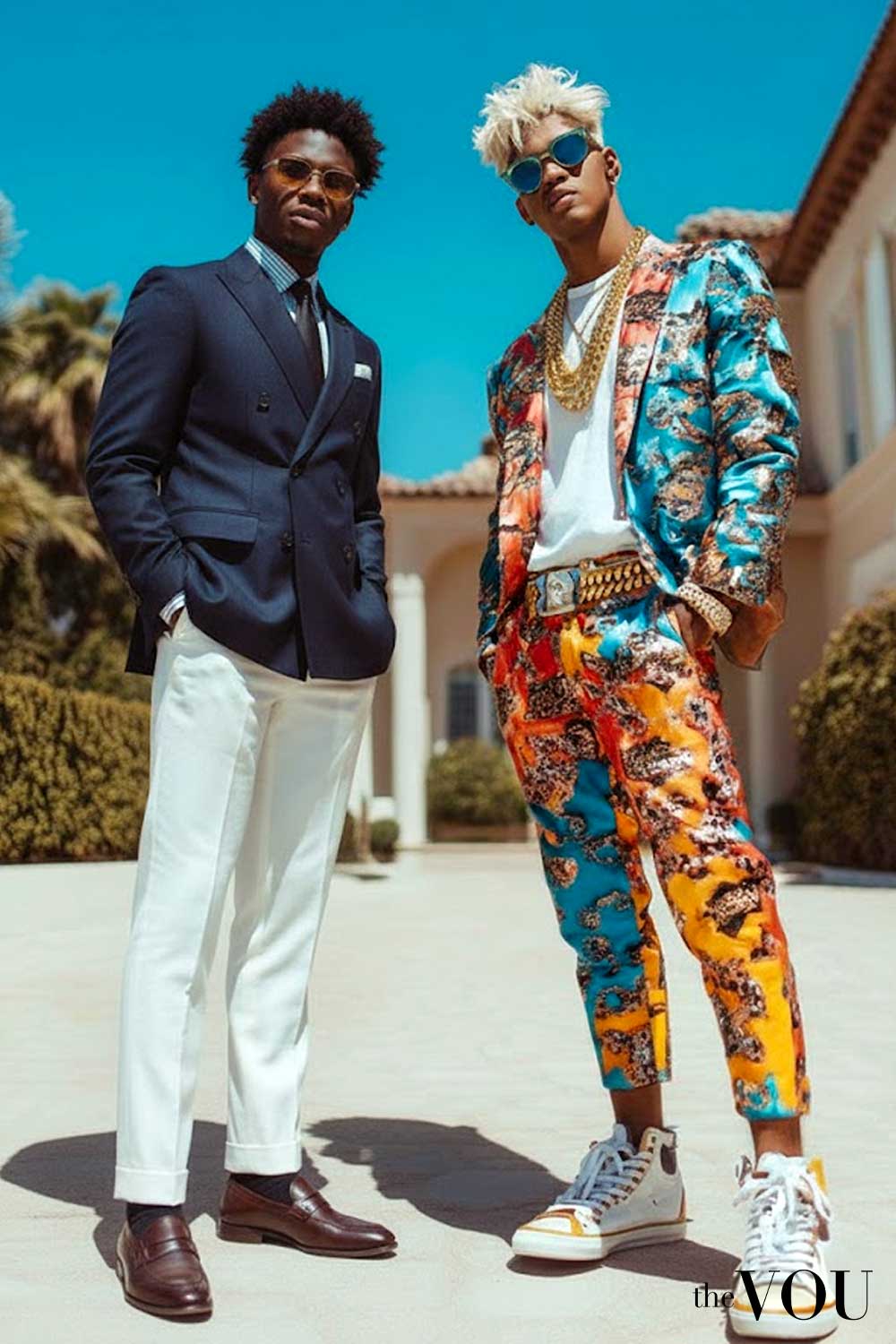
Old Money style is quiet, classic and lightly branded, while New Money style is bold, logo-led and follows current fashion.
This guide compares the two looks and shows how to wear or mix them, such as
Where the old money and new money labels come from
Typical colours, patterns and shapes in each look
How branding, shoes and accessories differ
How to choose between the two for your own life
Four complete outfits, including a blended one
and many more!
Both are clothing labels, not facts about the wearer, so choose by what you like wearing and where you need to dress.
Key Points
01Neither look shows how anyone got their money, how much they have or how they were raised.
02The Old Money look relies on fit, quiet colours and small logos; the New Money look relies on visible branding and fashion-led shapes.
03Fit and silhouette are separate decisions, and either look still needs clothes that fit at the shoulders, collar and waist.
04A classic base with one fashion-led garment is an easy way to blend the two.
“Old money” and “new money” are long-standing English phrases for families who have been rich for generations and for people who became rich recently.
In fashion writing and on social media, the same phrases now name two ways of dressing, one quiet and traditional, the other bold, branded and led by current fashion.
This guide compares the two looks garment by garment, shows how to recognise each one and gives complete outfits for each look and for a mix of both.
Both are clothing labels, not facts about the person wearing them, so neither look can show how anyone got their money, how much they have, how they were raised or what they value.
Where the two labels come from
Merriam-Webster defines old money as people whose families have been rich for a long time, while the French borrowing nouveau riche, recorded in English from about 1796, means a person who is newly rich.
“Old Money style” became a popular social-media label in the early 2020s, and the related idea of “quiet luxury” spread widely in 2023, helped by the HBO series Succession, as CNBC reported at the time.
“New Money style” is a looser label, used mostly as the opposite, meaning visible logos, fashion-led shapes and new-season designer clothes.
Our guide to the style differences between Old Money and New Money has more outfit examples, and our list comparing Old Money and New Money habits looks at the social clichés behind the two labels.
The Old Money look at a glance
The Old Money look draws on British country and tailoring traditions, American Ivy League clothes and classic French and Italian menswear.
Our guides to Beau Brummell’s influence on menswear, Parisian chic and Italian Old Money style cover those sources in more detail.
The usual clothes are tailored jackets with natural shoulders, pleated or flat-fronted trousers with some room in the leg, Oxford shirts, plain knitwear, and wool overcoats, trench coats or quilted country jackets.
The Old Money colour palette centres on navy, grey, beige, cream, brown, forest green and white.
Patterns are traditional ones such as herringbone, Prince of Wales check, fine stripes and small checks.
Wool, cotton, linen and cashmere are typical fibres, although fibre alone does not guarantee that a garment will wear well, so check the weave, the seams and the fit as well.
Shoes are usually leather or suede, such as penny loafers, brogues, Oxfords and Chelsea boots.
Accessories are small and few, with a plain watch, a leather belt and perhaps a signet ring.
The settings people link with the look, from New England summers and the French Riviera to the British countryside, explain its sailing, resort and country clothes, but you do not need to go to any of them to wear those clothes.
The New Money look at a glance
The New Money look takes its ideas from current designer collections, luxury streetwear and the styling of celebrities and social-media personalities.
Visible branding is central, from monogram prints and large logos to recognisable designer belts, trainers and bags.
Labels often mentioned include Louis Vuitton, Gucci, Balenciaga and the streetwear brand Supreme.
Our article on why Gucci is so expensive explains that label’s pricing, but price is not what puts an outfit in either camp.
Shapes follow fashion, which means very slim suits with cropped trousers in some seasons and oversized jackets, bombers and hoodies in others.
Colour can be bold, including bright or neon shades, jewel tones, all-black outfits and strong black-and-white contrast.
Shoes are often chunky designer trainers, branded loafers or boots with prominent hardware.
Accessories are larger and easier to notice, such as chains, big watches, oversized sunglasses and logo-covered leather goods.
Neither look is bad taste in itself, and plenty of men wear both at different times.
Old Money vs New Money, the key differences
The table compares the two looks; treat it as a description of typical clothes, not a set of rules.
Scroll horizontally to see all columns →
| Feature | Old Money look | New Money look |
|---|---|---|
| Branding | Small logos or none | Visible logos and monograms |
| Colour | Navy, grey, beige, cream, brown, forest green, white | Black, white, bright and jewel colours, neon accents |
| Pattern | Herringbone, Prince of Wales check, fine stripes | Logo prints, large graphics, bold prints |
| Tailoring | Natural shoulders, moderate cut, pleated or flat-fronted trousers | Very slim or oversized, depending on the season |
| Casual clothes | Oxford shirts, polo shirts, knitwear, chinos | Hoodies, graphic T-shirts, track tops, designer jeans |
| Shoes | Loafers, Oxfords, brogues, suede Chelsea boots | Designer trainers, branded loafers, boots with hardware |
| Accessories | Plain watch, leather belt, signet ring | Chains, large watches, branded bags and belts |
| Sources of ideas | British, American, French and Italian classic menswear | Current designer collections, streetwear and celebrity styling |
1. Branding
In an Old Money outfit, a navy cashmere jumper or a pair of plain leather loafers carries no visible logo.
Brands often linked with the look include Loro Piana, Brunello Cucinelli and the shoemaker Edward Green, although plenty of less expensive makers also produce plain, well-made clothes.
In a New Money outfit, the logo is the point, so a monogrammed belt or a recognisable pair of designer trainers is meant to be noticed.
2. Colours and patterns
Old Money colours change little from year to year, while New Money colours tend to follow the latest fashion trends.
If you want clothes that you can wear for several seasons, the steadier palette is easier to build on.
If you enjoy changing your look, brighter colours and graphic prints let you do that.
3. Silhouette and fit
Fit and silhouette are different decisions. Fit is whether a garment sits correctly on you, and silhouette is the overall shape you choose.
The Old Money look usually picks moderate shapes, such as double-breasted blazers, pleated wool trousers and Oxford shirts, while the New Money look moves between very slim and very loose shapes as fashion changes.
Whichever shape you choose, the jacket shoulders, shirt collar and trouser waist still need to fit.
4. Accessories and shoes
Old Money references include a plain dress watch, a leather belt from a house such as Hermès and loafers from makers such as John Lobb, but a plain watch and belt at any price create the same effect in an outfit.
Shoes are usually leather or suede, in designs such as tassel loafers and cap-toe Oxfords, and kept clean and polished.
New Money accessories are bigger, such as large watches set with stones, oversized sunglasses and monogrammed crossbody bags, worn with limited-edition trainers or heavily branded boots.
5. Style references
Menswear writers often point to photographs of Gianni Agnelli, the Duke of Windsor and John F. Kennedy as references for the classic look, especially their tailoring and relaxed summer clothes.
The New Money look is shaped by designer collaborations, the styling of music and sports stars, and social-media fashion, so its references change from season to season.
Photographs show what someone wore on a particular day; they do not tell you where that person’s money came from.
Which look suits your life?
Choose by where you need to dress, what you like wearing and what you already own, rather than by what you want other people to assume about you.
If you work in a conservative office or prefer clothes that last several seasons, the Old Money look is easier to build, because a navy blazer, an Oxford shirt, grey trousers and brown loafers already make an outfit.
If you enjoy fashion, colour and new designers, New Money outfits let you show that interest.
Many men mix the two, and a mixed wardrobe is often the most practical one.
Our guide to building your personal style sets out a step-by-step approach, whichever way you lean.
How to blend Old Money and New Money style
A blended wardrobe starts with classic garments and adds a small number of fashion-led ones.
1. Start with a classic base
Tailored wool trousers in navy, grey or taupe, a white or light blue Oxford shirt and a navy or tweed blazer give you a base that works with most other clothes.
Shirtmakers such as Turnbull & Asser and Charvet, and labels such as Ralph Lauren Purple Label and Brunello Cucinelli, are often named for this look, but plain shirts and trousers that fit well are made at every price.
Leather loafers from makers such as Edward Green or John Lobb are classic examples, and any well-made plain loafer does the same job in an outfit.
2. Add one fashion-led garment
Add one statement garment rather than several, such as a strongly cut overcoat or a sleek bomber jacket from a designer label, and keep the rest of the outfit plain.
Minimal leather trainers, such as those made by Common Projects, can replace dress shoes in a smart-casual outfit.
3. Keep accessories to one focus
A single bolder accessory, such as a chunky signet ring or a bracelet, sits well with an otherwise classic outfit.
Plain leather goods without large logos keep the balance, whether you choose a wallet from Tom Ford or from a small leather workshop.
4. Fit and grooming
Whatever the mix, have jackets and trousers altered where needed, keep your shoes clean and polished, and keep your hair and facial hair tidy.
Every garment in the outfit looks better when it fits and is cared for, whatever the label.
Four complete outfits
These outfits are starting points; change colours and cloths for your weather and dress code.
Classic Old Money for the weekday office
Wear a navy two-button suit, a white Oxford shirt, a burgundy silk tie, dark brown cap-toe Oxfords and, in winter, a camel overcoat.
Classic Old Money at the weekend
Wear a navy crew-neck jumper over a light blue Oxford button-down, stone chinos, brown suede penny loafers and a quilted or waxed cotton jacket if it turns cold or wet.
New Money for an evening out
Wear a black bomber jacket over a plain white T-shirt, slim black trousers or dark designer jeans, chunky leather trainers and one statement accessory, such as a chain or a large watch.
Blended for a smart-casual dinner
Wear a navy double-breasted blazer, a fine black roll-neck or a white T-shirt, grey wool trousers, white leather trainers and a plain watch.
The final word is to dress with intention
The difference between the two looks comes down to how much attention you want your clothes to draw.
Build on garments that fit and suit the places you go, add fashion-led clothes where you enjoy them, and leave assumptions about wealth and background out of it.
Quizzes and personal help from The VOU
None of these tools is needed to wear the outfits above, but some readers like extra help when choosing clothes.
You can read about choosing an image consultant and what an image consultant does, and our guides to dressing for your body shape and seasonal colour analysis explain two optional frameworks for thinking about proportion and colour.
For more on dressing for the setting, see styling by occasion, location, season and time of day.
For the vocabulary behind this guide, see our explainers on clothing, garments, fashion accessories, menswear silhouettes and outfits.
We also cover heritage luxury brands and how logo-heavy luxury designs come across, and our fashion style guide explains personal and historic styles.
1. Check your body shape
Check your body shape with the body shape quiz for men.
2. Find your seasonal colours
Find your seasonal colours with the seasonal colour quiz for men.
3. Take the fashion style quiz
Take the fashion style quiz for men to see which styles and outfit ideas match what you like wearing.
Book a consultation for personal help
If you would like personal help after the three quizzes, you can book a consultation with The VOU’s image consultants and stylists through our styling services for men, or contact us with questions.