
Start here
What’s This About
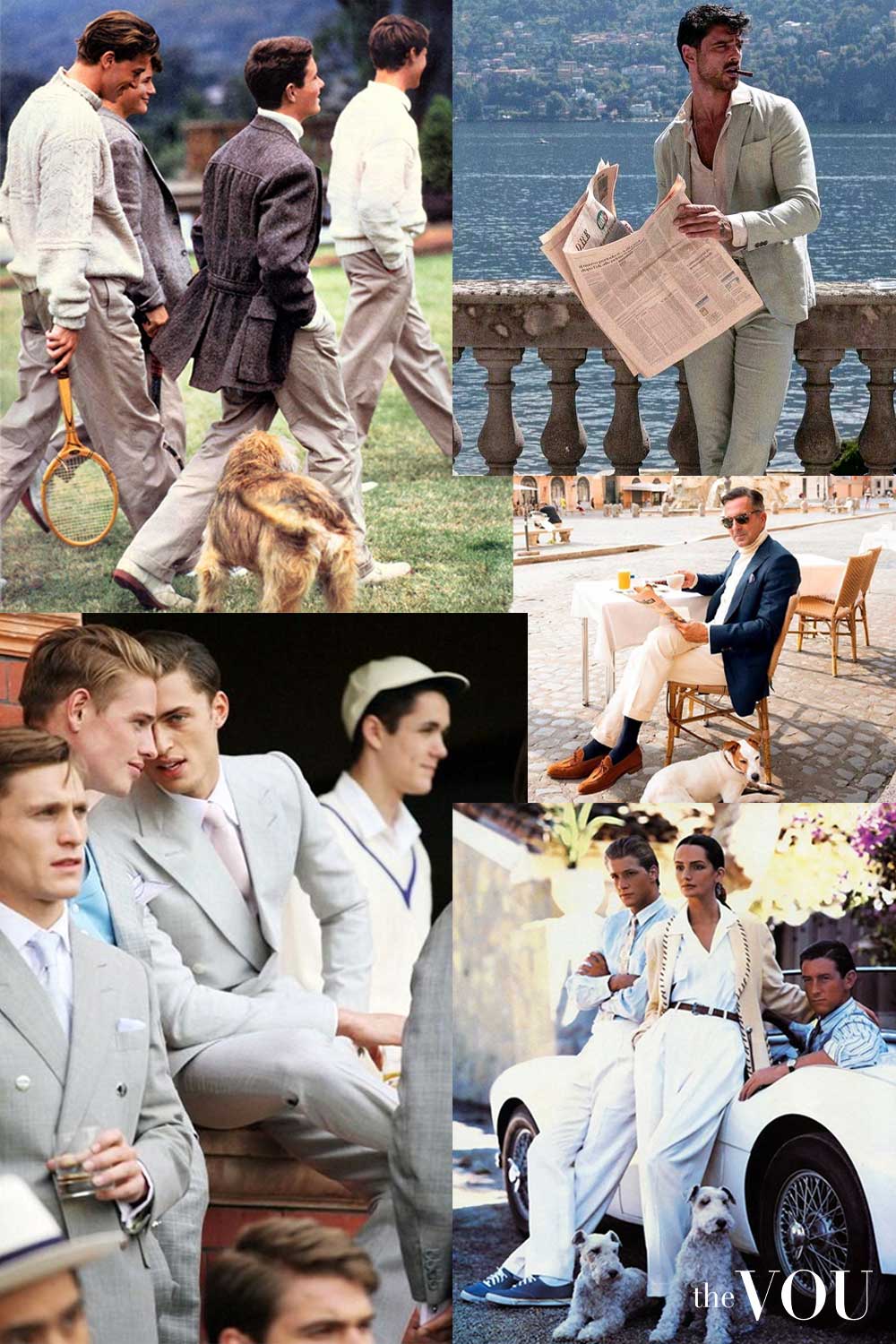
Old Money style is a contemporary label for dressing in classic tailoring, collegiate, country and leisure clothes with quiet colours, little branding and good fit.
This guide covers where the look comes from and how to wear it today, such as:
How the label relates to preppy, Ivy, Sloane Ranger and BCBG dressing
What Beau Brummell, sprezzatura and mid-century leisurewear contributed
Fit checks for suits, blazers, Oxford shirts, chinos, knitwear and coats
Which shoes suit business, smart-casual and summer outfits
Four complete outfits for business, weekends and summer events
and many more!
The clothes can look polished, but they cannot show anyone’s wealth, ancestry or manners, and you do not need any particular background to wear them.
Key Points
01Old Money is a recent clothing label drawing on several older traditions, not a single historical style.
02Fit comes first: shoulders, collar, sleeve length and trouser hem matter more than the label or price.
03Navy, grey, camel, cream, brown and olive make an easy base, with colour added through ties, knits or pocket squares.
04Start with a navy blazer, an Oxford button-down, chinos, grey flannels and brown loafers, then add a suit, knitwear and an overcoat as you need them.
The Old Money style is a contemporary name for a way of dressing built on classic tailoring, collegiate clothes, country clothing and relaxed leisurewear.
It draws on several traditions, from Savile Row and American campus outfitters to the soft Neapolitan tailoring of southern Italy.
This guide explains where those clothes come from, what each garment should look like and how to fit it, which shoes and accessories go with them, and how to put complete outfits together.
The clothes can look polished and well chosen, but they cannot prove wealth, ancestry, manners or taste, and you do not need any particular background to wear them.
What does Old Money mean?
“Old money” is an established English phrase for families who have been rich for a long time, as distinct from people who made their money recently.
As a clothing label, “Old Money style” became popular on social media in the early 2020s, used for outfits that look restrained, well kept and traditional rather than new and heavily branded.
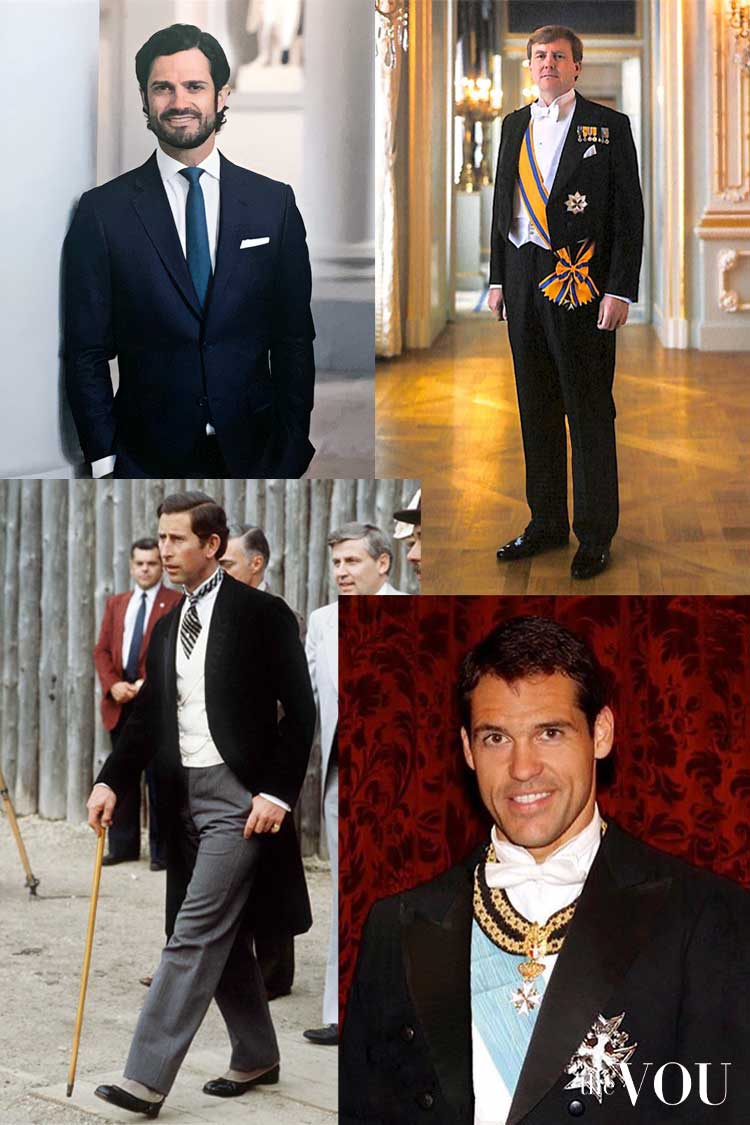
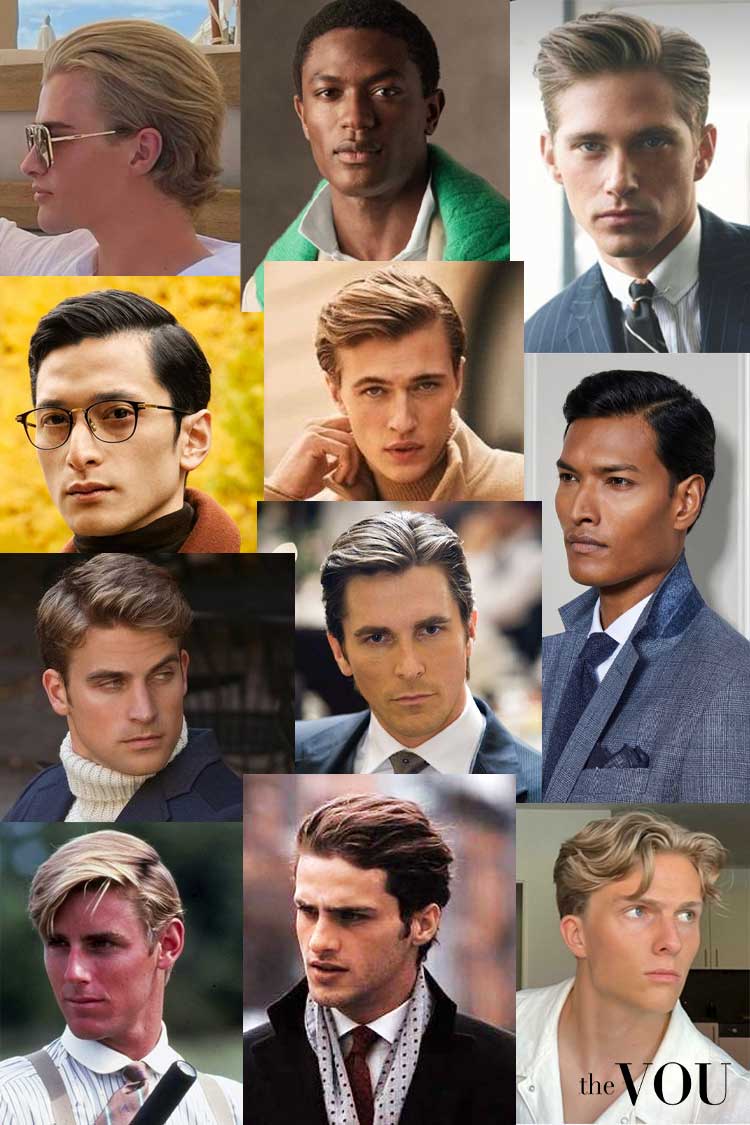
Photographs of royal and aristocratic men are often used to illustrate the look, as in the collage above, but they show formal and ceremonial dress for specific occasions rather than a single family style.
The label is best understood as a group of fashion styles that share a preference for quiet colour, natural-looking fabrics and good fit.
British, American and French versions
Writers often trace the look to European court and aristocratic dress, in periods when garments were openly used to show rank.
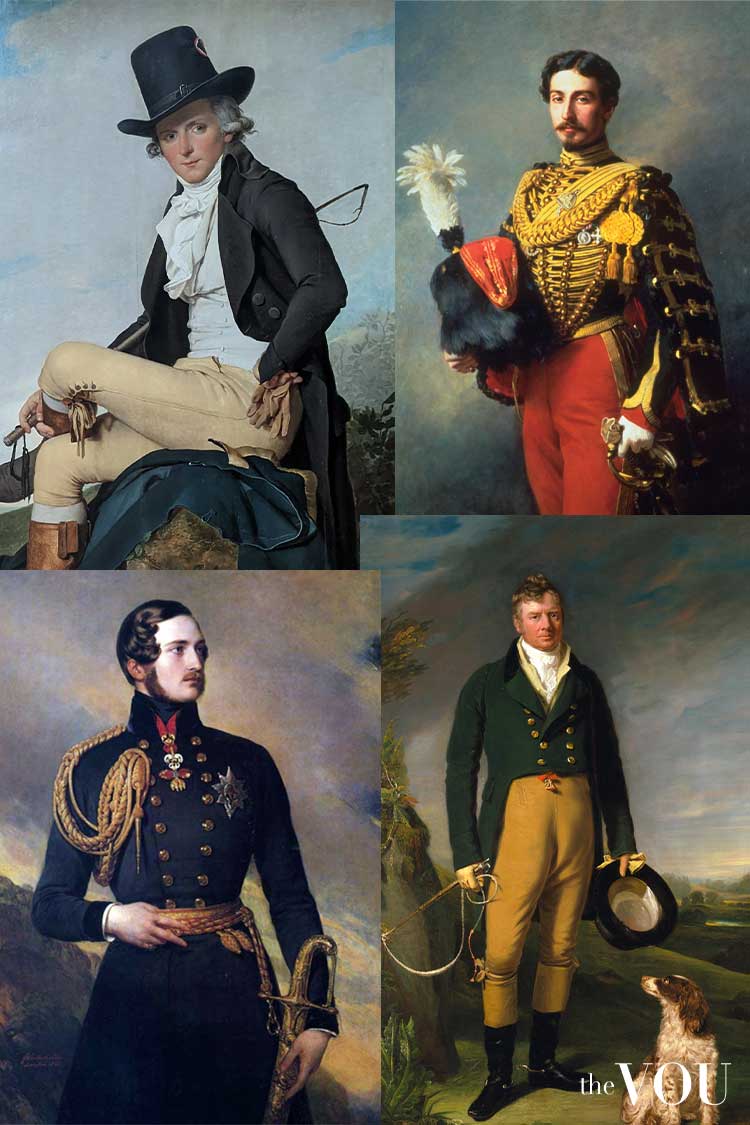
Today the related looks go by different names: American preppy, the British Sloane Ranger look and the French BCBG style.
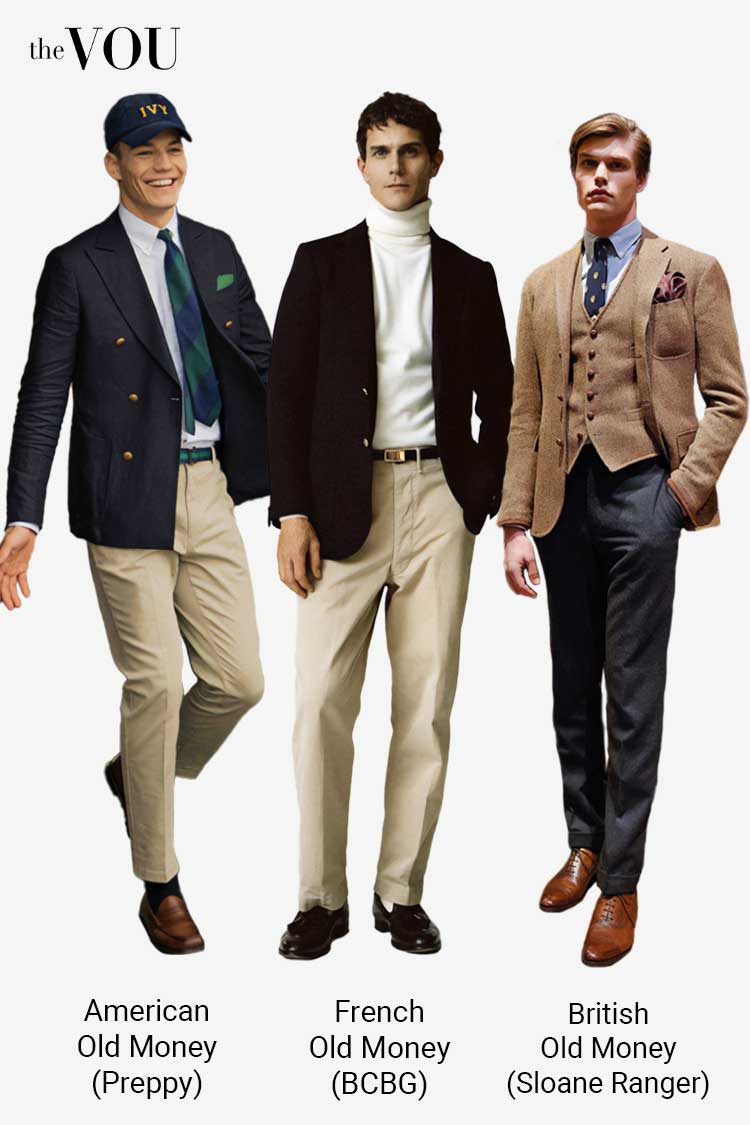
The American version leans on blazers, chinos and loafers, the French version on simple dark tailoring with roll-necks, and the British version on tweed and country tailoring, although each one borrows from the others.
A short history of the clothes behind the look
None of the periods below created an “Old Money style” as such, but each one shaped garments that the label uses today.
The Regency period and Beau Brummell
Fashionable British menswear of the Regency period, roughly the first decades of the nineteenth century, moved away from the embroidered silks of the previous century towards plainer cloth and close cut.
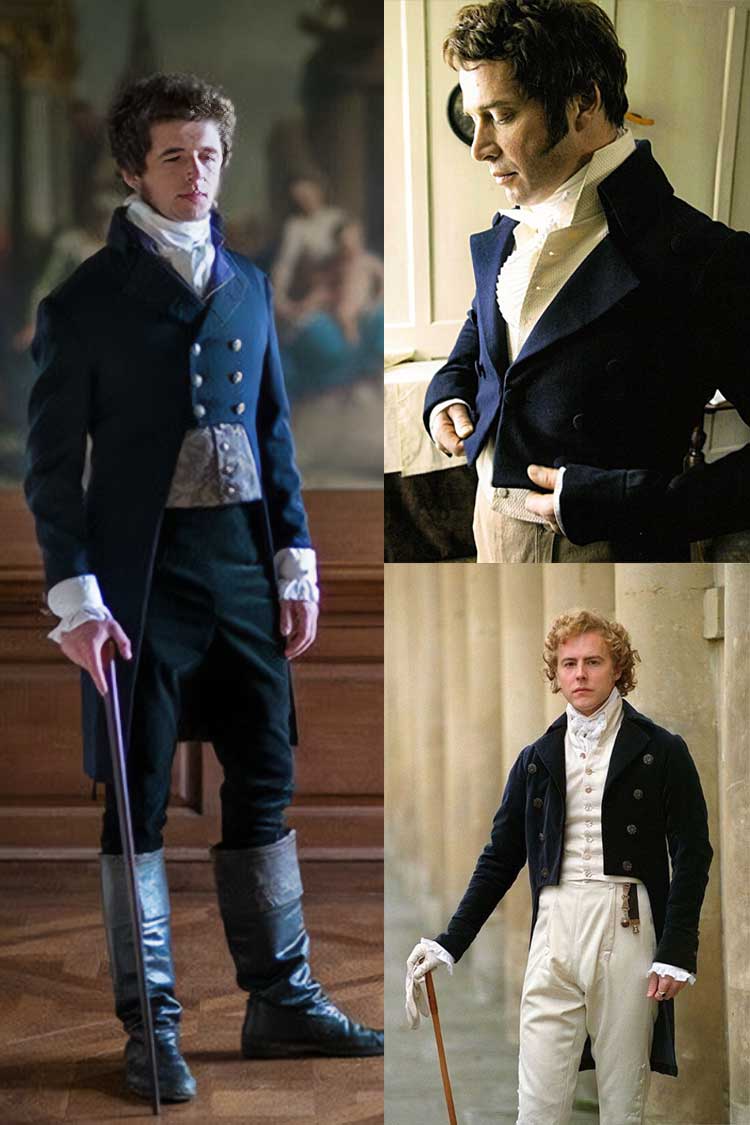
George “Beau” Brummell (1778 to 1840), a friend of the Prince of Wales who later became Prince Regent and George IV, is the figure most associated with that change.
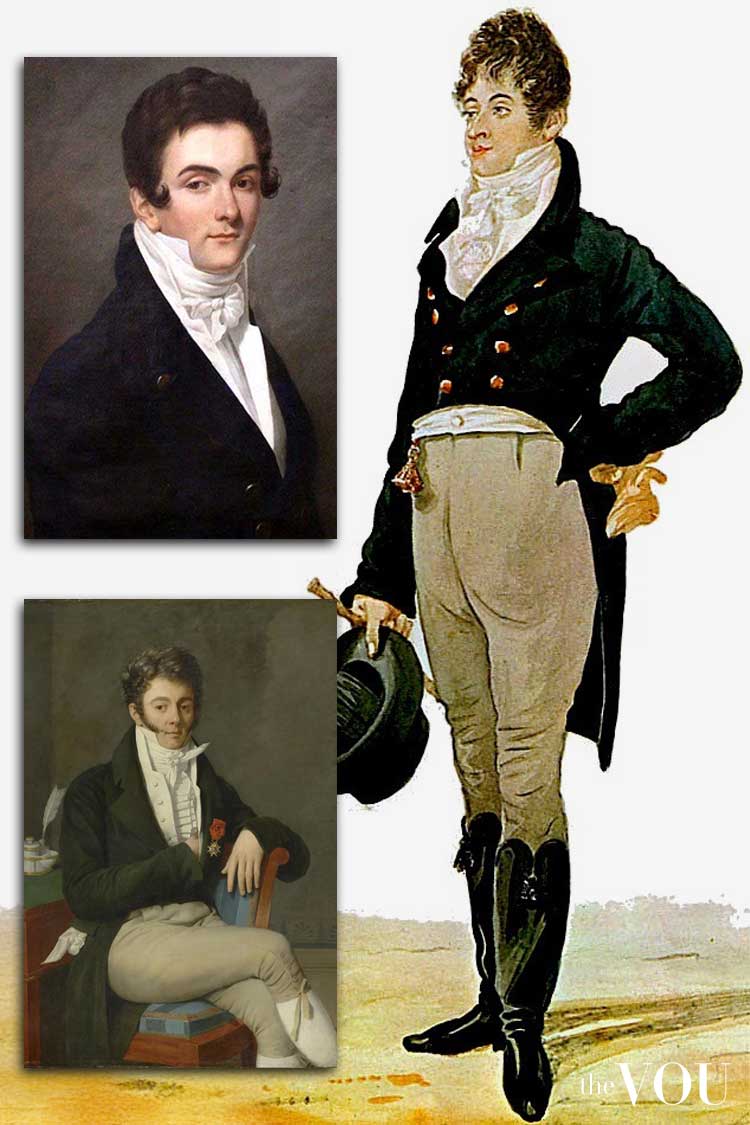
His influence on men’s dress is usually summed up as a well-cut dark blue coat, buff trousers or pantaloons, a clean white linen shirt and cravat, and polished boots.
He did not wear a matching tailored suit in the modern sense, but his preference for close fit, a restrained colour palette and careful grooming is often credited as a foundation of later menswear.
Industrial production and ready-made clothing
Mechanised spinning and weaving made textiles cheaper during the nineteenth century, and the sewing machine changed how garments were made.
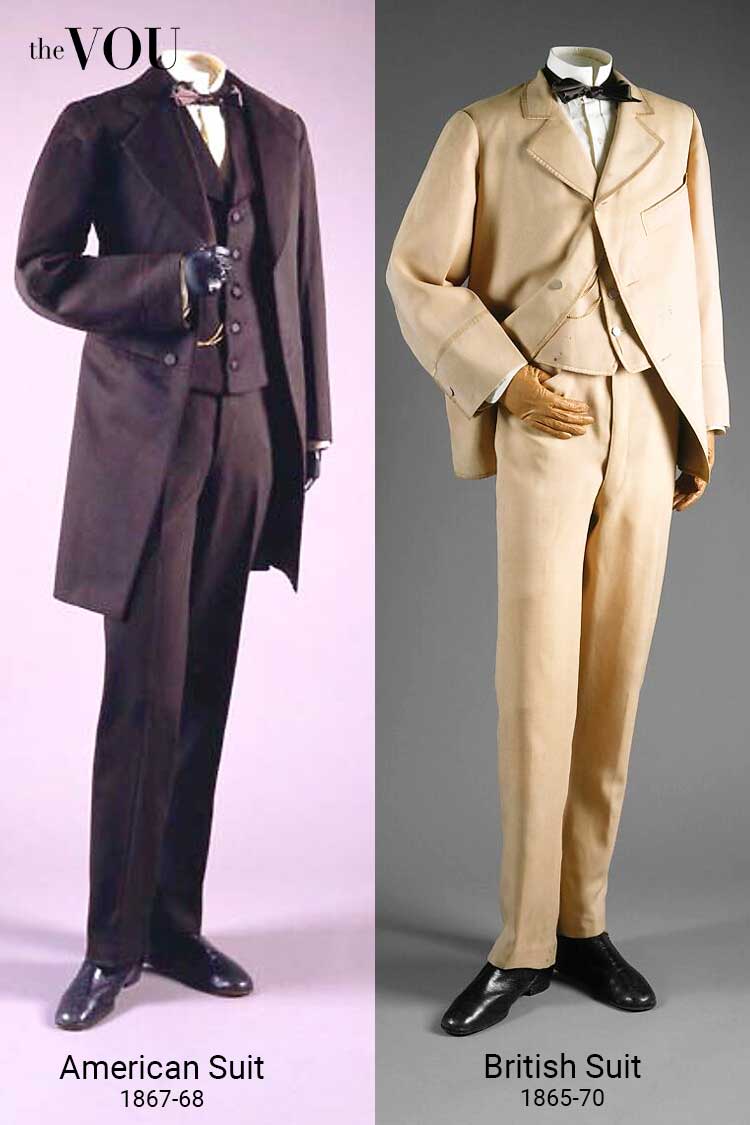
Elias Howe patented his sewing machine in 1846, Isaac Singer was selling a practical machine from 1850, and the value of ready-made clothing produced in the United States rose sharply in the following decade.
Wealthier men continued to order bespoke clothing, while clothing made in standard sizes and ready-to-wear suits spread through the late nineteenth and early twentieth centuries.
Both routes still exist, and our guide to what tailoring is explains how bespoke, made-to-measure and off-the-peg clothes differ.
Twentieth-century leisure and country clothes
Through the twentieth century, fashion for men became steadily more relaxed, and sports and country clothes moved into everyday dress.
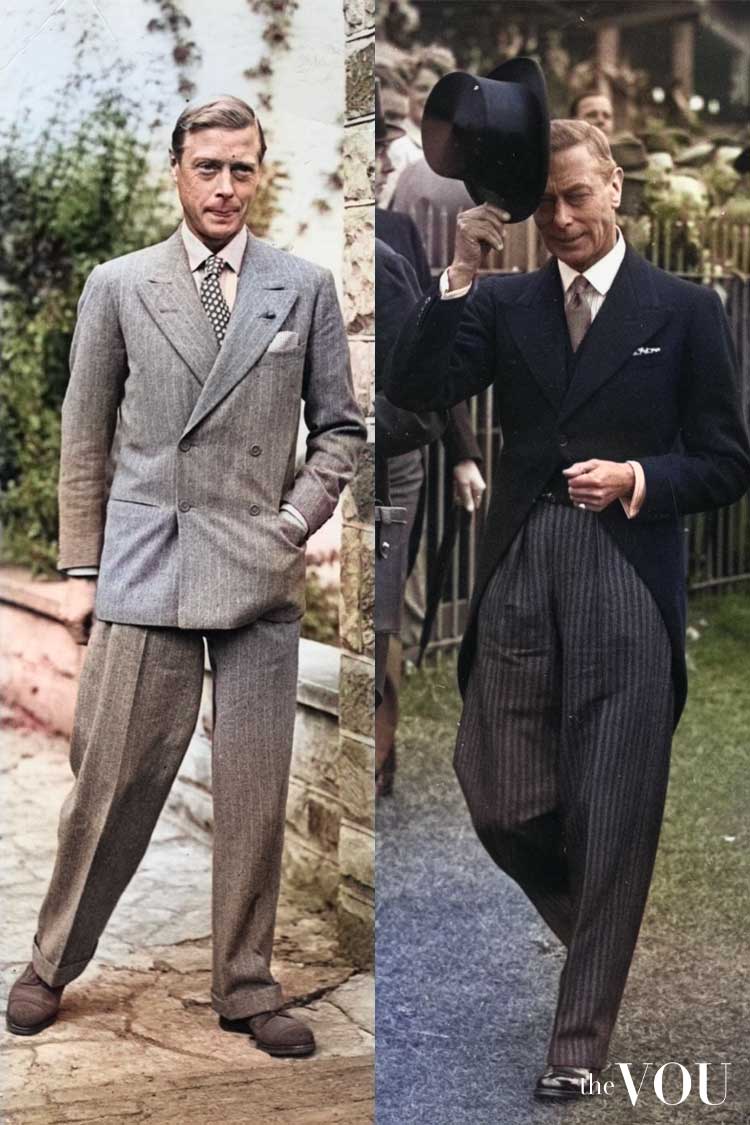
Golf, tennis, sailing and shooting all left garments behind, from the knitted polo shirt to the tweed jacket, and these now make up the casual Old Money wardrobe.
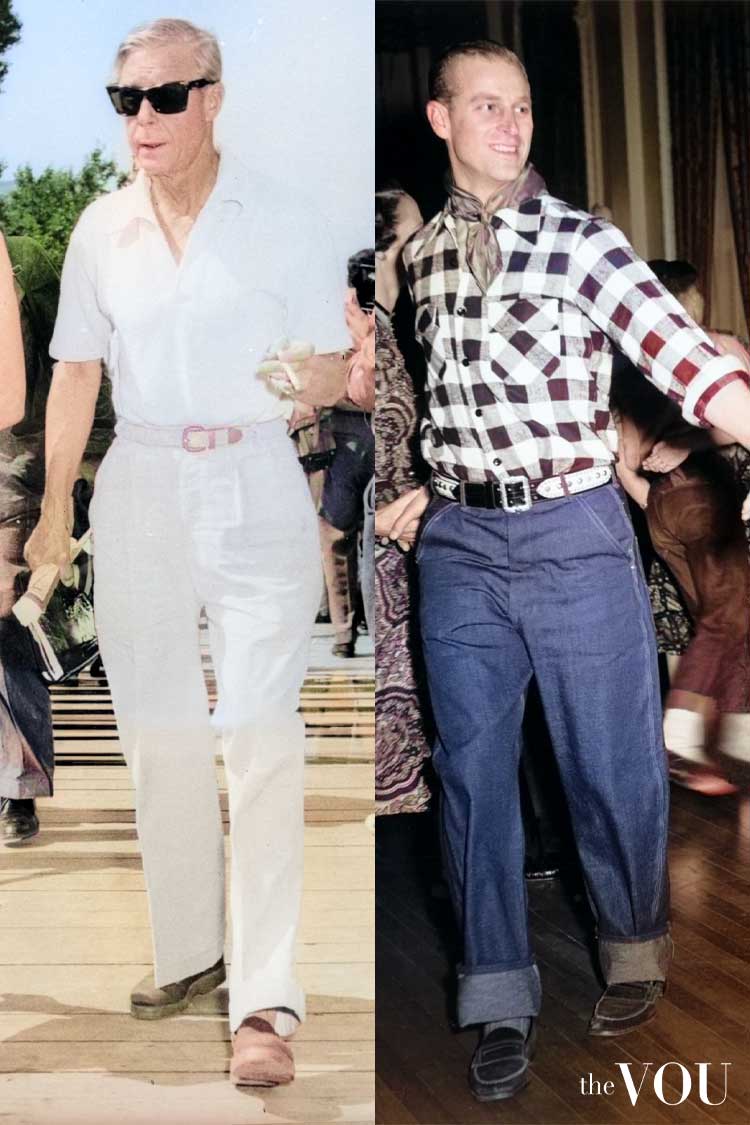
The result is a wardrobe that mixes formal tailoring with more relaxed attire, as listed in our Old Money wardrobe essentials guide.
Clubhouse and resort clothes from the same tradition are covered in our country club outfit ideas.
Ivy League and preppy
In the United States, the clothes worn at universities such as Harvard, Yale and Princeton in the first half of the twentieth century became known as Ivy League style, sold by campus outfitters such as J. Press and Brooks Brothers.
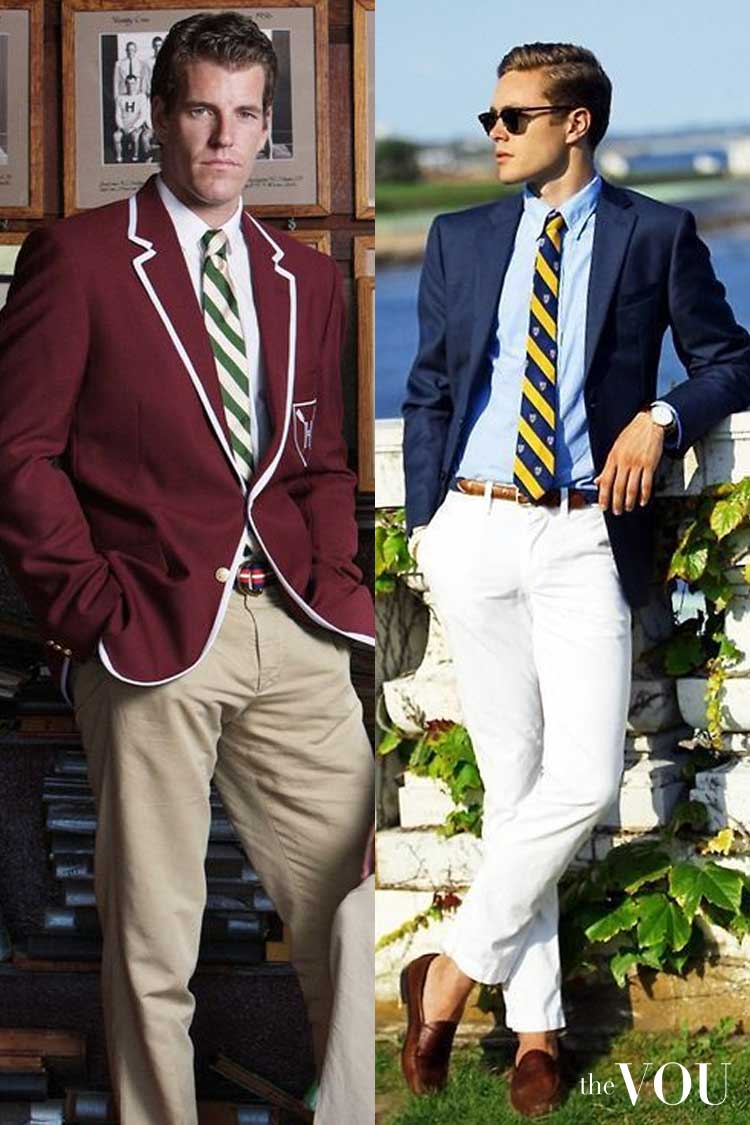
Its preppy reinterpretations, with more colour and casual sportswear, spread widely from the 1970s and 1980s, and our guide to preppy origins covers that history in detail.
Navy blazers, sports coats, polo shirts and loafers from this tradition are central to the American version of the Old Money look and overlap with what is now called quiet luxury.
Sprezzatura
Sprezzatura is an Italian word introduced by Baldassare Castiglione in The Book of the Courtier (Il Cortegiano), first published in Venice in 1528.
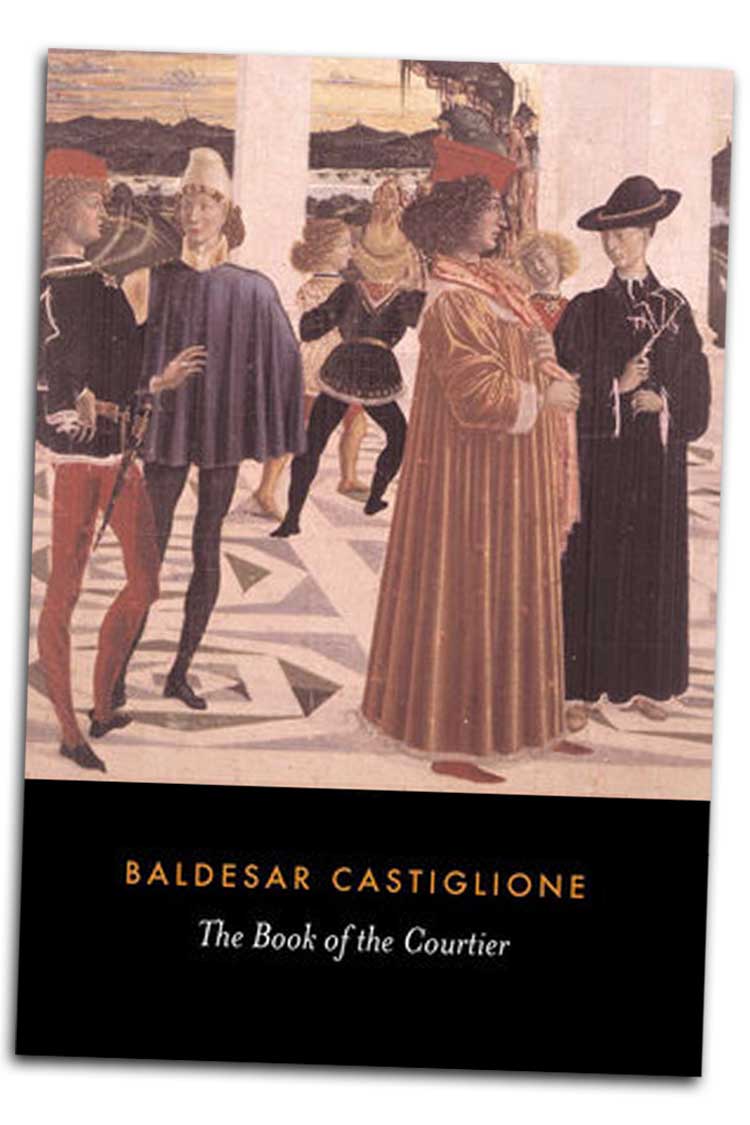
In George Bull’s translation, Castiglione advises the courtier to “practice in all things a certain nonchalance (sprezzatura) which conceals all artistry and makes whatever one says or does seem uncontrived and effortless”.
Castiglione was writing about conduct at court, not clothing, but menswear writers now use the word for an outfit that is carefully chosen yet worn without fuss, and it is often linked to the Old Money aesthetic.
In practice that can mean a pocket square folded loosely rather than pressed flat, an unbuttoned button-down collar, or leather loafers that show honest wear.
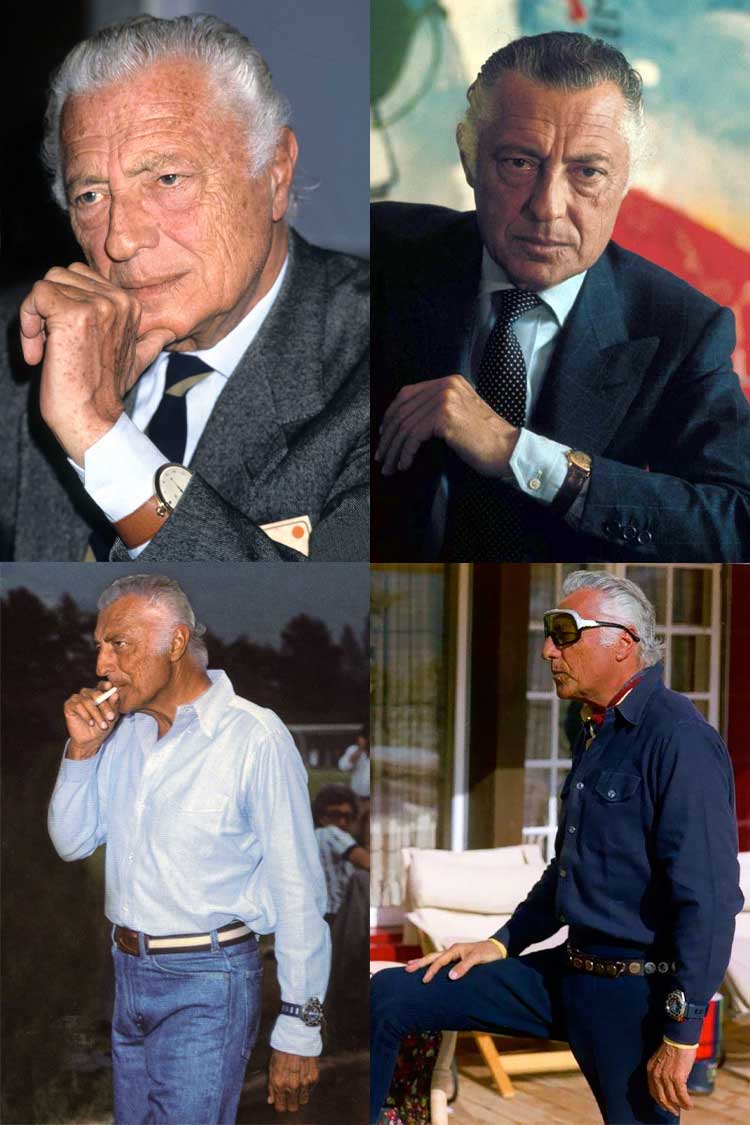
Gianni Agnelli, the head of Fiat, is the figure most often used to illustrate the idea, and he was frequently photographed with his watch strapped over the cuff and his button-down collar left open.
Sprezzatura is a matter of taste rather than a rule, and deliberately creased or mismatched clothes can look careless rather than relaxed, so start with garments that fit and add one relaxed detail at a time.
Old Money style on screen and in magazines
Film and television costume designers have helped fix the popular picture of the look, although several of the best-known characters are not “old money” in their own stories.
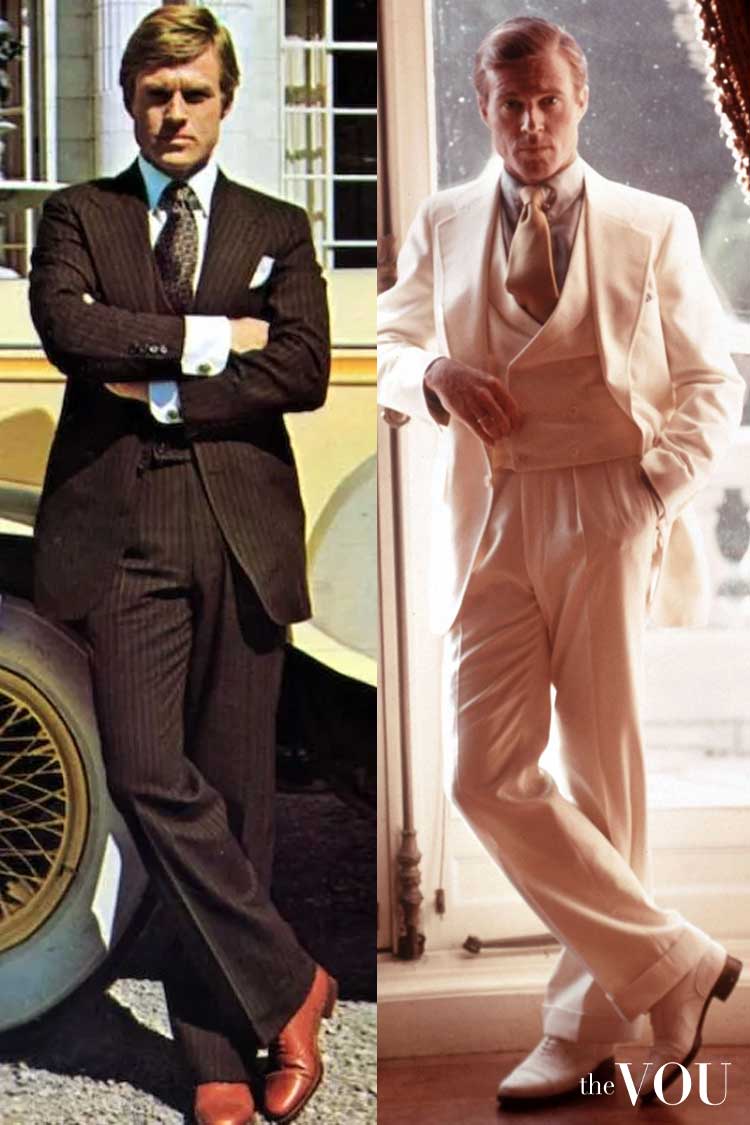
In F. Scott Fitzgerald’s novel The Great Gatsby, Jay Gatsby is the newly rich outsider set against old-money characters such as Tom Buchanan, and his clothes help him reinvent himself.
The 1974 film, with Robert Redford, had costumes by Theoni V. Aldredge and menswear supplied by Ralph Lauren, and the 2013 film with Leonardo DiCaprio was dressed by Catherine Martin with Brooks Brothers.
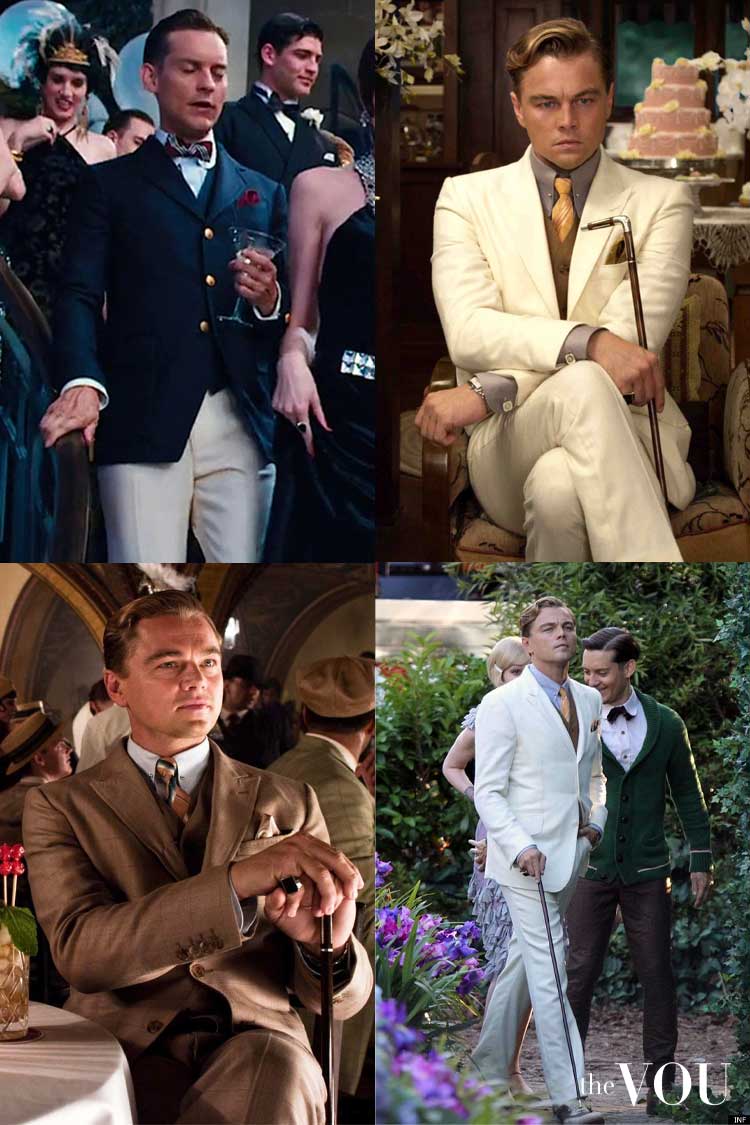
Both films are useful references for 1920s-inspired tailoring, such as pale summer suits and striped ties, rather than for everyday dressing.
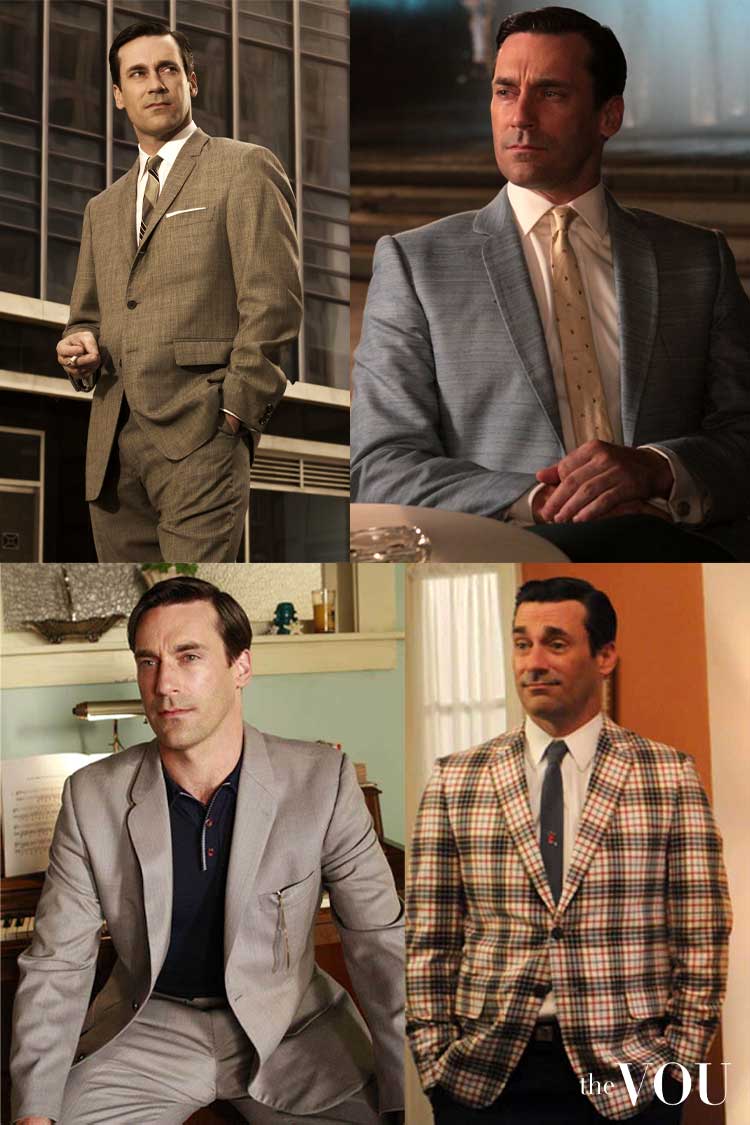
In Mad Men, set in a 1960s New York advertising agency, Don Draper is a man who has invented his own past, and Janie Bryant’s costumes dress him mainly in grey suits, white shirts and narrow ties.
The show is a good reference for mid-century American menswear, with its slim lapels, short hair and plain accessories.
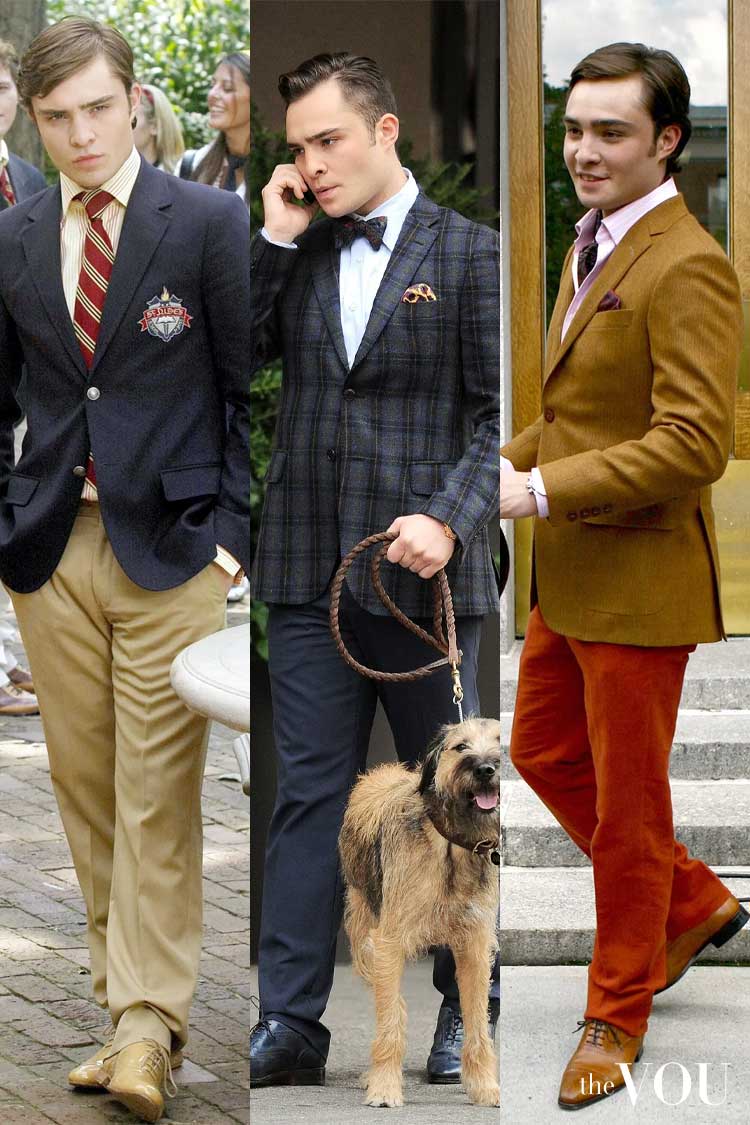
Chuck Bass in Gossip Girl, played by Ed Westwick, shows a younger and more colourful take on Old Money style for men, with crested blazers, bow ties, patterned jackets and bright trousers.
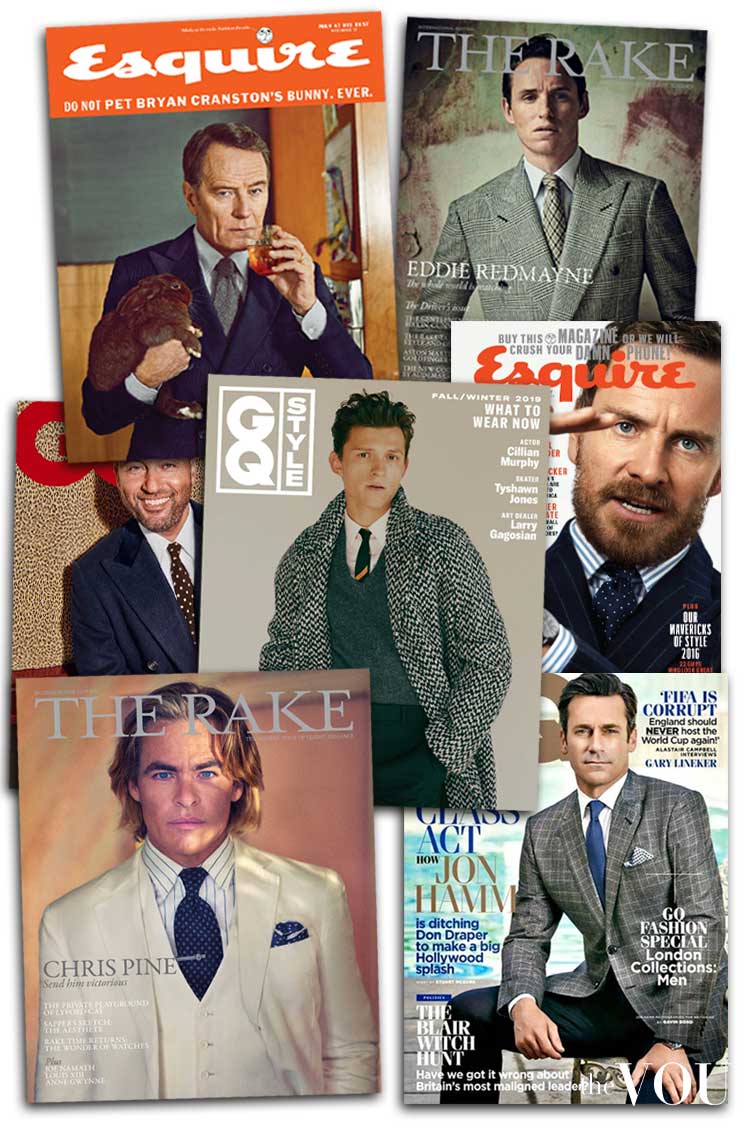
Men’s magazines such as GQ, Esquire and The Rake regularly feature tailored, traditional clothes, and the look also overlaps with equestrian clothing brands.
Typical sources range from the tailors of Savile Row to Ivy League clothing brands such as Brooks Brothers and Ralph Lauren.
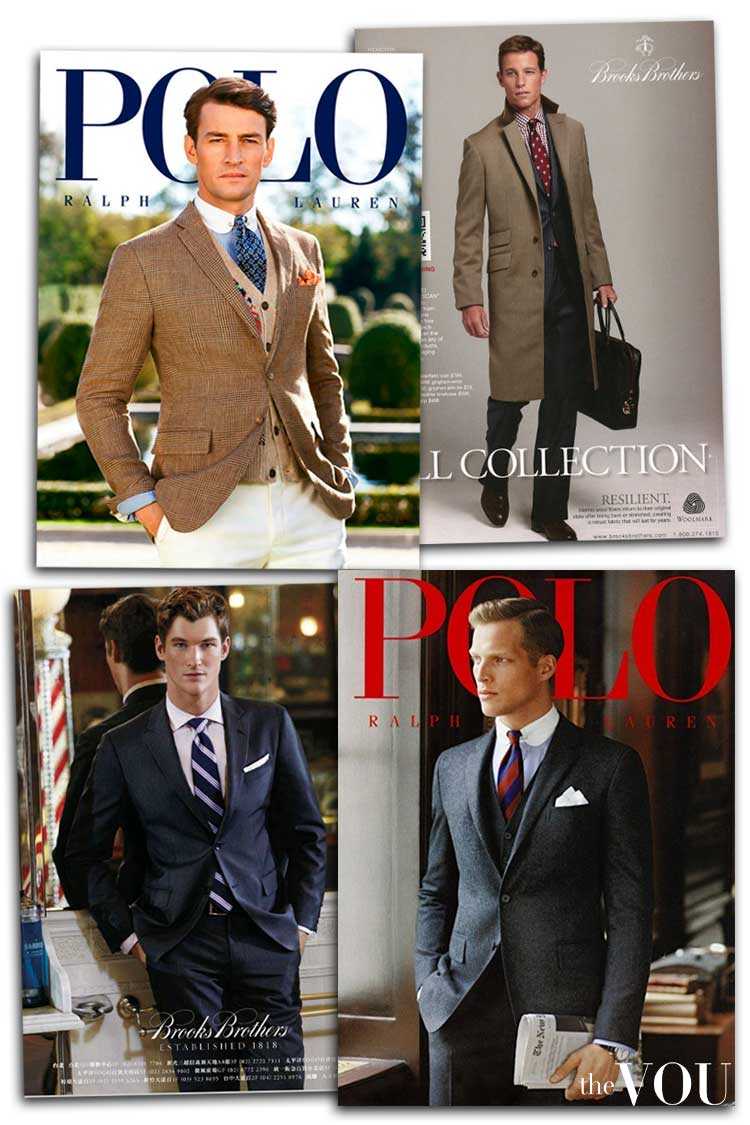
Ralph Lauren, who started his business with neckties in 1967, has built much of his brand on this kind of imagery, which has helped make the look available far beyond the families it refers to.
The navy blazer, the Oxford button-down shirt and the penny loafer are the garments most often associated with the look, and all of them are easy to find at many prices.
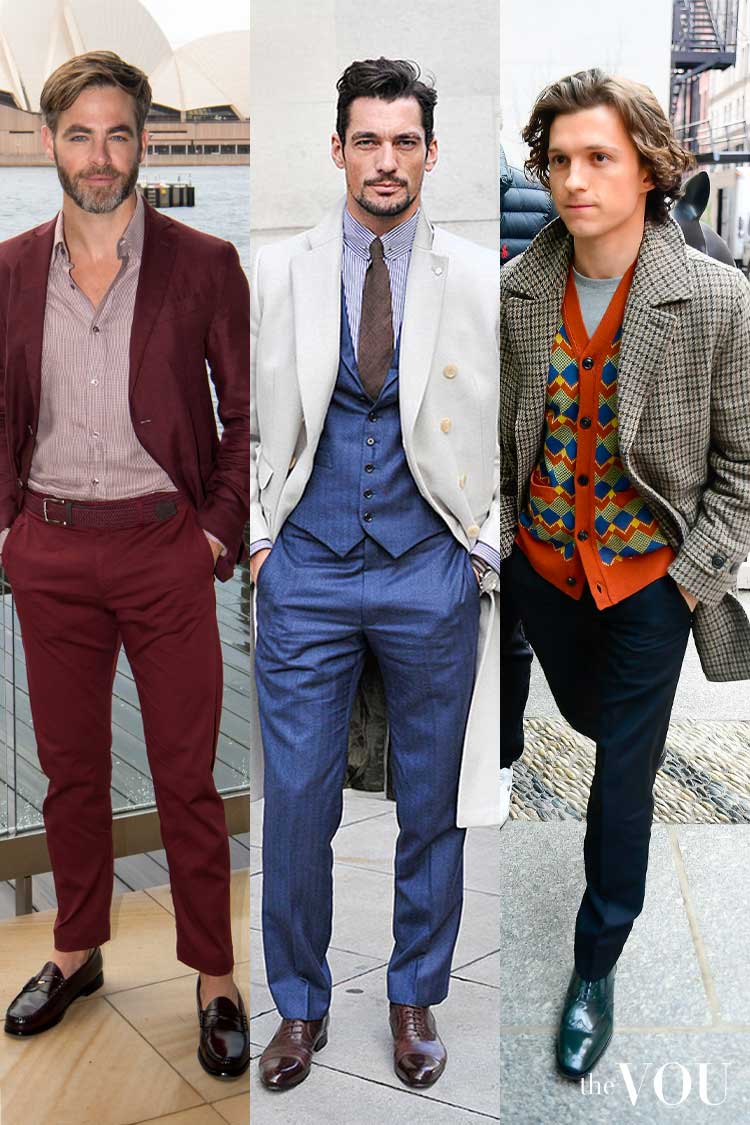
Discussions of the look often contrast it with “new money” dressing, meaning large logos and obviously new luxury goods, but that contrast describes clothes, not the people wearing them.
The Old Money aesthetic in practice
The Old Money aesthetic favours quiet patterns, soft colours and little or no visible branding.
A typical example is a navy or charcoal suit with a plain white shirt and a muted silk tie.
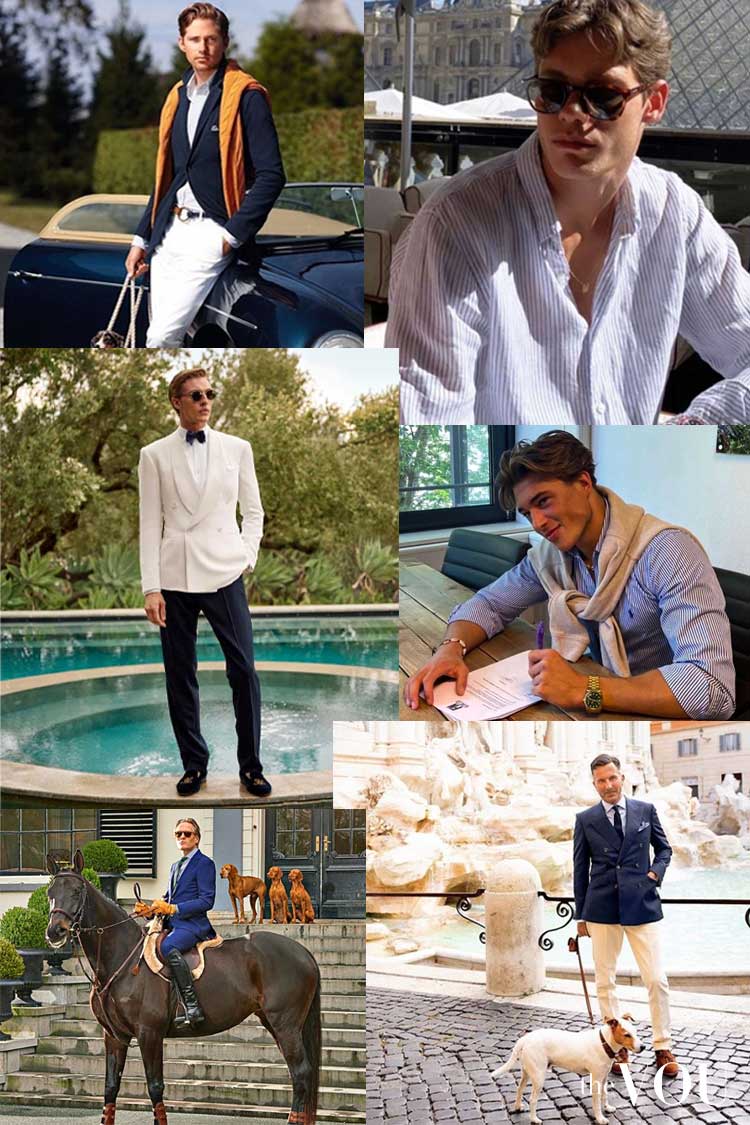
These working principles describe the look; treat them as suggestions rather than rules.
Scroll horizontally to see all columns →
| Principle | What it means in practice |
|---|---|
| Fit first | A well-fitting jacket and correctly hemmed trousers matter more than the label inside them. |
| Fewer, better-kept clothes | Buy what you will wear often, then brush, press, repair and resole it so it keeps looking good. |
| Quiet detail | Plain cloth, small checks, herringbone and stripes, with logos small or absent. |
| Classic shapes | Jackets, trousers and coats in proportions that have changed slowly over the decades. |
| Muted colour with accents | Navy, grey, camel, cream, brown and olive as a base, with colour in a tie, pocket square, knit or socks. |
| Personal accessories | A watch, cufflinks or a pen you have owned for years, whether inherited, bought new or bought second-hand. |
Fit versus the silhouette you choose
Fit and silhouette are different decisions.
Fit is about whether a garment sits correctly on you: jacket shoulders that end where your shoulders end, a collar that sits against your shirt collar, sleeves that show a little shirt cuff and trousers that do not pull or pool.
Silhouette is the overall shape you choose, such as a soft Neapolitan jacket or a structured English one, high-rise pleated trousers or lower flat-fronted ones, and a full or slim leg.
Any of these silhouettes can look right in an Old Money outfit if it fits well, so choose the shape you find comfortable and like the look of, and use a tailor for the fit.
Old Money wardrobe essentials
The look is easiest to build as a small capsule wardrobe of garments that combine with each other.
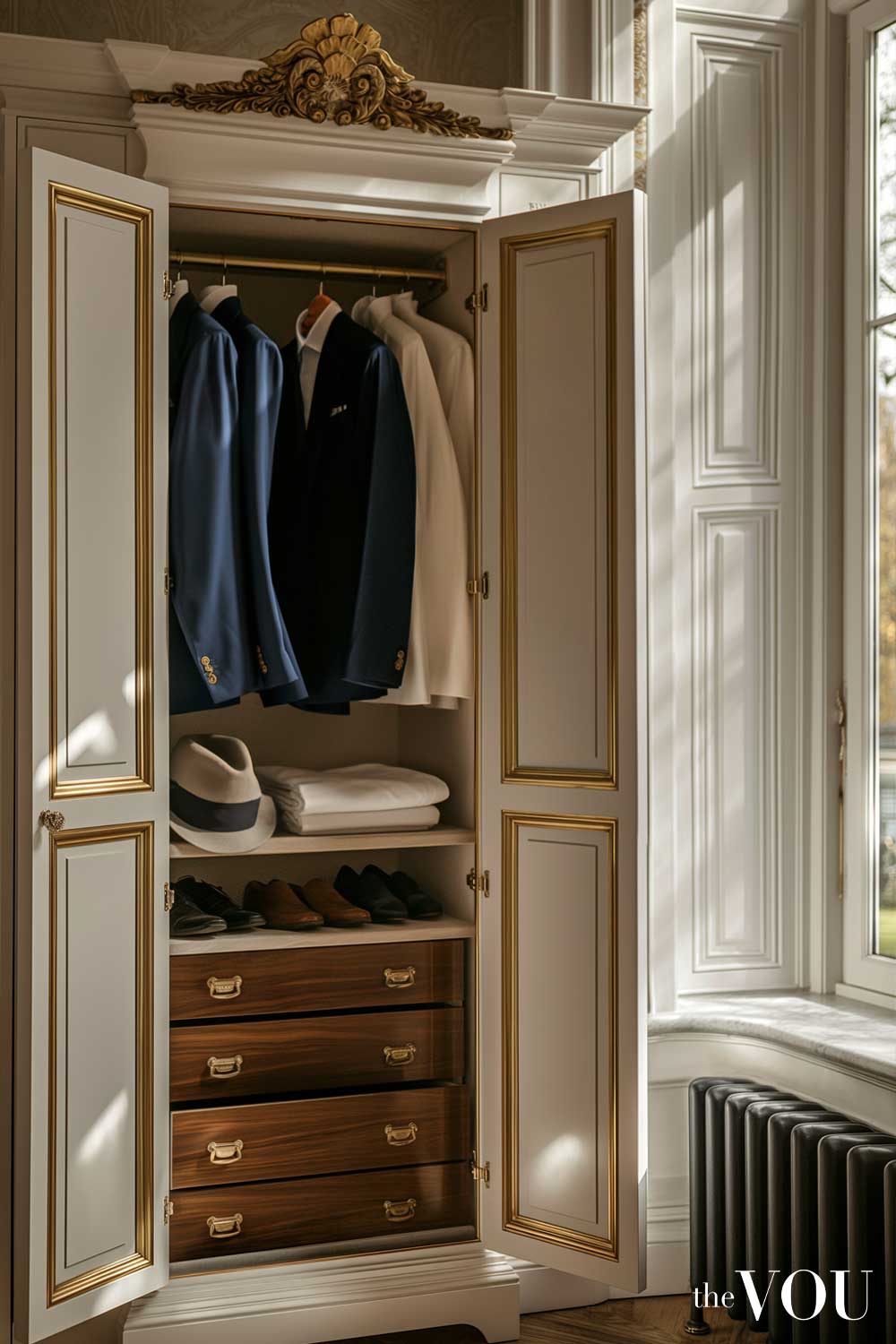
The table gives an overview, and each garment is covered in more detail below.
Scroll horizontally to see all columns →
| Garment | What it does |
|---|---|
| Tailored suit | Business and formal occasions, usually in navy, charcoal or mid-grey. |
| Blazer or sports coat | Smart-casual and semi-formal dress; the navy blazer and the tweed jacket are the classic choices. |
| Cashmere and wool knitwear | V-necks and crew necks in camel, navy, grey or cream for layering. |
| Oxford button-down shirt | The everyday shirt, in white, light blue or fine stripes, with or without a tie. |
| Chinos | Casual trousers in khaki, stone, navy or olive. |
| Tweed jacket | Cold-weather and country wear. |
| Overcoat | Winter outerwear in wool or wool and cashmere, long enough to cover a suit jacket. |
| Polo shirt | Warm-weather casual wear, usually in cotton piqué. |
| Flannel trousers | Soft wool trousers for autumn and winter, often in grey. |
The labels named under each garment are examples of makers associated with the look, not a required shopping list, and price or label does not guarantee fit, comfort or durability.
Tailored suits
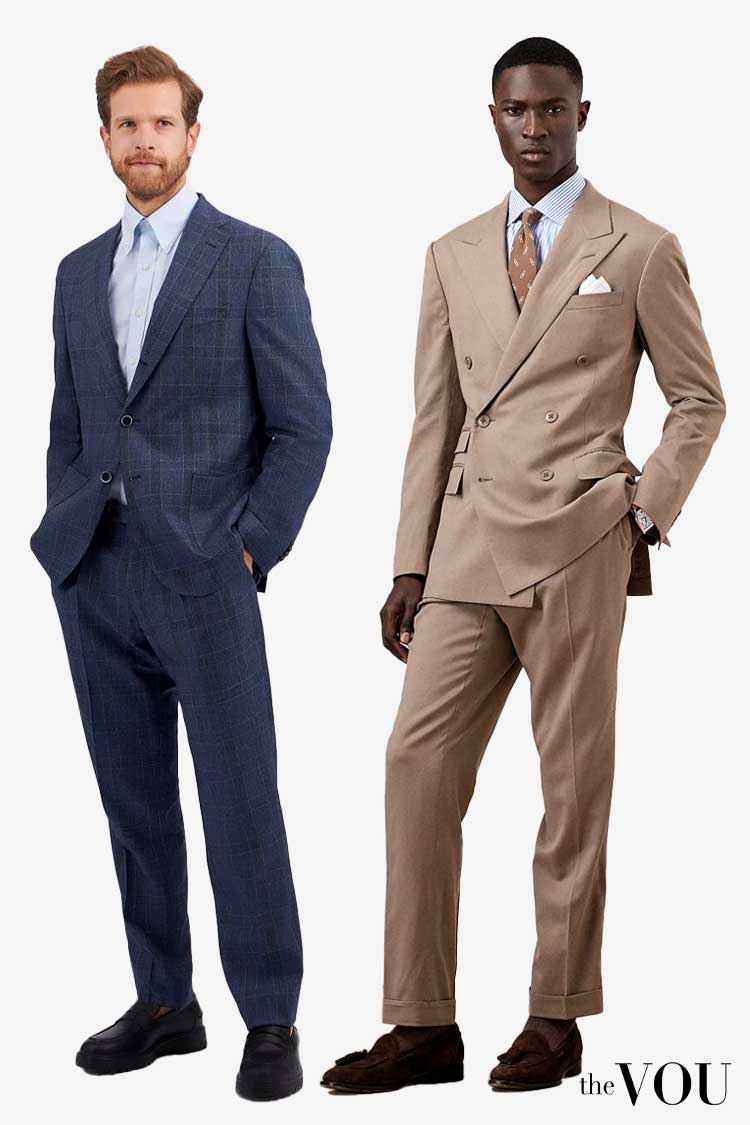
A suit in the Old Money manner is usually plain or quietly patterned, and judged on fit and cloth rather than on fashion details.
Many of the classic menswear brands offer this kind of suit.
Scroll horizontally to see all columns →
| Feature | What to look for |
|---|---|
| Jacket | Single-breasted with two buttons (or three rolled to two) is the most versatile; double-breasted reads as slightly dressier. |
| Fit check | Shoulder seams end at your shoulders, the collar sits against your shirt collar, the jacket covers most of your seat and about a centimetre (roughly half an inch) of shirt cuff shows. |
| Trousers | Flat-fronted or pleated, as you prefer; hem them to touch the shoe with a slight break or none. |
| Cloth | Worsted wool for most of the year; flannel or heavier wool for winter; linen, cotton or open-weave wool for heat, accepting that linen creases. |
| Colours and patterns | Navy, charcoal and mid-grey first; then subtle chalk stripes, herringbone or small checks. |
| Occasions | Dark plain suits for business and formal occasions; lighter greys and blues for daytime social events; beige, light grey or pale blue linen or tropical wool for summer events outdoors. |
Wool cloth is sometimes labelled “Super 100s” to “Super 150s” and above, which describes how fine the wool fibre is rather than how hard-wearing the cloth will be.
Labels to look at: American makers such as Brooks Brothers and Ralph Lauren; Savile Row tailors such as Gieves & Hawkes, Henry Poole and Huntsman for bespoke; and Italian houses such as Canali, Brioni and Ermenegildo Zegna, which tend towards a softer cut.
Blazers and sports coats
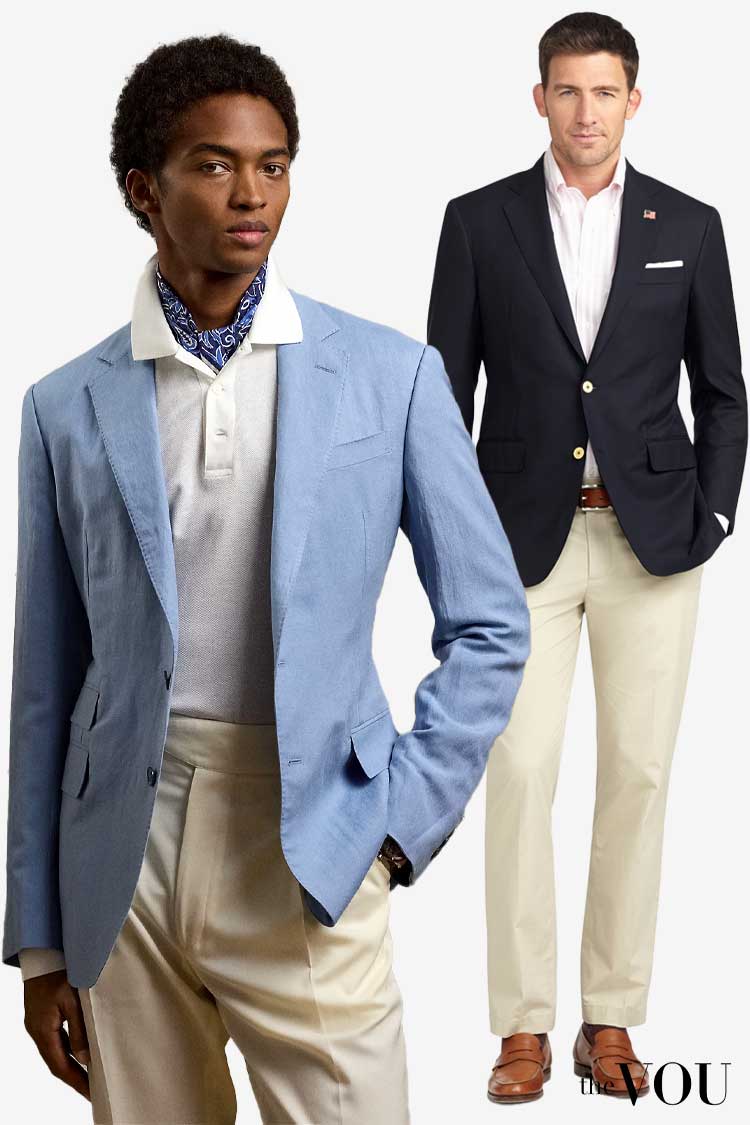
A blazer or sports coat is the most useful jacket in casual Old Money outfits because it works with flannel trousers, chinos and dark jeans.
Unlike a suit jacket, it is sold without matching trousers, so you can wear it with different trousers.
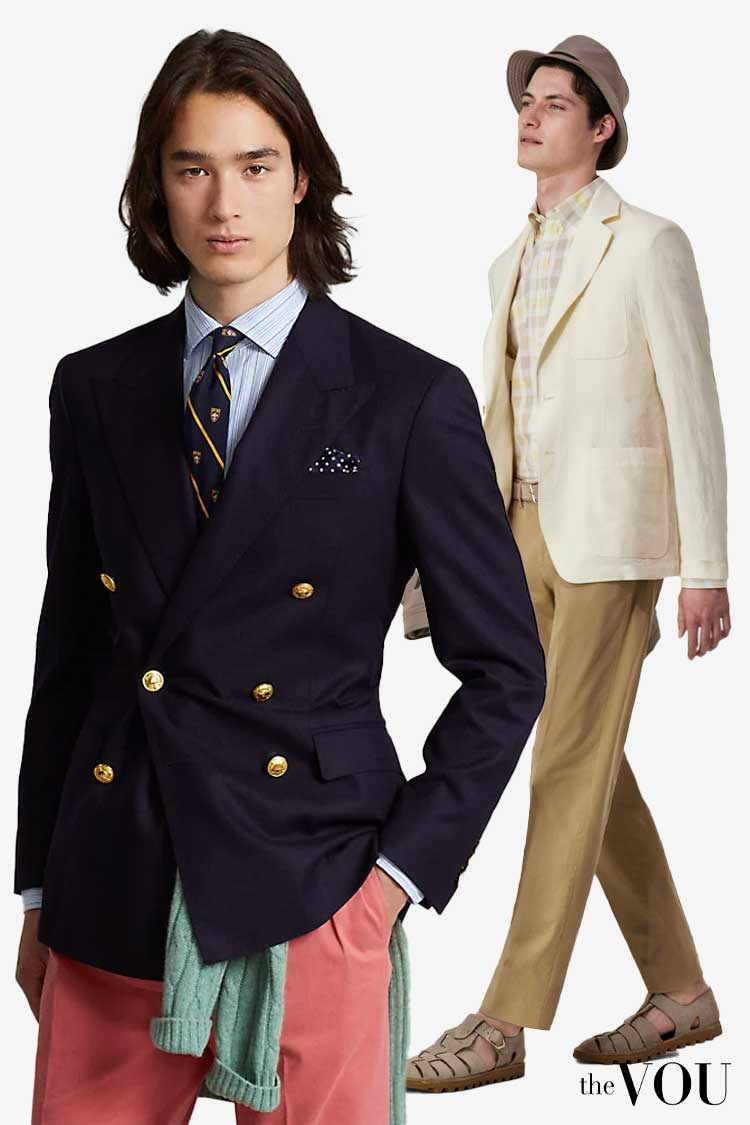
Our Old Money blazer guide covers more combinations, but three simple ones are a navy blazer with grey wool trousers, with light chinos in summer, or with dark jeans for a smart-casual evening.
Scroll horizontally to see all columns →
| Feature | Single-breasted | Double-breasted |
|---|---|---|
| Front | One row of two or three buttons; the easiest to dress up or down. | Two rows of buttons that overlap at the front; a more formal look with naval roots. |
| Lapels | Usually notched. | Usually peaked. |
| Pockets | Flap pockets for a dressier look; patch pockets for a more casual one. | Flap or jetted pockets. |
| Cloth and colour | Wool, cotton or linen blends; navy and grey first, brighter colours for summer. | Wool or wool blends in navy, dark green or a quiet stripe. |
| Wear it to | Business-casual offices, informal events and weekends. | Business meetings, celebrations and evening events. |
| Fit check | Fastens without pulling across the front. | Keep it fastened when standing, so check the overlap lies flat. |
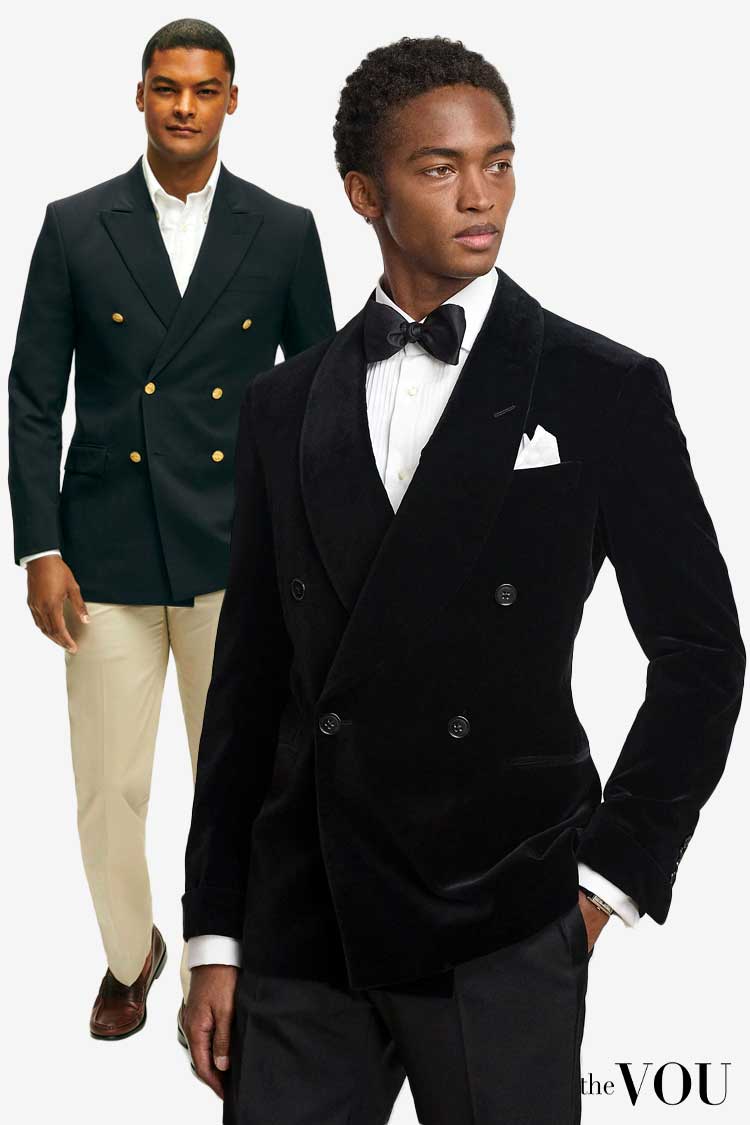
The black velvet double-breasted jacket in the picture above is an evening dinner jacket worn with a bow tie, which is a dressier option than a blazer.
Labels to look at: Ralph Lauren, Brooks Brothers and Canali.
Cashmere and wool knitwear
A plain sweater worn over a collared shirt is one of the simplest Old Money layers.
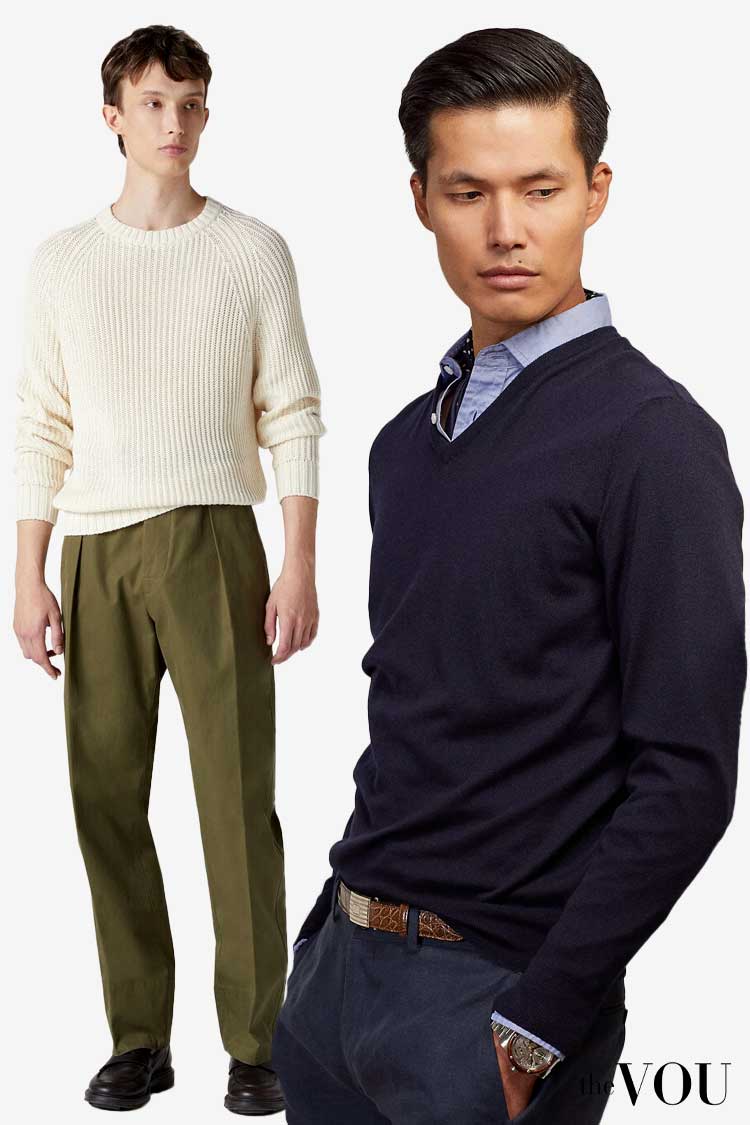
Scroll horizontally to see all columns →
| Feature | What to look for |
|---|---|
| Fit check | Close enough to wear under a jacket, loose enough not to cling over a shirt; ribbed cuffs and hem should hold their shape. |
| Neckline | A V-neck shows a tie; a crew neck looks cleaner on its own or over a collar. |
| Fibre | Cashmere is soft and light; lambswool, merino and Shetland wool are other good choices; a blend with silk or wool can add strength, so read the fibre label. |
| Colours and patterns | Camel, navy, charcoal, light grey and cream; argyle or simple stripes for something less plain. |
| Wear it with | Chinos or jeans at the weekend; an Oxford shirt and blazer for business-casual; flannel trousers in the evening. |
Longer cashmere fibres tend to pill less, but you usually cannot see fibre length on a label, so judge the knit by its density and how it recovers when gently stretched.
Labels to look at: Loro Piana, Brunello Cucinelli, Ralph Lauren and Brooks Brothers.
Oxford button-down shirts
The Oxford cloth button-down shirt sits between casual and formal: it looks right with a blazer and tie and just as right with the sleeves rolled up.
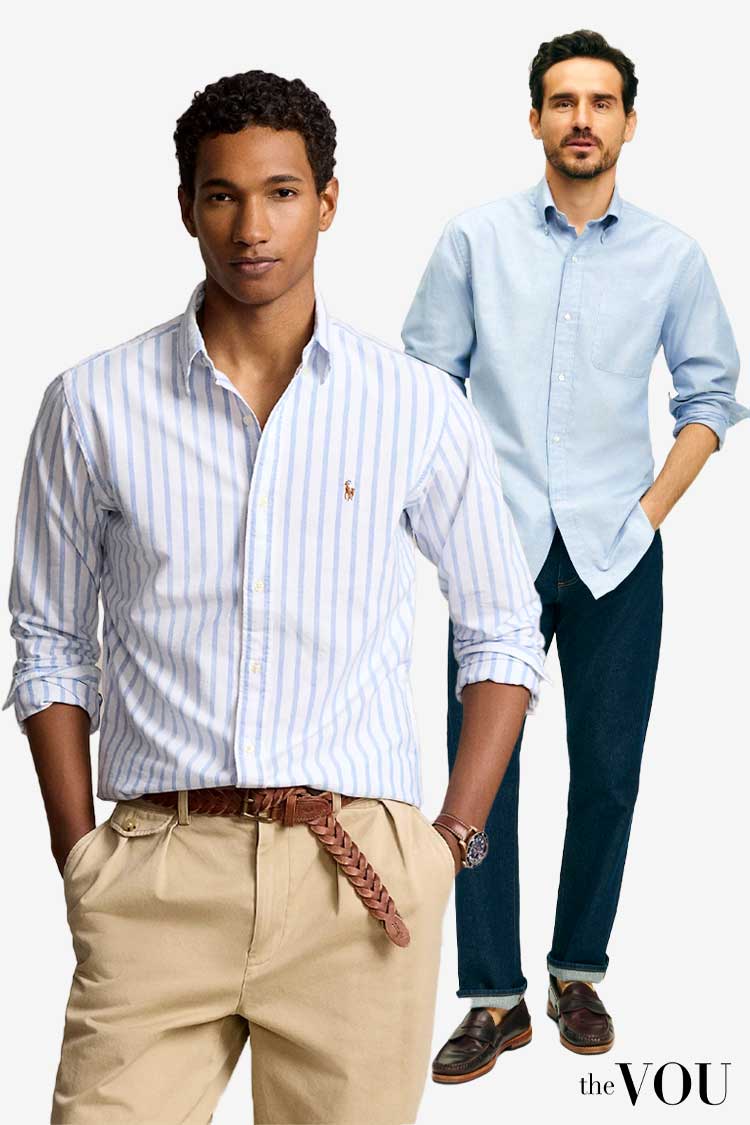
Scroll horizontally to see all columns →
| Feature | What to look for |
|---|---|
| Collar | Buttoned collar points with a soft roll; the defining detail. |
| Cloth | Oxford cloth is a cotton basketweave that is thicker and more textured than most dress shirts; pinpoint and royal Oxford are smoother and dressier. |
| Fit check | The collar closes without pinching, shoulder seams sit at your shoulders and there is room to move; a box pleat at the back helps. |
| Cuffs | Button barrel cuffs. |
| Colours and patterns | White and light blue first; then pink, fine stripes or quiet checks. |
| Wear it with | Chinos alone; a sweater or blazer for business-casual; tailored trousers and a sports coat when a suit is not needed. |
Brooks Brothers is generally credited with introducing the button-down collar to American shirts around 1900, after seeing collars buttoned down on English polo players’ shirts, and the shirt became a staple of Ivy League dress.
Labels to look at: Brooks Brothers, Ralph Lauren, J. Press and Thom Browne, a designer label with a modern take on the look whose shirts have details such as grosgrain trim.
Chinos
Chinos began as hard-wearing cotton twill military trousers and are now the standard casual trouser of the look.
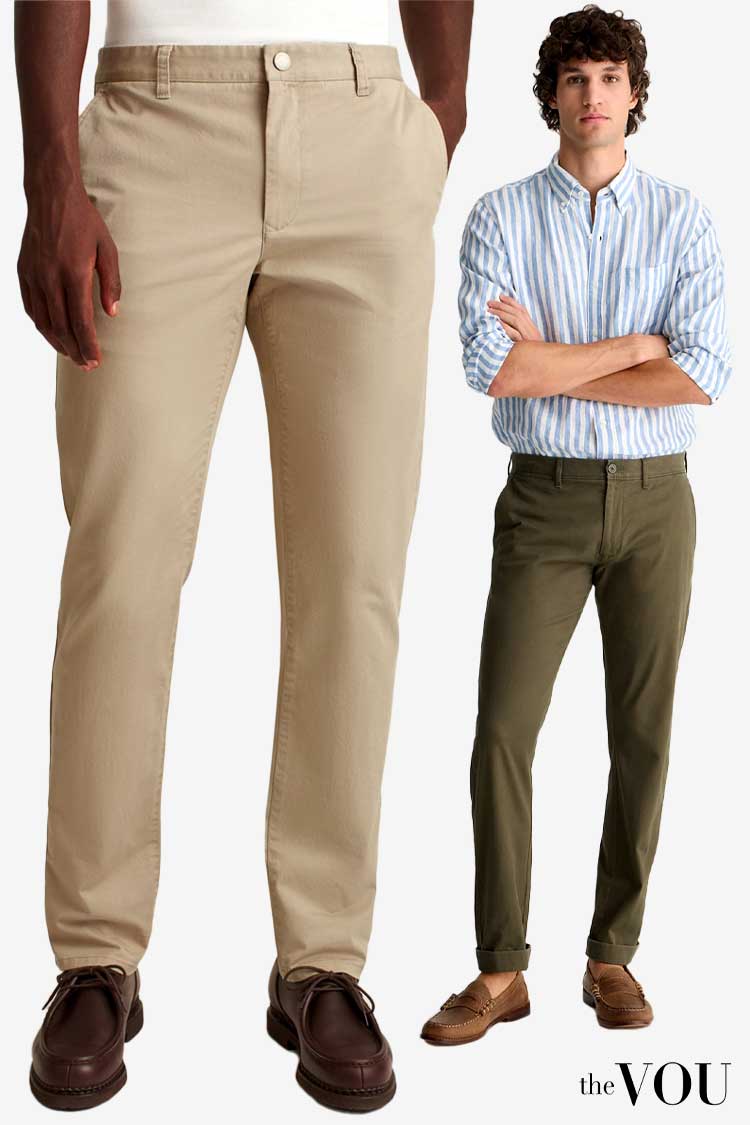
Scroll horizontally to see all columns →
| Feature | What to look for |
|---|---|
| Cloth | Cotton twill that softens with wear; a little elastane adds stretch but can look less crisp. |
| Fit check | The waist closes without a belt pulling it in, the seat does not wrinkle and the hem sits on the shoe without pooling. |
| Silhouette | Straight, tapered or wider legs, and mid or high rise, are all choices; pick what you find comfortable. |
| Colours | Khaki, stone, navy and olive. |
| Wear it with | A polo shirt or button-down at the weekend; an Oxford shirt, blazer and loafers for a business-casual outfit with boots or shoes; a sports coat or knit for semi-formal events. |
Labels to look at: Brooks Brothers, Ralph Lauren, J.Crew and Bonobos.
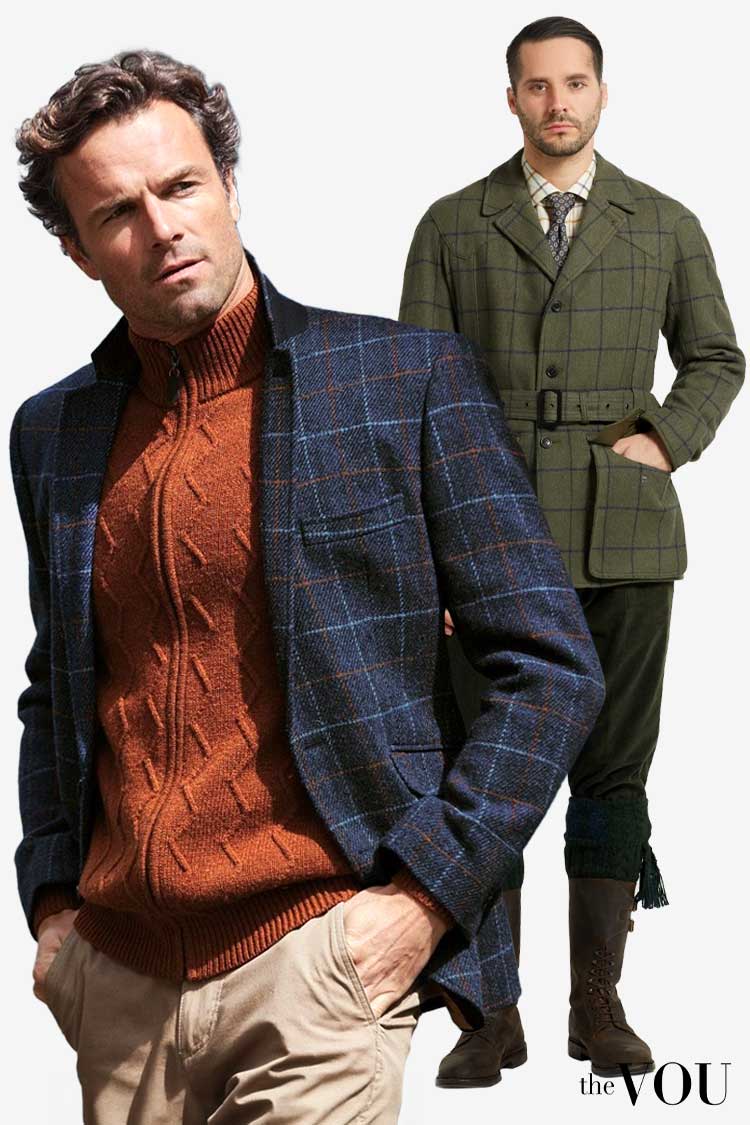
Tweed jackets
Tweed is a rough, warm woollen cloth associated with Scotland and Ireland, and a tweed jacket is the country member of the Old Money wardrobe.
Scroll horizontally to see all columns →
| Feature | What to look for |
|---|---|
| Cut | Usually single-breasted with two or three buttons and notched lapels; enough room to wear a knit underneath. |
| Pockets and details | Flap pockets, sometimes a ticket pocket; elbow patches on some. |
| Cloth | Herringbone, barleycorn, checks, windowpanes or plain weaves in green, brown, grey and blue. |
| Harris Tweed | Protected by law: handwoven by islanders at their homes in the Outer Hebrides and made from pure virgin wool dyed and spun there. |
| Wear it to | Country walks and weekends; business-casual and smart-casual settings; informal gatherings with a roll-neck or Oxford shirt. |
Labels to look at: Harris Tweed Hebrides for cloth, and Barbour, Ralph Lauren and Purdey for jackets.
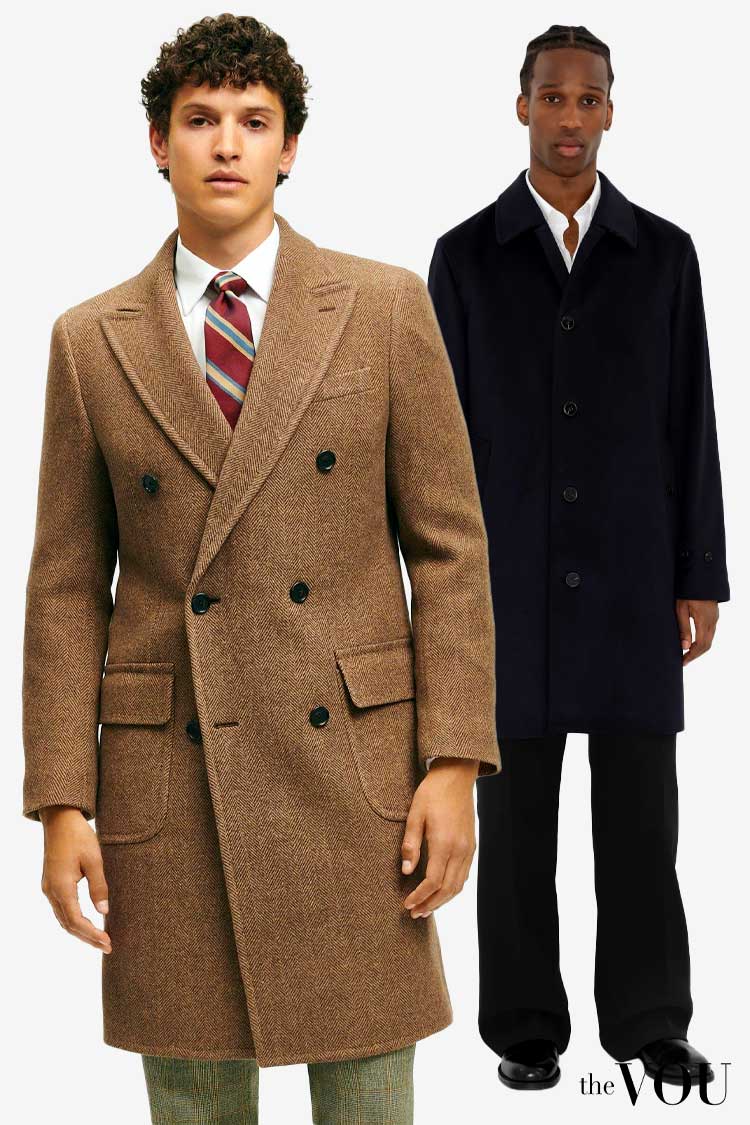
Overcoats
A plain wool overcoat is the winter layer over suits and blazers.
Scroll horizontally to see all columns →
| Feature | What to look for |
|---|---|
| Fit check | Room to wear a jacket underneath without the buttons pulling, and sleeves that cover your jacket sleeves. |
| Length | Long enough to cover your suit jacket, traditionally around the knee. |
| Collar | A notched collar wide enough to turn up against wind and rain. |
| Fastening | Single-breasted, usually with three or four buttons, is simpler; double-breasted adds an overlap of cloth at the front and looks more formal. |
| Cloth | Wool, including melton or tweed, or wool and cashmere; pure cashmere is soft but less hard-wearing. |
| Colours | Navy, charcoal, camel and black, plain or in a quiet herringbone. |
Labels to look at: Burberry, Canali, Brooks Brothers and Crombie.
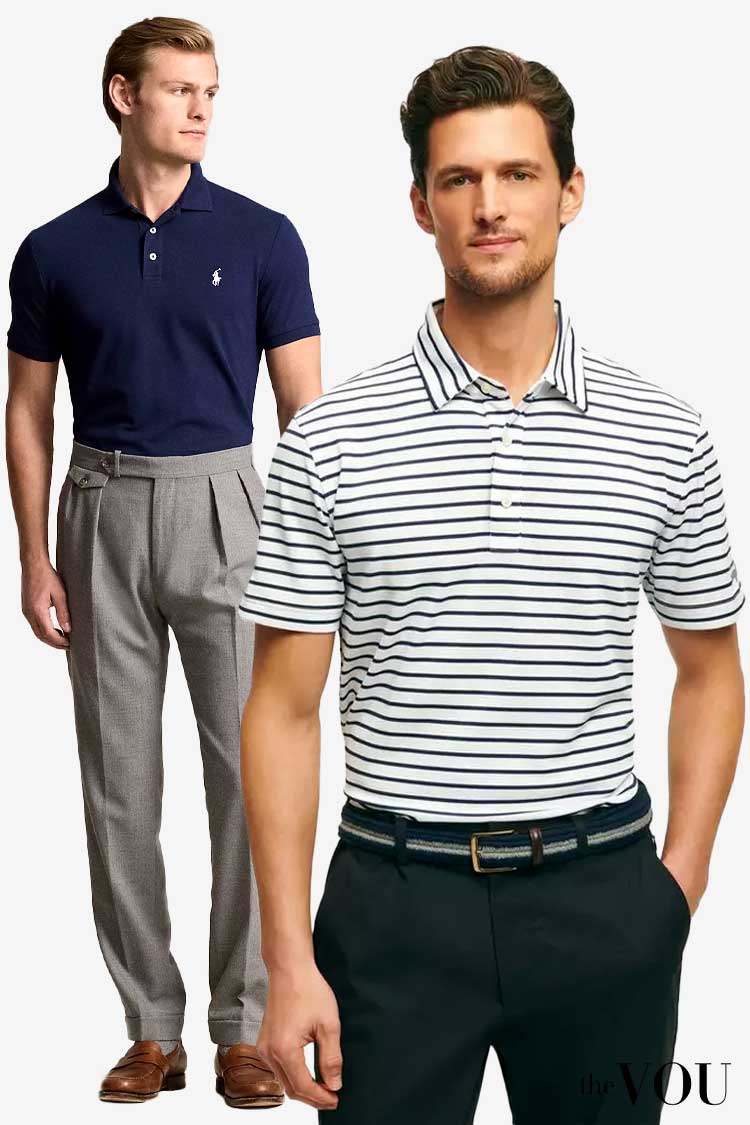
Polo shirts
The polo shirt came from tennis and polo, and in this wardrobe it is a plain, well-fitting warm-weather shirt.
Scroll horizontally to see all columns →
| Feature | What to look for |
|---|---|
| Fit check | Shoulder seams at your shoulders, sleeves ending around mid-upper arm and a body that neither clings nor billows. |
| Details | A two or three-button placket and a longer back hem, called a tennis tail, which helps it stay tucked in. |
| Fabric | Cotton piqué is the traditional textured knit; smooth jersey is lighter; technical fabrics suit sport. |
| Colours | Navy, white, cream, green and simple stripes, with a small logo or none. |
| Wear it with | Chinos or shorts; a blazer and trousers for a smart-casual lunch. |
A polo shirt is one of the Old Money wardrobe essentials that is easy to find at many prices.
Labels to look at: Polo Ralph Lauren, Lacoste, Brooks Brothers and Fred Perry.
Flannel trousers
Wool flannel trousers are soft, warm and slightly brushed, and grey flannels with a navy blazer is one of the most traditional combinations in menswear.
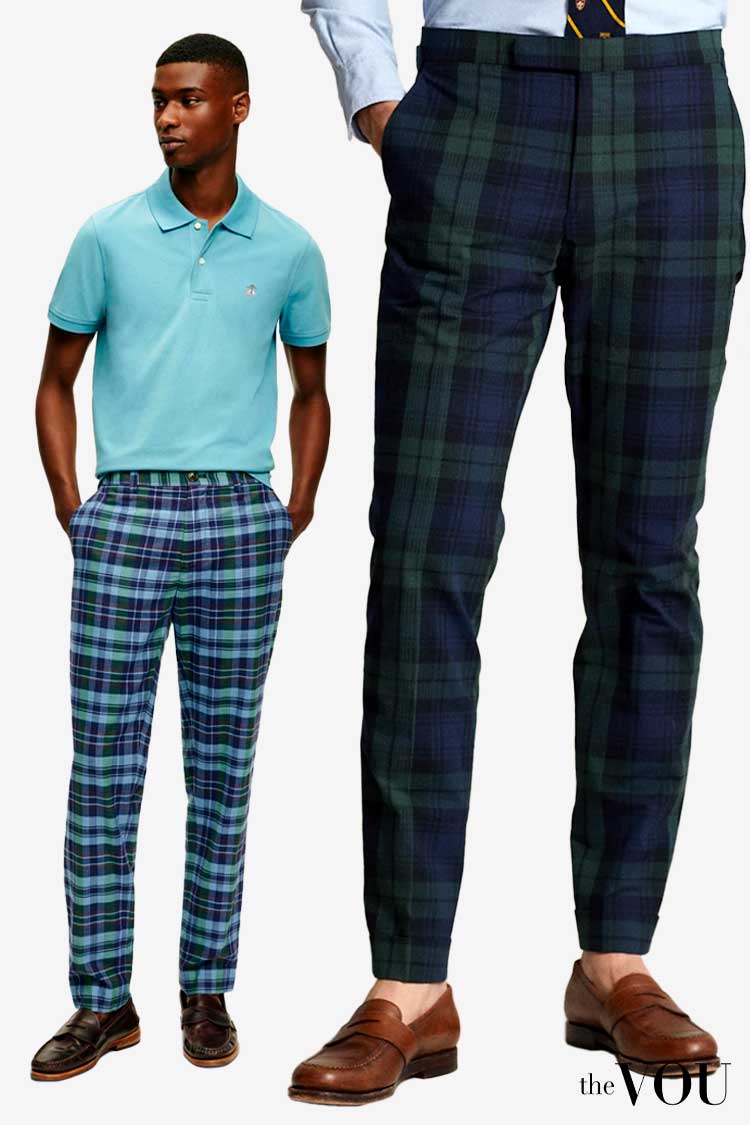
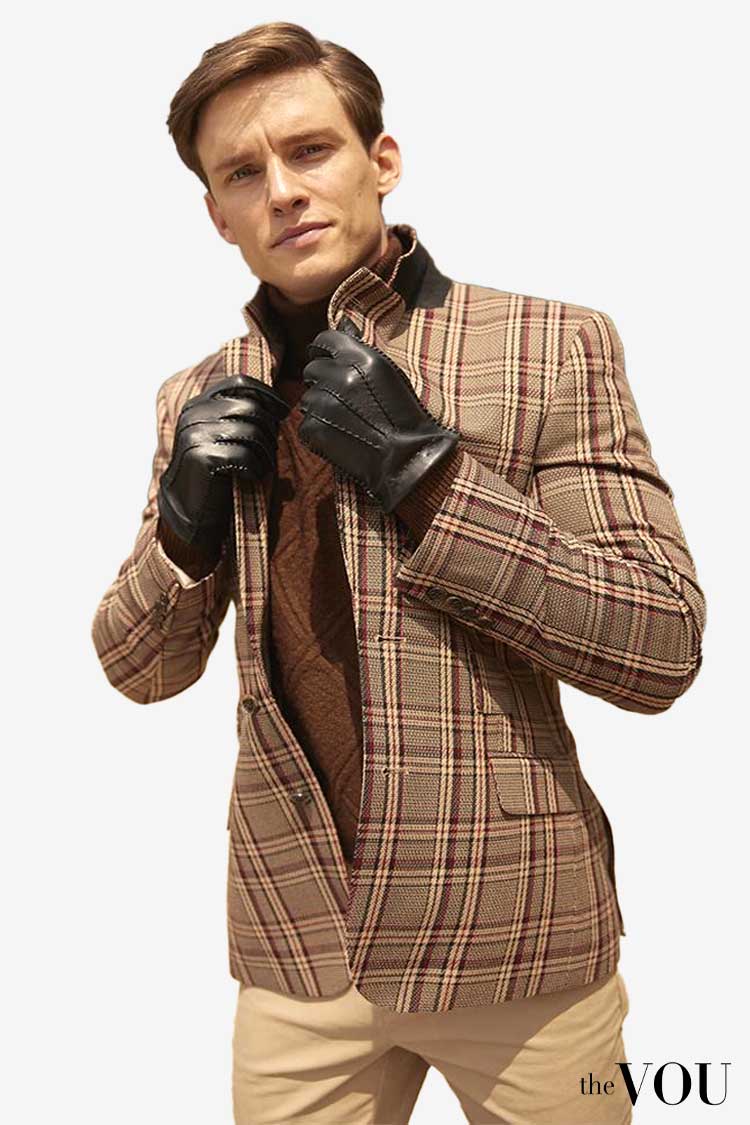
The photograph above shows tartan trousers, a more colourful cold-weather alternative; flannel itself is usually plain grey, charcoal or navy.
Scroll horizontally to see all columns →
| Feature | What to look for |
|---|---|
| Fit check | The waistband sits comfortably at your chosen rise and the hem touches the shoe; turn-ups (cuffs) add weight that helps the leg hang. |
| Silhouette | Higher rise and pleats are traditional and give more room; flat fronts look cleaner; both are choices. |
| Weight | Lighter flannels for early autumn, heavier ones for winter. |
| Wear it with | A shirt and wool blazer for winter business; a roll-neck and boots at the weekend; a tailored jacket and polished shoes in the evening. |
Labels to look at: Brooks Brothers, Ralph Lauren, Canali and J.Crew.
Tailoring and fit
Good fit is the most important detail of the look, and there are three ways to get it.
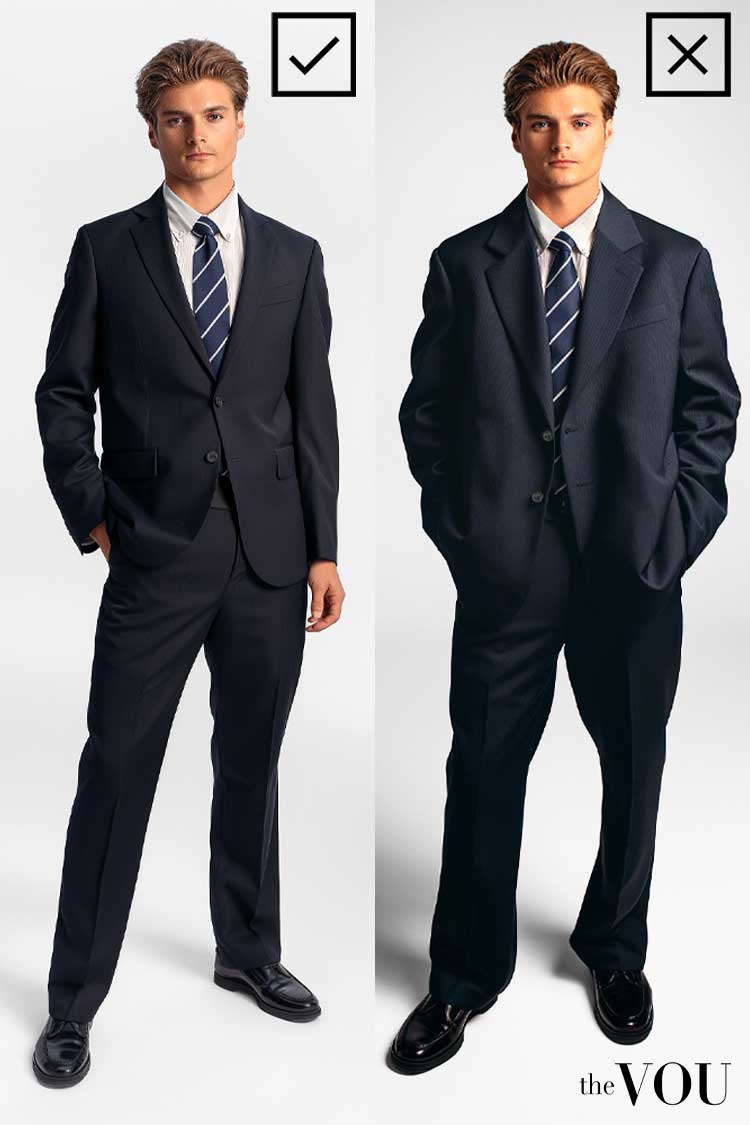
Bespoke tailoring, explained in our guide to fit and tailoring, means a tailor measures you, cuts an individual pattern and makes the garment over several fittings.
Made-to-measure adjusts an existing pattern to your measurements, and off-the-peg clothes can be altered by a tailor, especially at the waist, sleeves and hems.
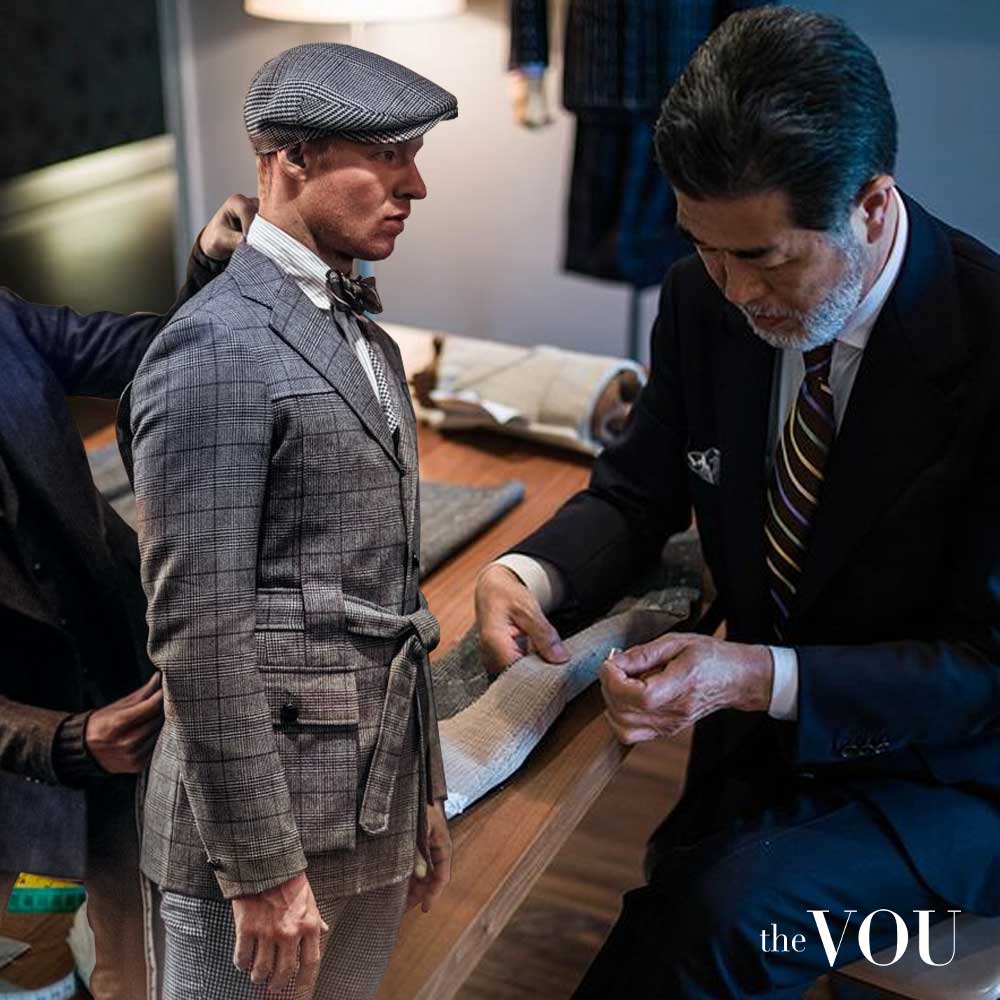
Bespoke clothes often include hand finishing such as handmade buttonholes and lapels shaped by hand, but the main benefit is a pattern cut for your measurements, and a well-altered ready-made suit can also fit well.
Shoulders are the hardest area to alter, so buy jackets that fit there first and alter the rest.
Shoes
Leather shoes in brown, dark brown, burgundy and black, plus suede for casual wear, cover most Old Money outfits.
Scroll horizontally to see all columns →
| Shoe | Best for |
|---|---|
| Oxfords | Business and formal wear; black is the most formal colour. |
| Brogues | Business to smart-casual, depending on how much decoration they carry. |
| Loafers | Smart-casual and casual wear, in leather or suede. |
| Chelsea boots | Autumn and winter, from jeans to business-casual. |
| Driving shoes | Casual summer wear and travel. |
Oxford shoes
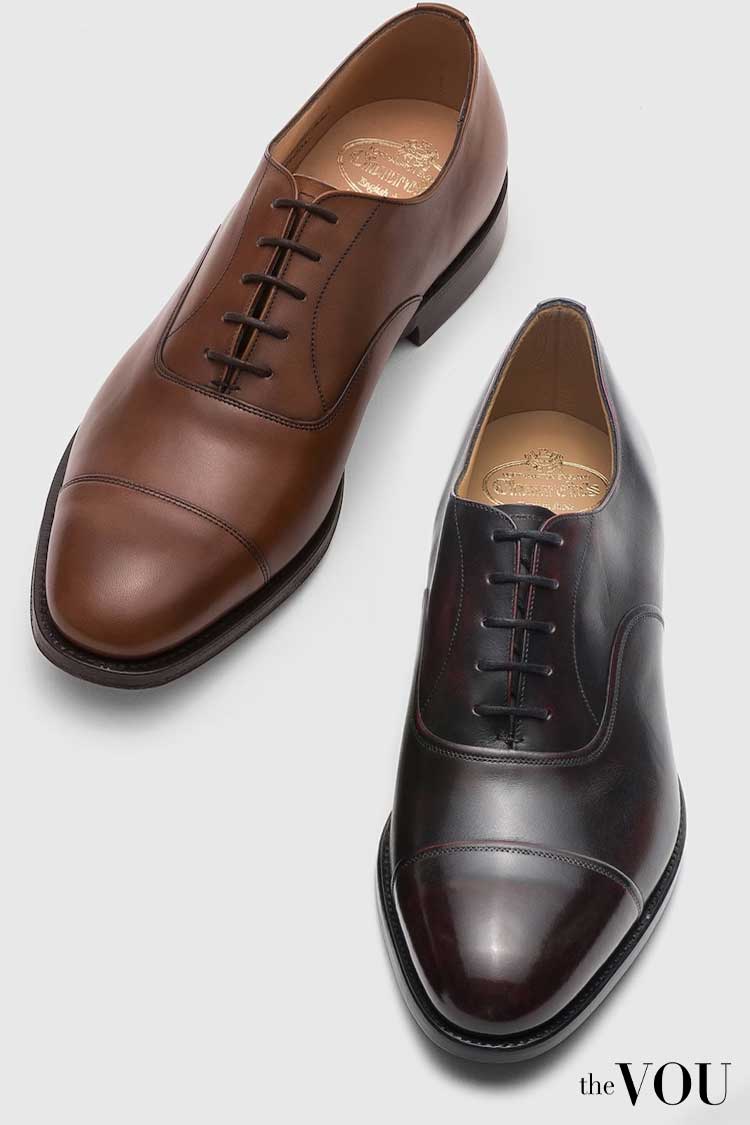
Oxfords have closed lacing, where the eyelet tabs are stitched under the front of the shoe, which gives a slim, neat look and makes them the most formal of the dress shoes for suits.
Scroll horizontally to see all columns →
| Feature | What to look for |
|---|---|
| Styles | Cap-toe Oxfords are the classic business shoe; plain-toe Oxfords look sleeker. |
| Leather | Smooth calf in black or dark brown; patent leather is for evening dress. |
| Fit check | Room to move your toes, a heel that does not slip and laces that leave a small gap when tied. |
| Occasions | Black for business, formal dinners and weddings; dark brown with lighter suits and blazers in the daytime; black patent or highly polished calf for white tie and black tie; black Oxfords with morning dress. |
Labels to look at: Allen Edmonds, Church’s, John Lobb and Crockett & Jones.
Brogues
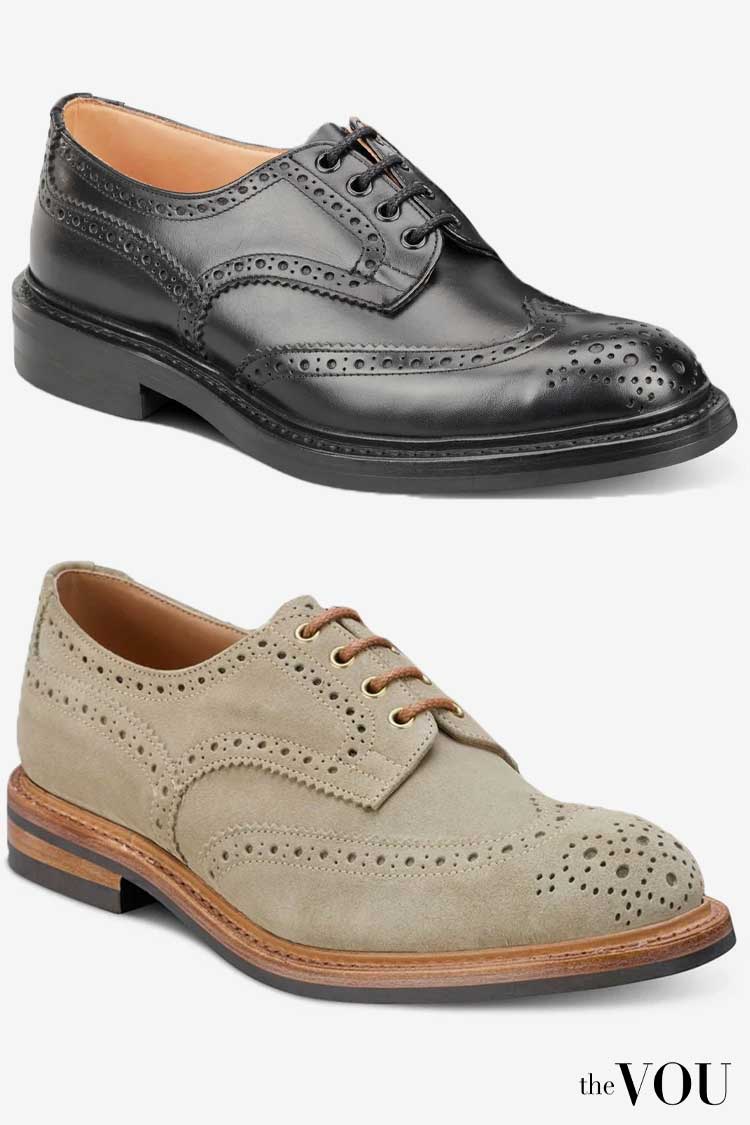
Brogues are shoes decorated with punched perforations along their seams, and they can be Oxfords or Derbies (open lacing).
Scroll horizontally to see all columns →
| Style | Description |
|---|---|
| Full brogue (wingtip) | A toe cap shaped like a W running along the sides of the shoe; the most casual of the three. |
| Semi-brogue | Perforations along the toe cap seam plus a pattern on the toe. |
| Quarter brogue | Perforations only along the toe cap seam; the dressiest. |
Quarter brogues in dark leather work with business suits, while full brogues in lighter leather or suede work with tweed, flannels and smart-casual suits.
Labels to look at: Tricker’s, Grenson, Loake and Church’s.
Loafers
Loafers are slip-on shoes, and the two classic styles are the penny loafer, with a leather strap across the top that has a slot cut into it, and the tassel loafer.
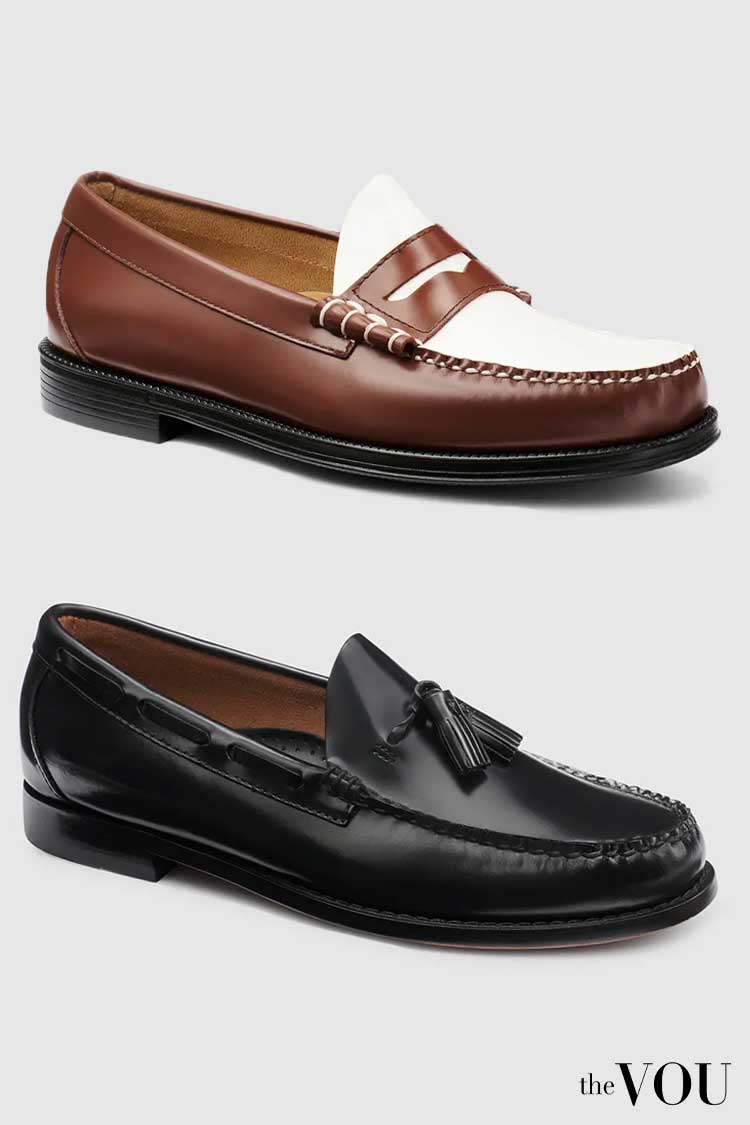
Our penny loafer guide covers styling in detail.
Scroll horizontally to see all columns →
| Feature | What to look for |
|---|---|
| Leather | Smooth leather looks polished enough for business-casual; suede is softer and suits summer outfits. |
| Fit check | Snug at the heel without slipping, because there are no laces to tighten. |
| Colours | Dark brown, tan, burgundy and black; navy or green suede for more colour. |
| Wear them with | Chinos and a polo or Oxford shirt; a blazer and grey trousers; a casual summer suit. |
Labels to look at: G.H. Bass, which introduced its Weejun loafer in 1936, Tod’s, Allen Edmonds and Church’s.
Chelsea boots
Chelsea boots are ankle boots with elastic side panels and no laces, which makes them easy to pull on and gives a clean line under trousers.
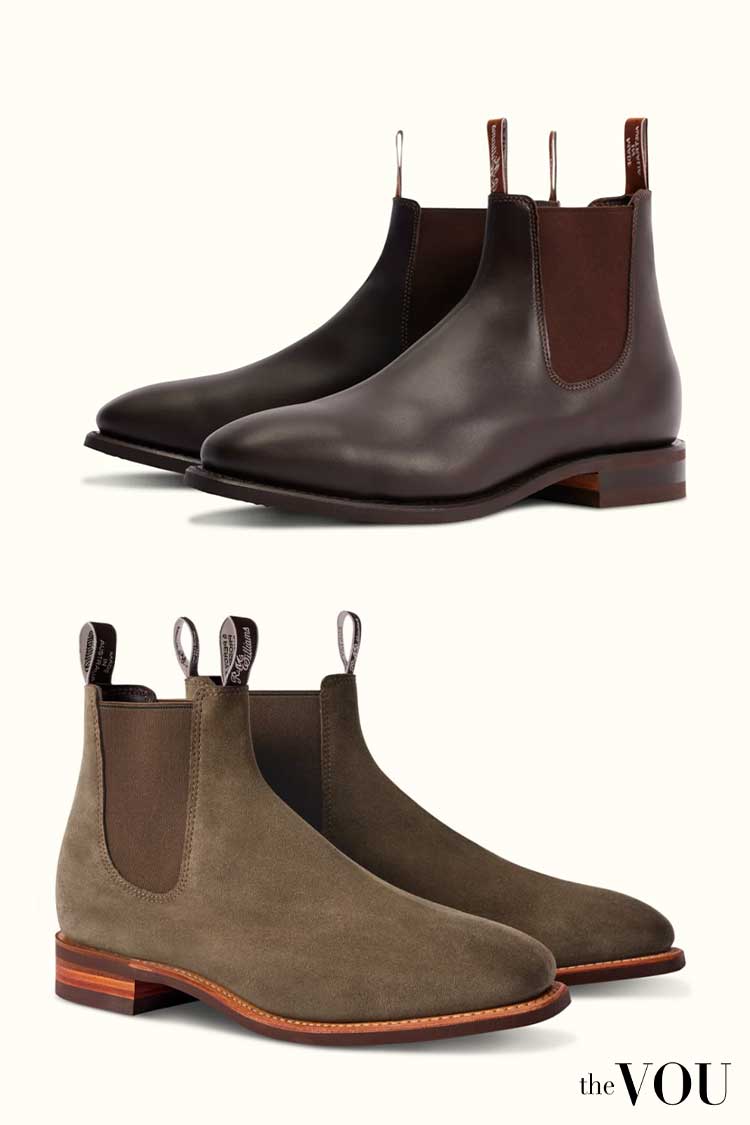
Scroll horizontally to see all columns →
| Feature | What to look for |
|---|---|
| Leather | Smooth leather for business-casual and city wear; suede for weekends. |
| Fit check | The elastic should hold the boot close at the ankle without digging in. |
| Colours | Black, dark brown, tan and taupe; burgundy or dark green for more colour. |
| Wear them with | Jeans or chinos and a knit; flannel trousers and a tweed jacket; a plain suit in a business-casual office. |
Labels to look at: R.M. Williams, Church’s and Common Projects.
Driving shoes
Driving shoes, or driving moccasins, are soft slip-ons with rubber pebbles or grips on the sole that continue up the back of the heel.
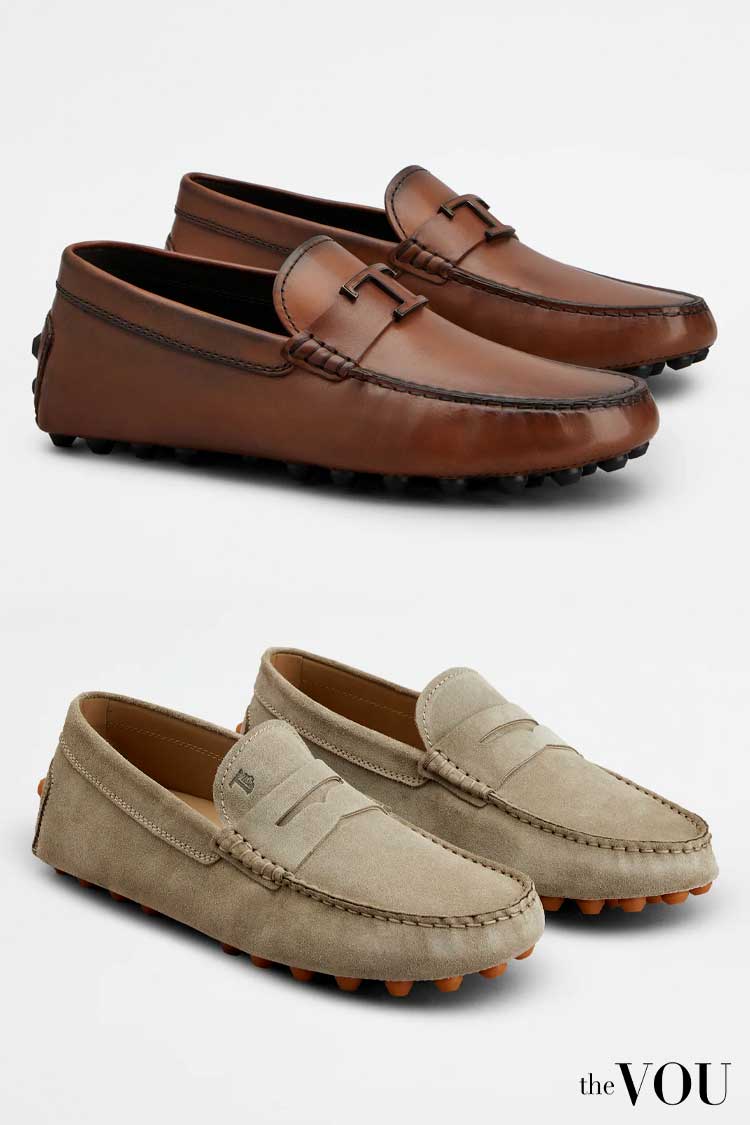
They are comfortable for summer and travel, in leather or suede, but the thin pebbled sole wears quickly on pavements, so keep them for lighter use.
Wear them with chinos or shorts and a polo shirt, or with linen trousers on holiday.
Labels to look at: Tod’s, Ferragamo and Minnetonka.
Accessories
Accessories in this look are few and plain, and they are often the easiest way to add colour or a personal note.
Scroll horizontally to see all columns →
| Accessory | What to choose |
|---|---|
| Leather belt | Black or brown, usually close in colour to your shoes. |
| Silk tie | Plain colours, small patterns or striped repp ties. |
| Pocket square | Silk, linen or cotton, folded simply. |
| Cufflinks | Simple silver, gold or mother-of-pearl designs for double-cuff shirts. |
| Watch | A simple design on a leather strap or a plain metal bracelet. |
| Pen | A fountain pen or rollerball, if you like writing by hand. |
| Leather goods | A plain briefcase, wallet and weekend bag. |
| Sunglasses | Classic shapes such as Wayfarer-type frames or aviators. |
| Scarf | Wool or cashmere for cold weather. |
| Leather gloves | Black or brown, lined for warmth. |
| Umbrella | A sturdy umbrella with a wooden or leather-covered handle. |
Leather belts
A plain leather belt with a simple buckle finishes trousers without drawing attention.
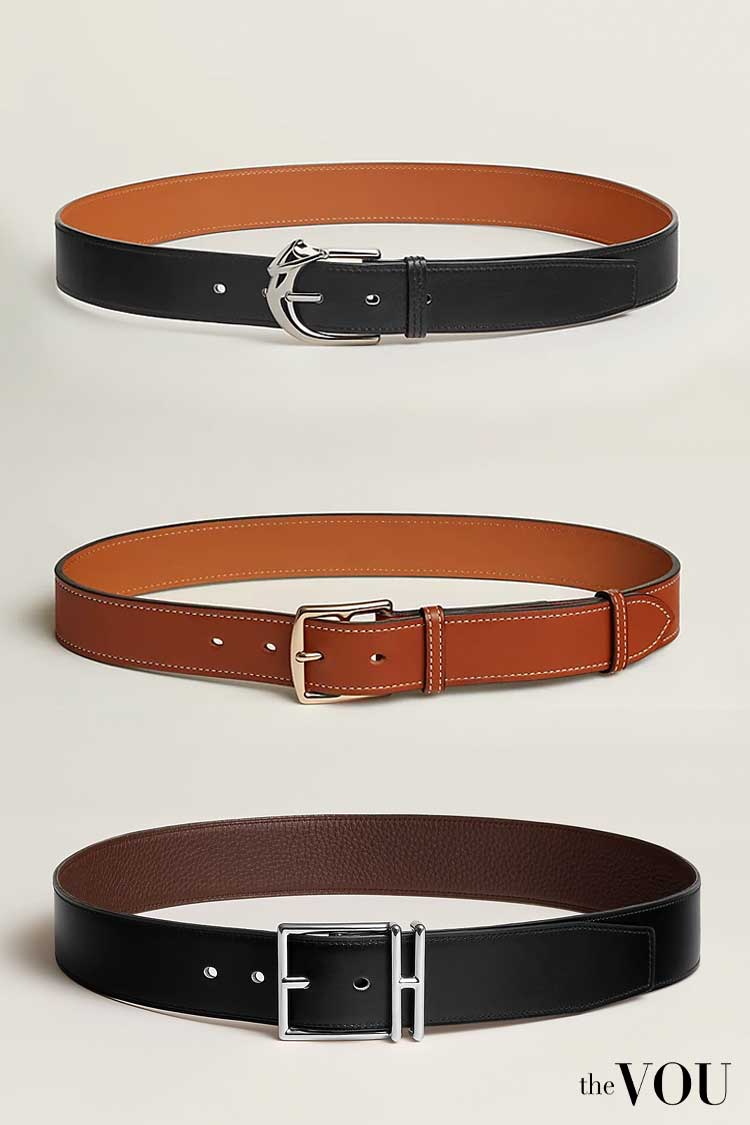
Scroll horizontally to see all columns →
| Feature | What to look for |
|---|---|
| Buckle | Simple silver or gold-tone metal, ideally matching your watch case or cufflinks. |
| Width | About 3 to 3.5 centimetres (roughly 1.25 to 1.5 inches) suits most trousers; narrower belts look dressier. |
| Leather | Full-grain or vegetable-tanned leather develops a patina as it ages. |
| Colour | A common convention is to keep the belt close to the colour of your shoes; a textured or woven brown belt suits jeans and chinos, and a slim black belt suits dark suits. |
Suits with side adjusters or braces (suspenders) do not need a belt at all.
Labels to look at: Hermès, Montblanc, Brooks Brothers and Allen Edmonds.
Silk ties
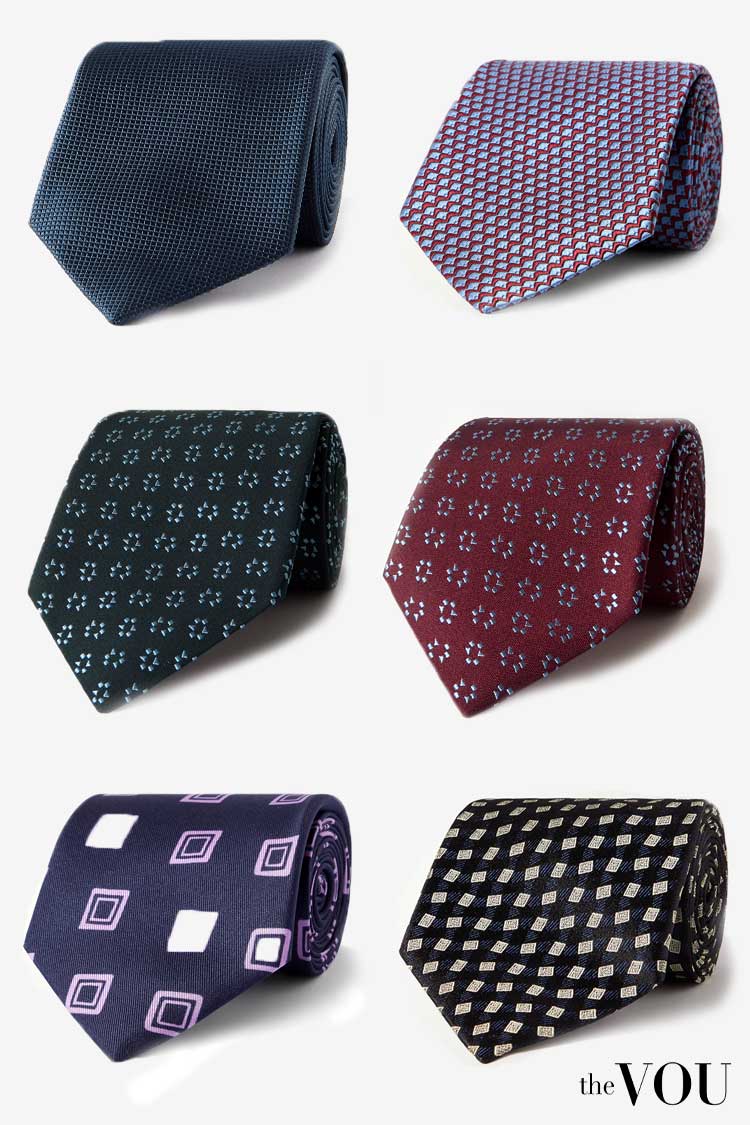
A silk tie in a plain colour, stripe or small pattern is the classic finishing touch for a suit or blazer.
Scroll horizontally to see all columns →
| Feature | What to look for |
|---|---|
| Patterns and colours | Plain navy, burgundy or dark green; club or regimental stripes; small dots, paisleys or geometric patterns. |
| Width | Keep the widest point roughly in proportion with your jacket lapels. |
| Occasions | Darker, plainer ties for business and formal events; lighter colours or livelier patterns for weddings and social occasions. |
Labels to look at: Hermès, Charvet, Brooks Brothers and Drake’s.
Pocket squares
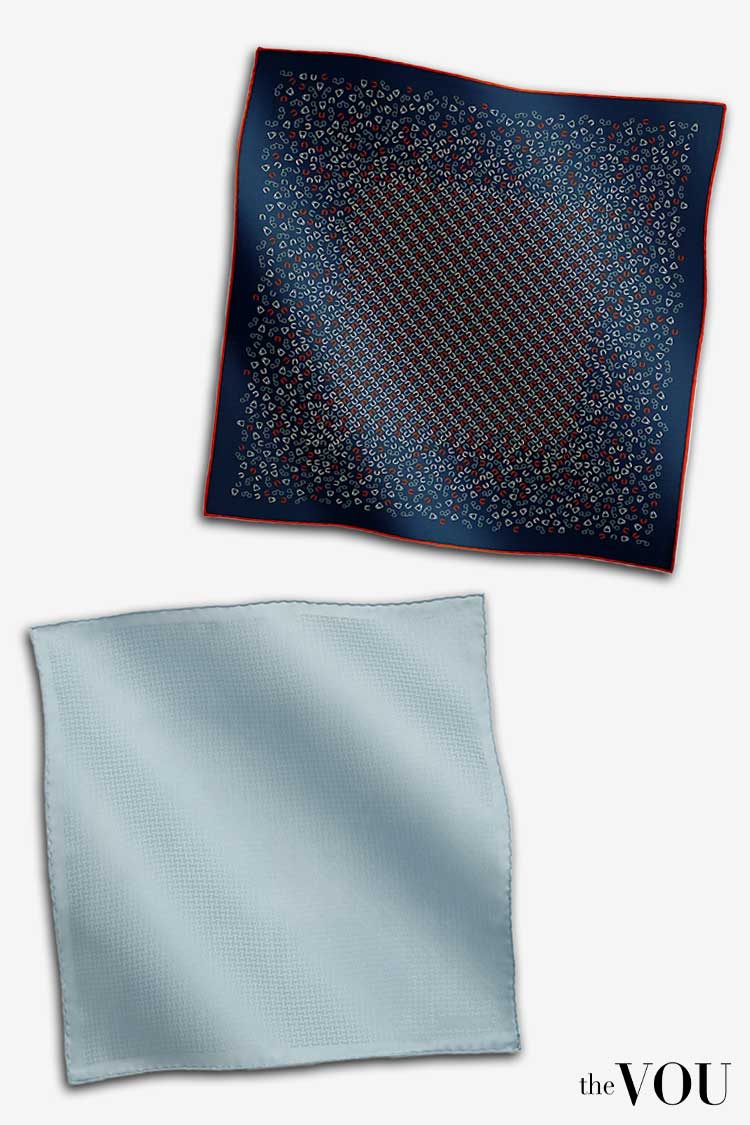
A pocket square in the breast pocket of a jacket adds colour or texture, and it should complement your tie or shirt rather than match it exactly.
Scroll horizontally to see all columns →
| Fabric | Best for |
|---|---|
| Silk | A soft sheen and stronger colour, for formal and evening wear or a puffed fold. |
| Linen | A crisp, matte look; a white linen square in a straight fold suits dark suits and dinner jackets. |
| Cotton | A softer, more casual look for sports coats and blazers. |
Hand-rolled edges are a sign of careful finishing.
Labels to look at: Hermès, Drake’s, Simonnot Godard and Tom Ford.
Cufflinks
Cufflinks fasten double (French) cuffs, and in this look they are usually small and simple.
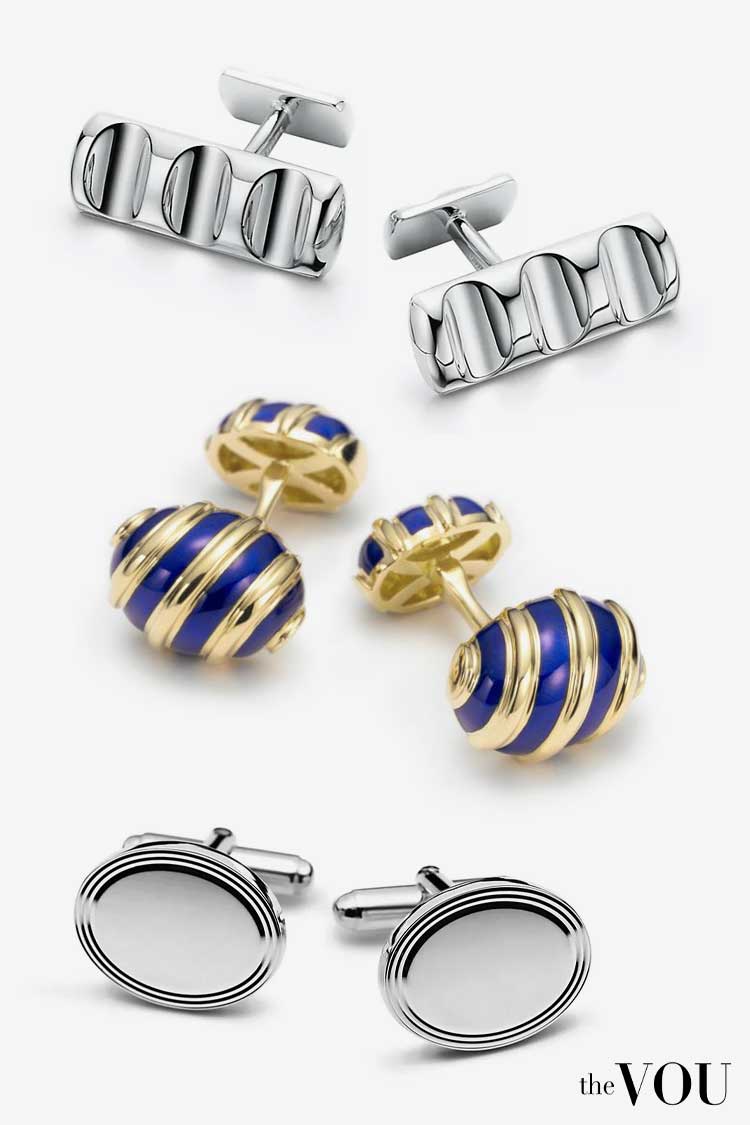
Choose plain silver, gold or mother-of-pearl for business and black tie, and keep playful designs or coloured enamel for informal occasions.
Labels to look at: Tiffany & Co., Cartier, Montblanc and Paul Smith.
Watches
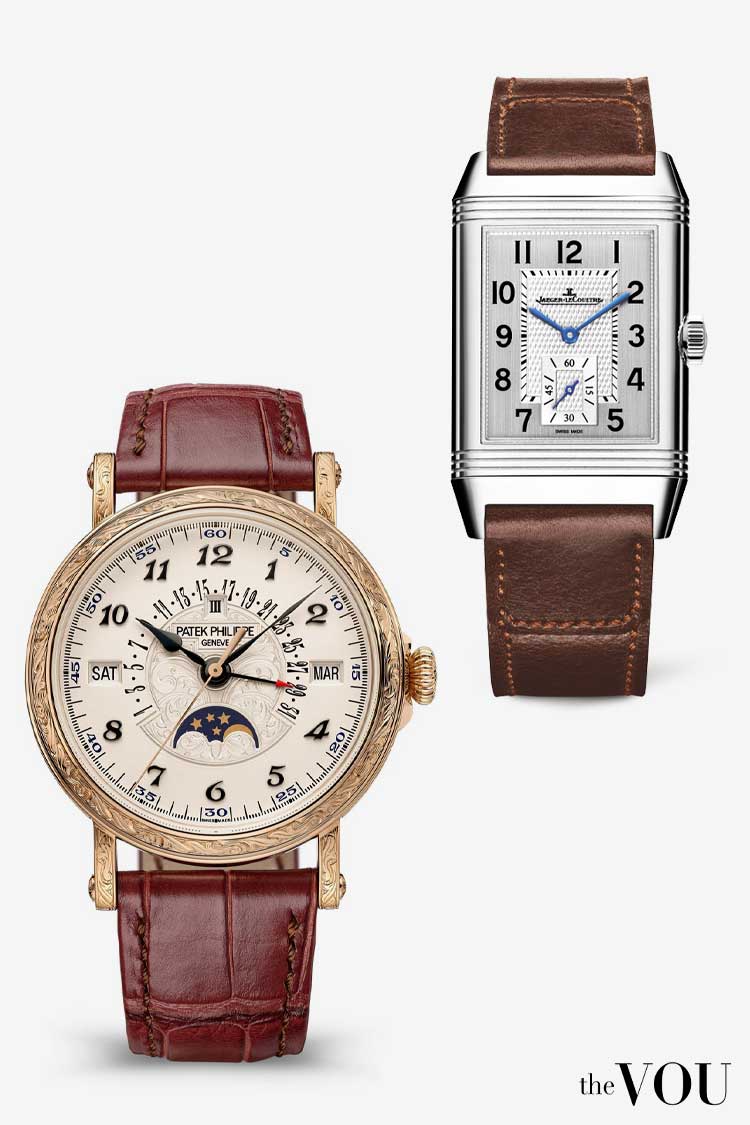
A watch is often the only jewellery men wear with this look, and a simple, readable design suits it best.
Scroll horizontally to see all columns →
| Feature | What to look for |
|---|---|
| Movement | Mechanical (manual or automatic) watches appeal to people who enjoy the craft; quartz watches are accurate and need less care. |
| Design | A plain, readable dial; a slim case slides under a shirt cuff more easily. |
| Case | Stainless steel is hard-wearing and easy to wear daily; gold and platinum are dressier and more expensive. |
| Strap | Leather for suits and evening; a metal bracelet or fabric strap for casual wear. |
An inherited or second-hand watch fits the look just as well as a new one, and a simple watch at a modest price can look as appropriate as an expensive one.
Labels to look at: Rolex, Patek Philippe, Omega and Jaeger-LeCoultre at the high end.
Pens
Pens are an optional extra rather than clothing, but a good pen suits people who write by hand.
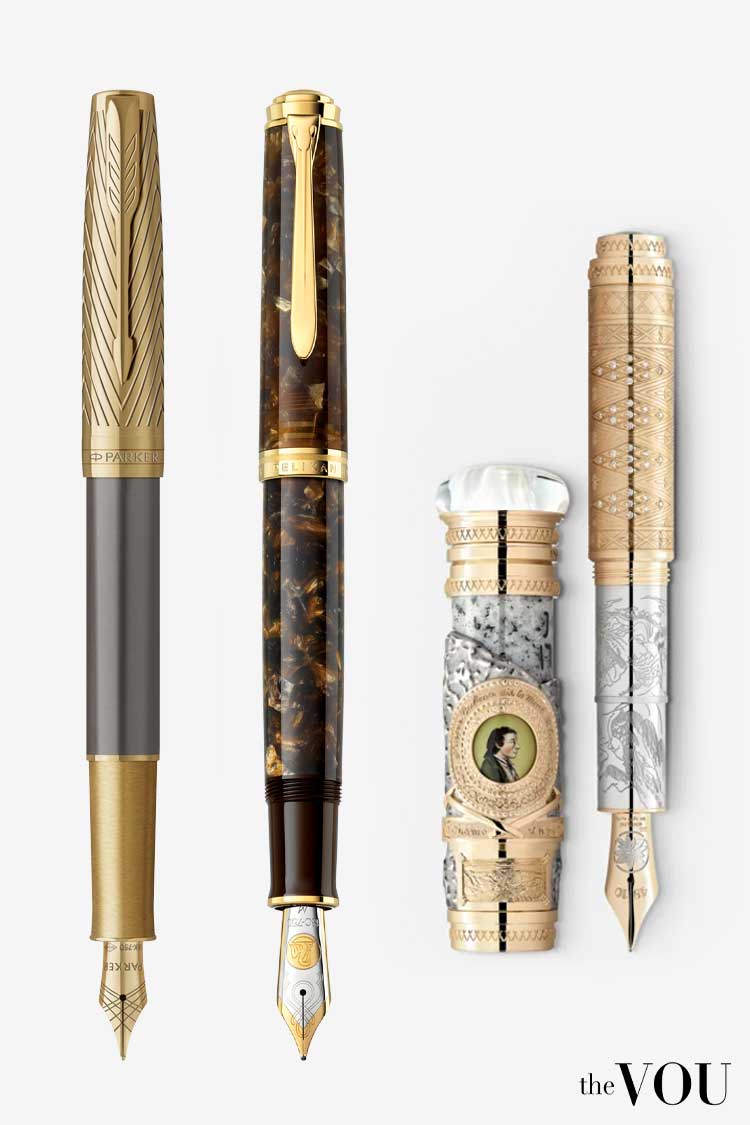
Fountain pens are the traditional choice for letters and signing documents, while rollerball and ballpoint pens are more practical day to day.
Labels to look at: Montblanc, Pelikan, Parker and Waterman.
Leather goods
A plain leather briefcase, a slim wallet and a weekend bag finish the look when you carry papers, cards or clothes.
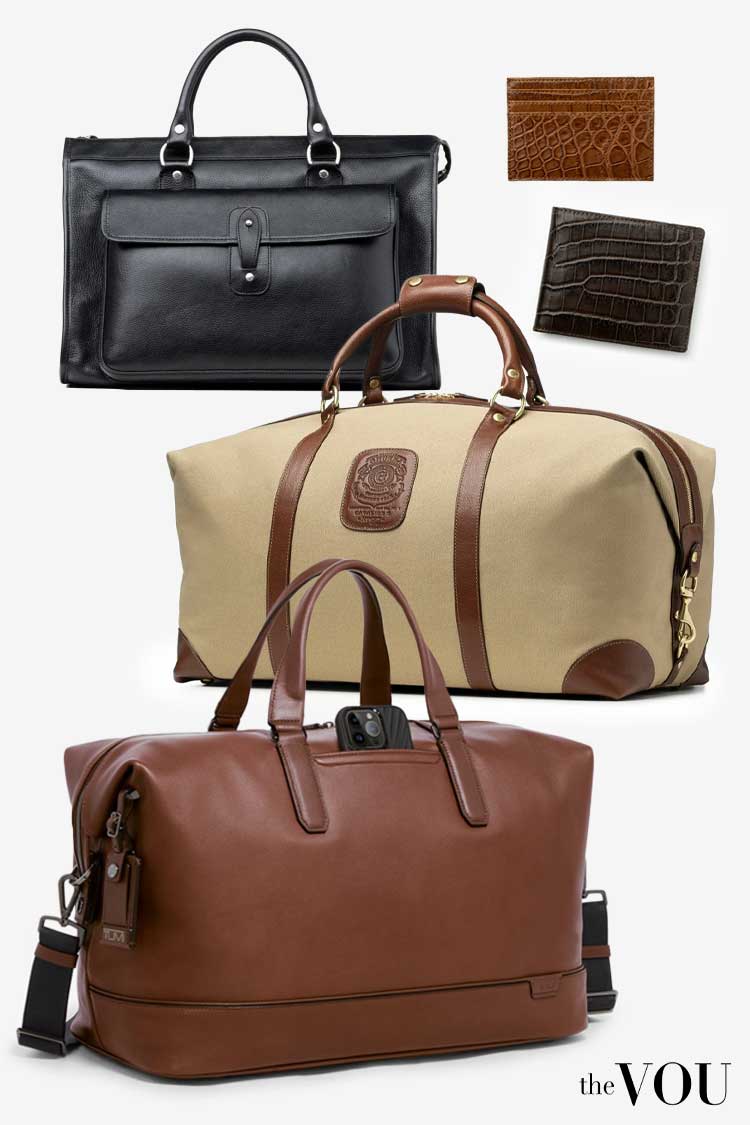
Choose versatile colours such as black, dark brown and tan, check stitching and fittings, and pick the size for what you actually carry.
Full-grain leather develops a patina with use, and handmade construction can be easier to repair.
Labels to look at: Ghurka, Smythson, Tumi and Moore & Giles.
Sunglasses
Classic frame shapes suit the look better than fashion shapes.
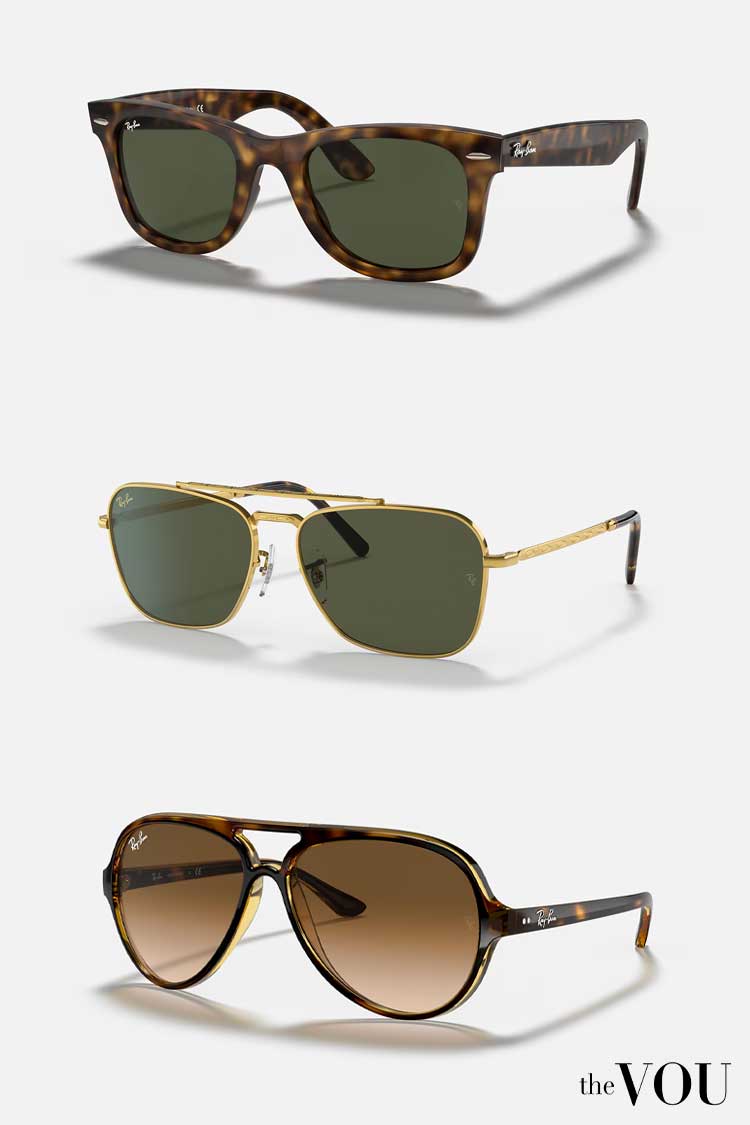
Aviators, originally designed for pilots, have thin metal frames and teardrop lenses, while Wayfarer-type frames are heavier acetate with a slightly trapezoid shape.
Check that lenses carry a UV protection label, such as UV400 or a stated standard, and try frames on to judge width and comfort.
Labels to look at: Ray-Ban, Persol and Oliver Peoples, which is known for vintage-inspired frames.
Scarves
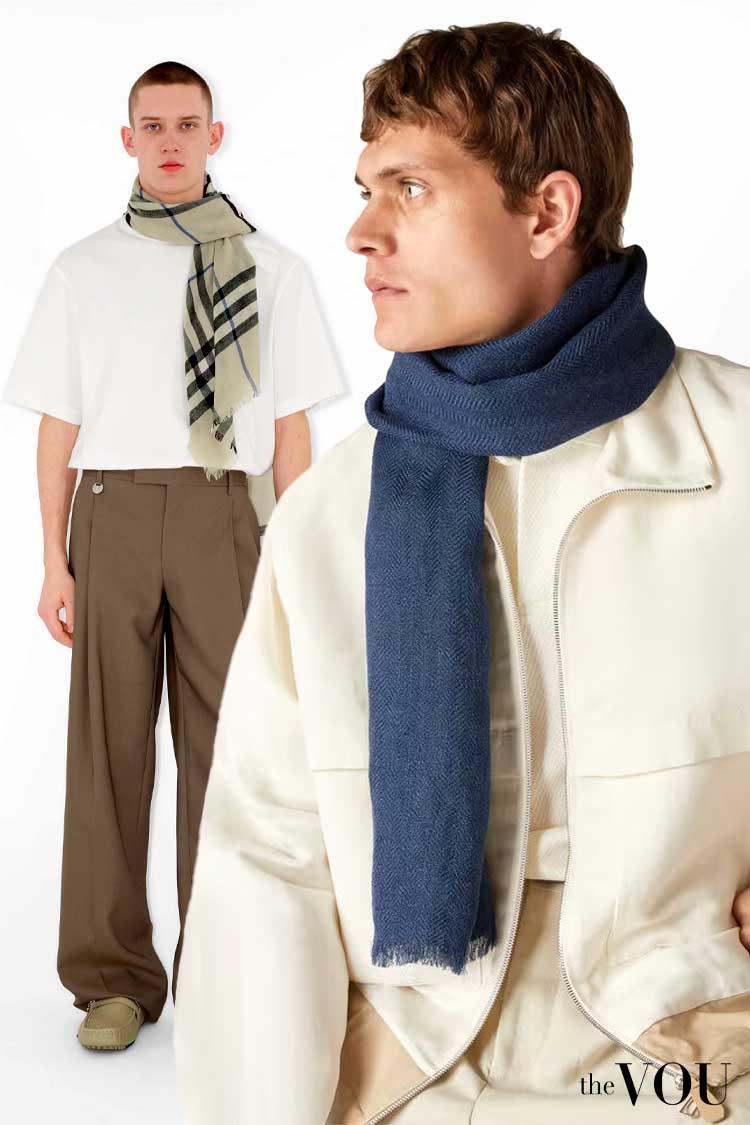
A wool or cashmere scarf adds warmth and a little colour to an overcoat or tweed jacket.
Herringbone, tartan, checks and plain colours all work, and a scarf long enough to loop once around your neck is the most versatile.
Labels to look at: Burberry, Loro Piana, Johnstons of Elgin and Drake’s.
Leather gloves
Leather gloves are practical in winter and look neat with an overcoat.
Scroll horizontally to see all columns →
| Feature | What to look for |
|---|---|
| Leather | Soft lambskin or deerskin. |
| Lining | Silk is thin, wool and cashmere are warmer. |
| Colour | Black, brown or tan, close to your shoes or coat. |
| Detailing | Plain gloves with minimal stitching look dressier; visible stitching and decorative details suit casual wear. |
| Fit check | Measure your hand and check the maker’s size chart; gloves should be snug without restricting your fingers. |
Labels to look at: Dents, founded in 1777, Hestra and Merola.
Umbrellas
A sturdy umbrella is a practical accessory that finishes a coat-and-suit outfit in wet weather.
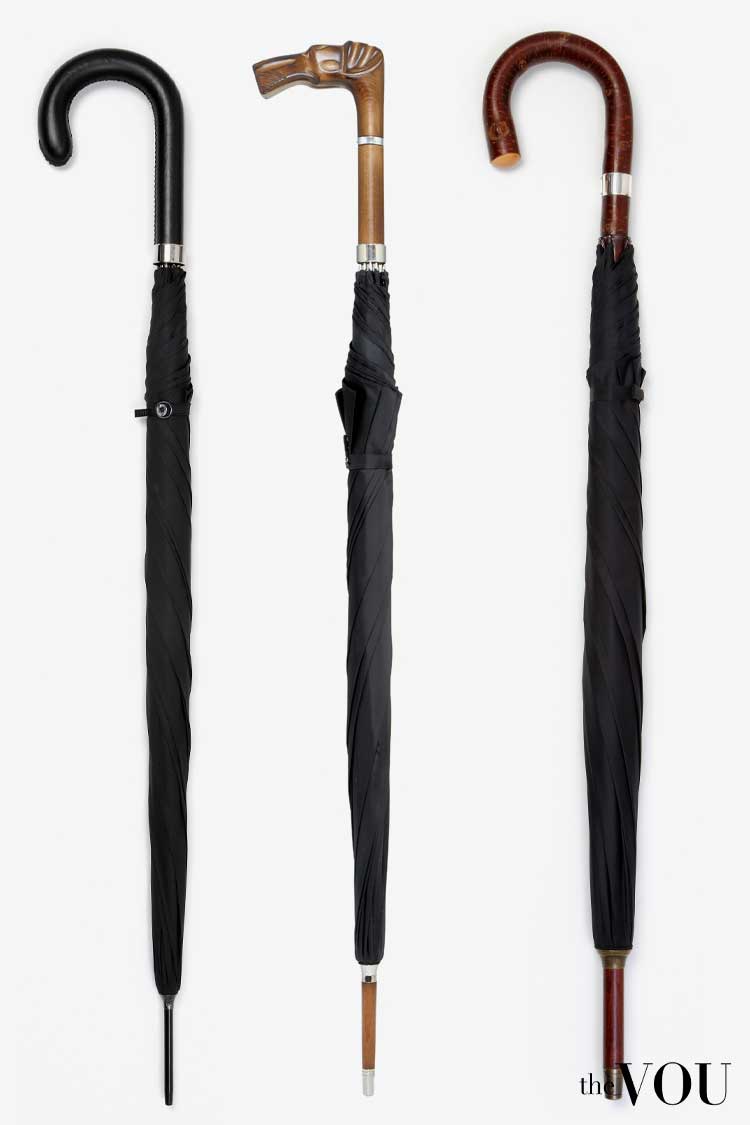
Look for a strong frame, a dense water-resistant canopy and a smooth opening mechanism.
A stick umbrella with a wooden or leather-covered handle is the traditional city choice, while a compact folding umbrella is more practical to carry.
Labels to look at: James Smith & Sons, Swaine Adeney Brigg, Davek and Fulton.
Four complete Old Money outfits
These outfits are starting points built from the garments above; swap colours and cloths for the weather and the dress code you actually face.
Business
Wear: a navy or charcoal worsted suit, a white or light blue shirt, a dark silk tie, black or dark brown cap-toe Oxfords, a black or dark brown belt and, in winter, a navy or charcoal overcoat.
Business-casual
Wear: a navy blazer, a light blue Oxford button-down, grey flannel or stone chino trousers, brown suede or leather penny loafers and a navy V-neck in cold weather.
Weekend in the country
Wear: a brown or green tweed jacket, a cream or navy crew-neck knit over an Oxford shirt, olive or khaki chinos or cords, brown suede Chelsea boots or brogues and a wool scarf.
Summer lunch or garden party
Wear: a navy or cream polo shirt or a white linen shirt, stone chinos or light linen trousers, suede loafers or driving shoes, sunglasses and, if the event is smarter, an unstructured light blue or cream jacket.
Grooming for an Old Money look
Grooming for this look is about looking clean and cared for rather than following a particular routine.
A neat, regularly trimmed haircut suits the clothes, and our guides to Old Money hairstyles and the Ivy League haircut show side partings, short crops and slightly longer swept-back cuts.

Beyond that, the useful habits are simple: a clean shave or a well-kept beard, short clean nails, clothes that are brushed and pressed, and polished shoes.
If you wear fragrance, a light cologne used sparingly suits the understated look.
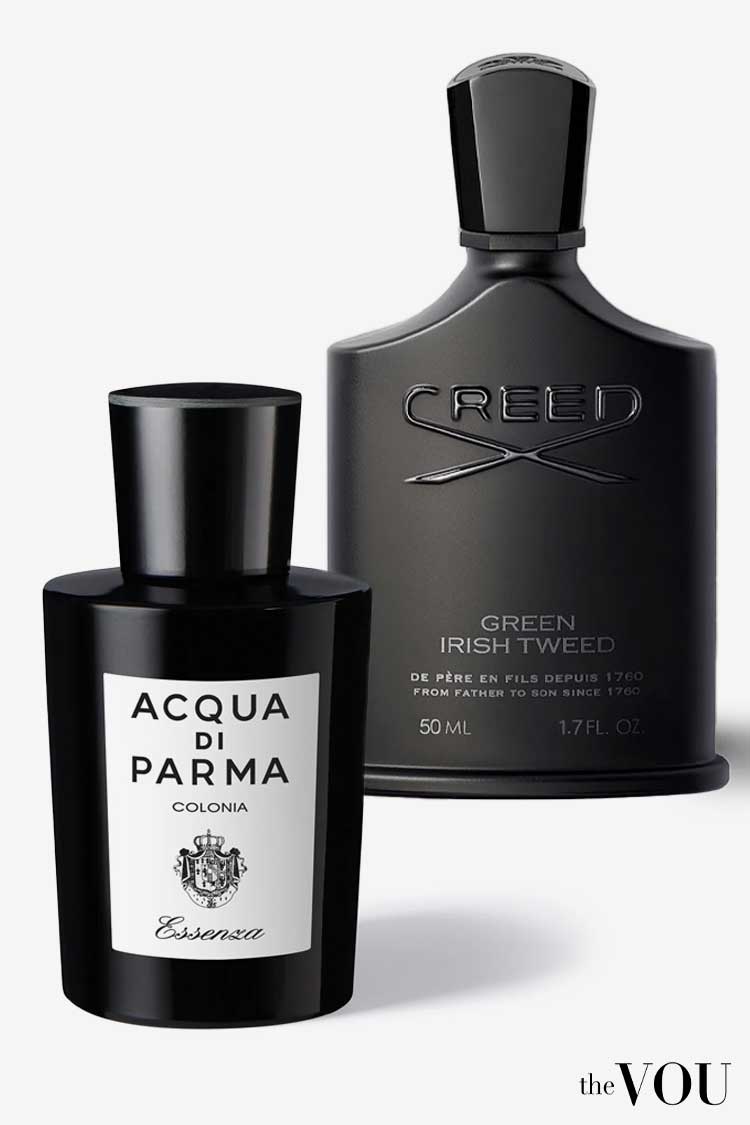
Classic examples include Acqua di Parma’s Colonia and Creed’s Green Irish Tweed, but any fresh, light scent you like will do.
Old Money style icons
Many men are cited as Old Money style icons, and two of the most often named are the Duke of Windsor and Cary Grant.
Neither fits the label neatly: one was a former king and the other a film actor, which shows that the look is about clothes rather than family wealth.
The Duke of Windsor
The Duke of Windsor was Prince of Wales until he became King Edward VIII in 1936, abdicating later that year.
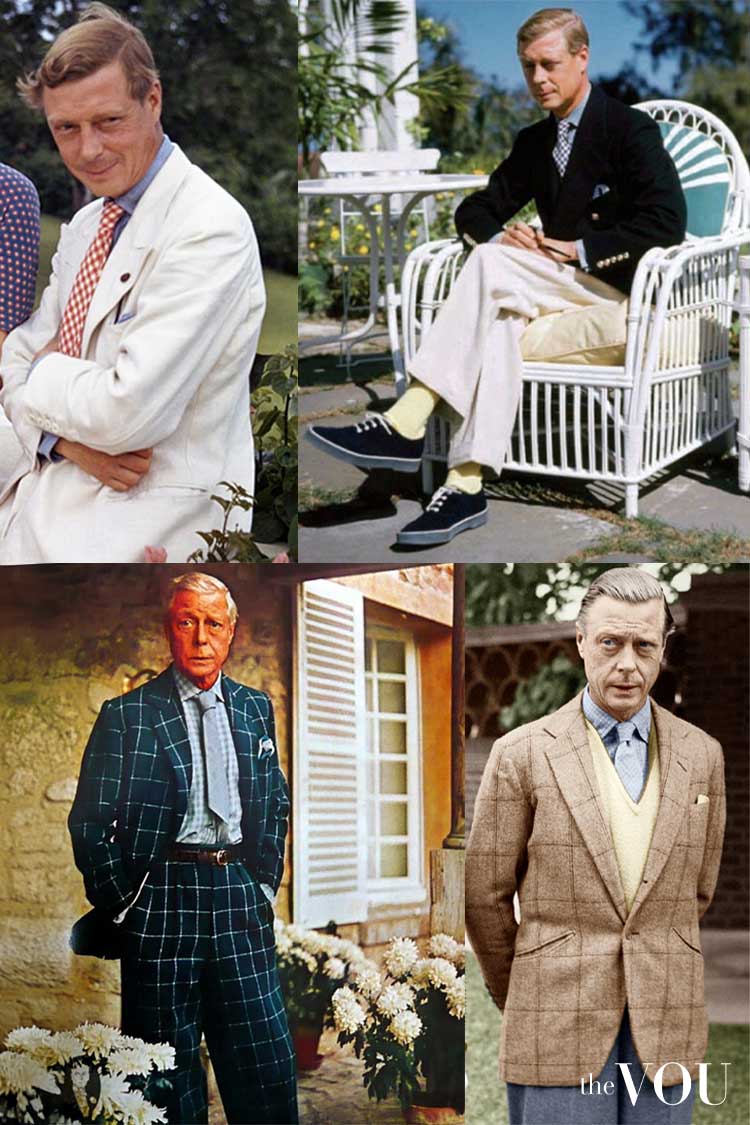
The Victoria and Albert Museum describes him as internationally acknowledged as a leader of men’s fashion, known for a casual style and for bright colour, strong texture and bold pattern made by London and New York tailors.
He is closely associated with the Glen Urquhart check, often called the Prince of Wales check, and the V&A holds one of his suits in that pattern from 1940.
The Windsor tie knot is named after him, although he wrote that his full knots came from thicker, specially lined ties rather than from a special knot.
His wardrobe is a good reference for mixing patterns and for relaxed country and resort clothes.
Cary Grant
Cary Grant was a British-born American actor whose film career ran from the early 1930s to 1966.
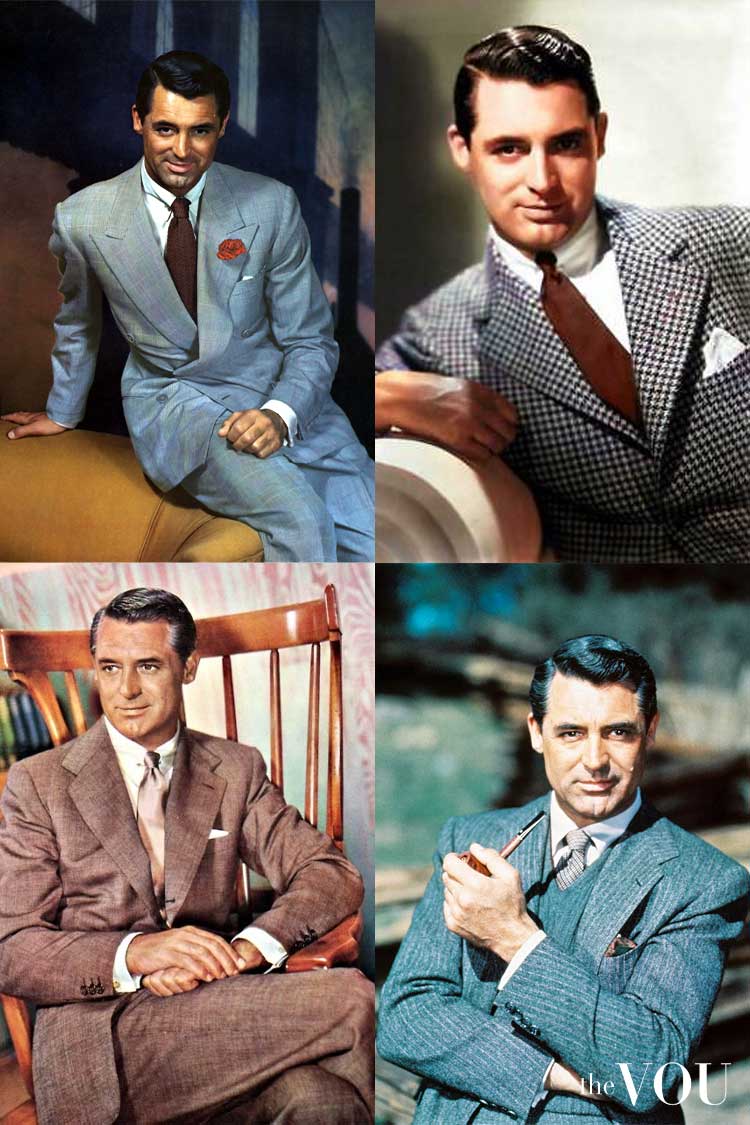
He is remembered for well-fitted suits, plain shirts and simple accessories that made formal clothes look easy to wear.
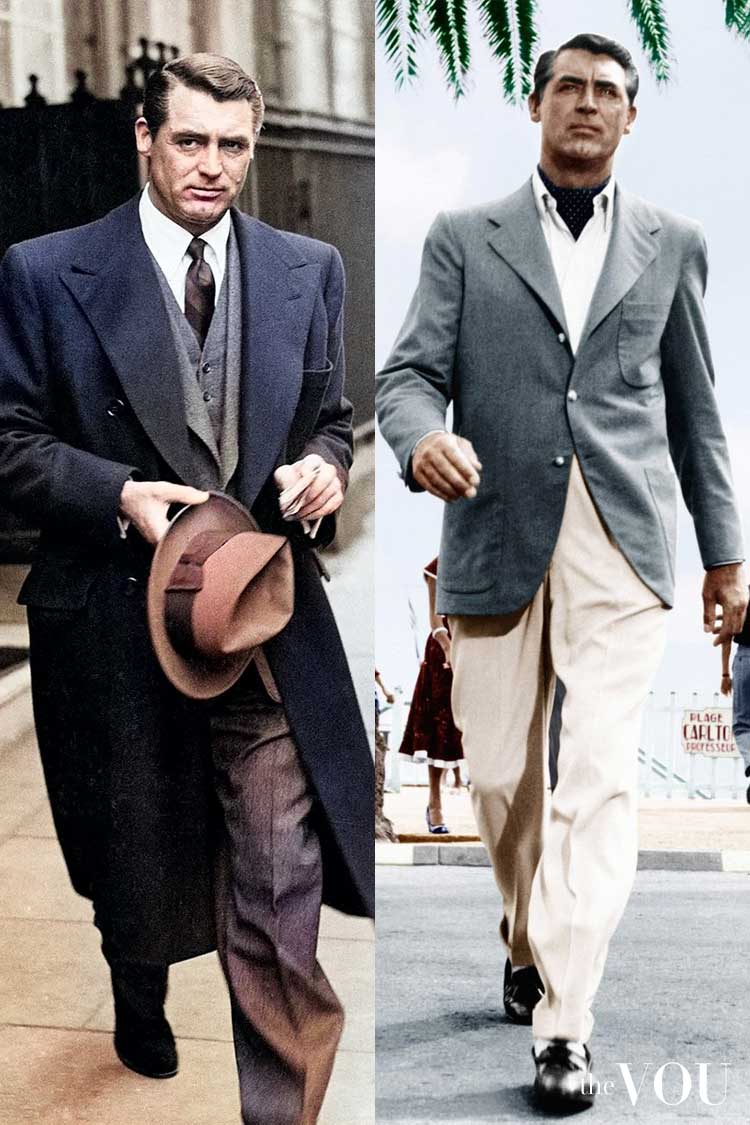
In To Catch a Thief (1955), opposite Grace Kelly, Grant plays a retired cat burglar on the French Riviera, and the film is still a reference for men’s resort clothes such as striped knits, neckerchiefs and light trousers.
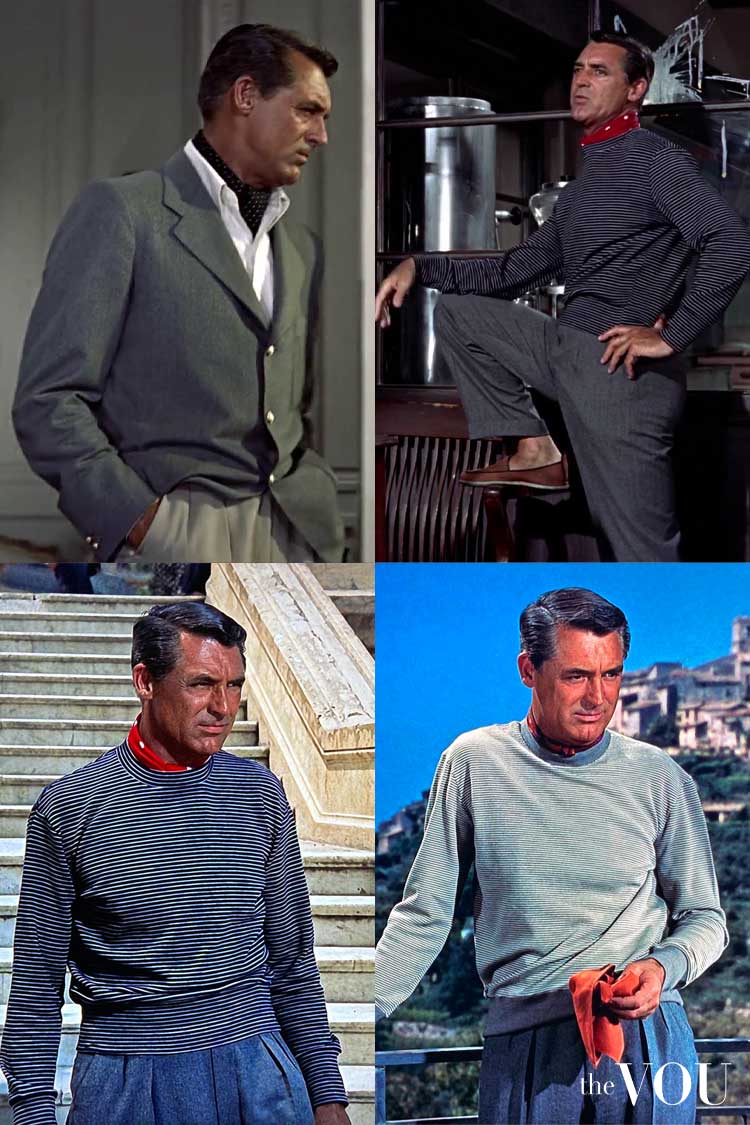
Edith Head is credited as the film’s costume designer, though Grant is believed to have supplied much of his own wardrobe, and the Savile Row tailor Kilgour names him among its clients.
Formal dress beyond the West
“Old Money” is a Western label, and other cultures have their own long traditions of elite and court dress that are best understood on their own terms rather than as versions of it.
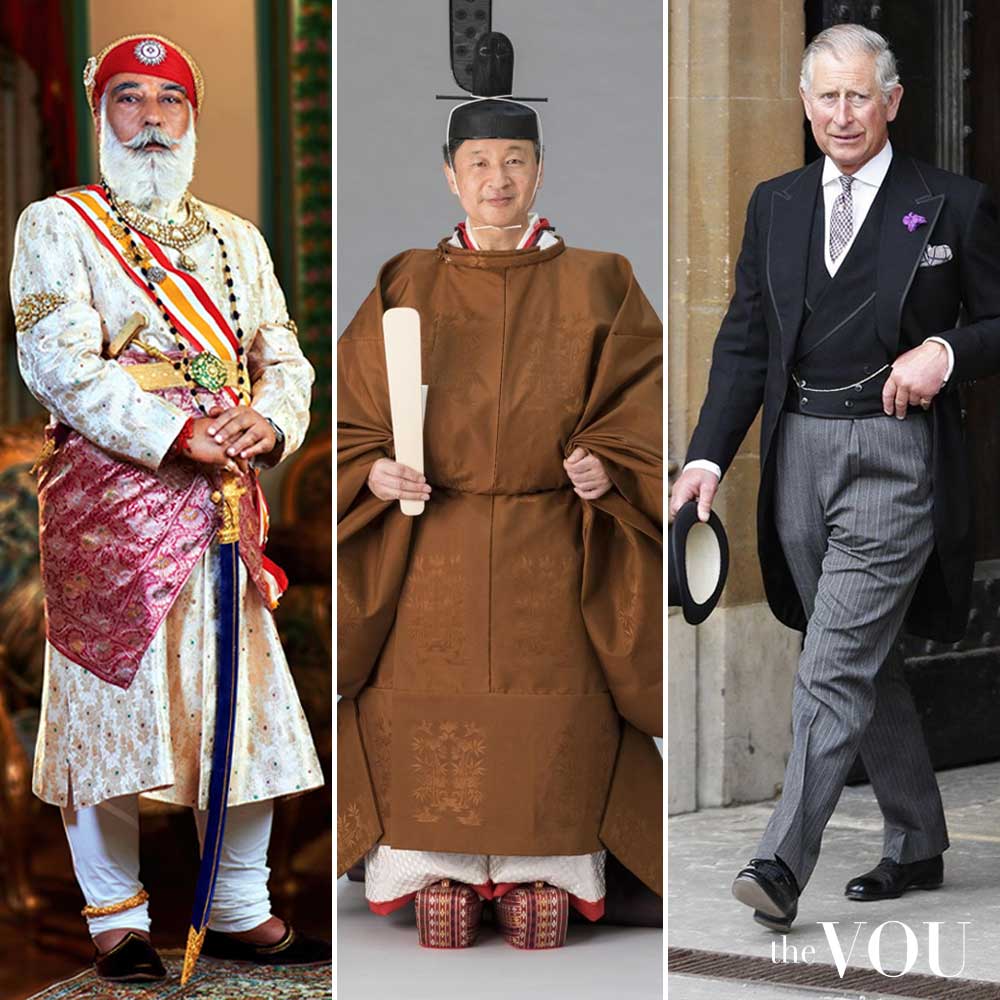
The images in this section compare formal and ceremonial dress from India, Japan and Britain.
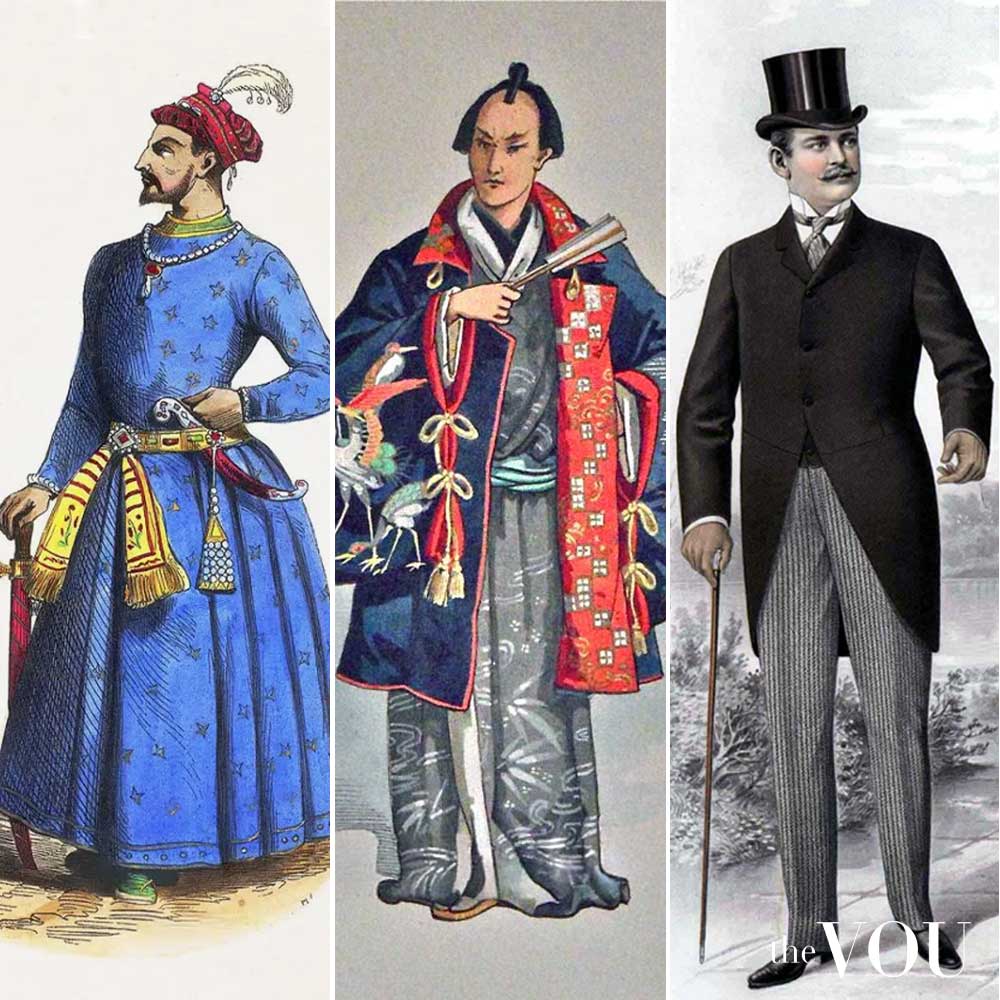
What they share with the Western look is mostly a respect for fine textiles and skilled making, while the colours, shapes and meanings are very different.
Japan: samurai-class formal dress
In Edo-period Japan, most men of the samurai class wore the kamishimo for formal occasions: a sleeveless jacket with stiffened, extended shoulders and pleated trousers called hakama, worn over a kimono.
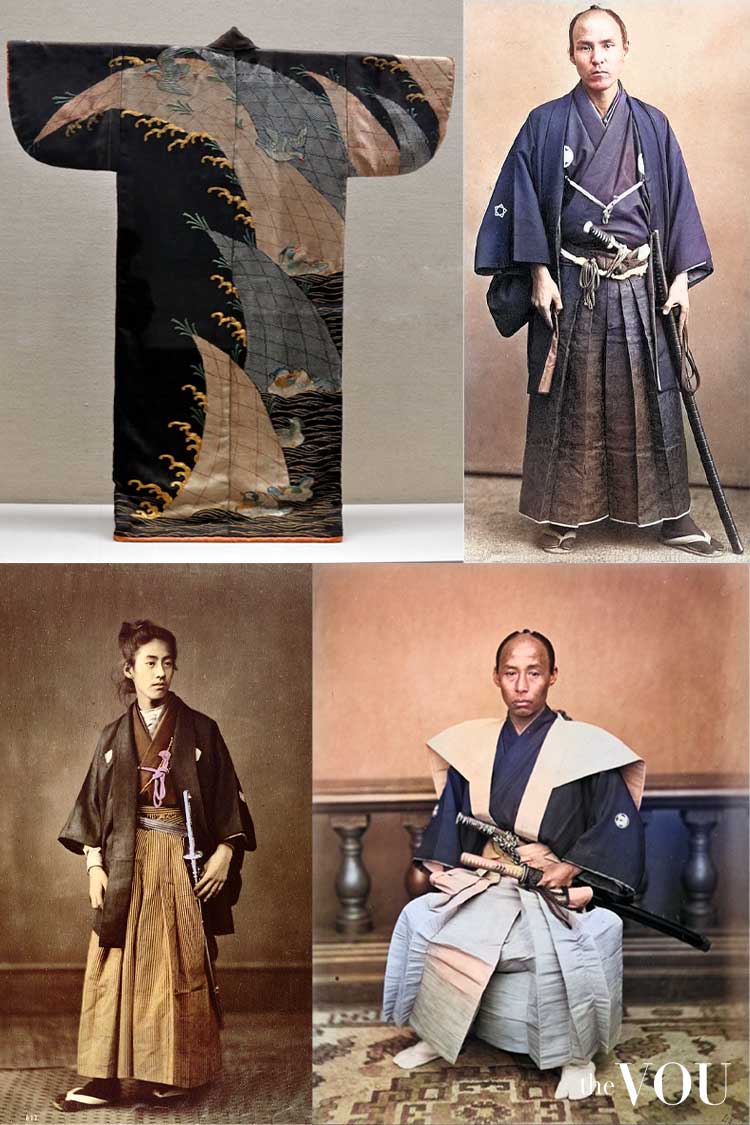
The Victoria and Albert Museum notes that many kamishimo were made of hemp with small stencilled patterns and family crests, so status was shown through cut, crest and occasion rather than through bright display.
India: court coats and textiles
Indian royal courts were long patrons of fine textiles such as silk brocade and muslin, and of embroidery and hand weaving.
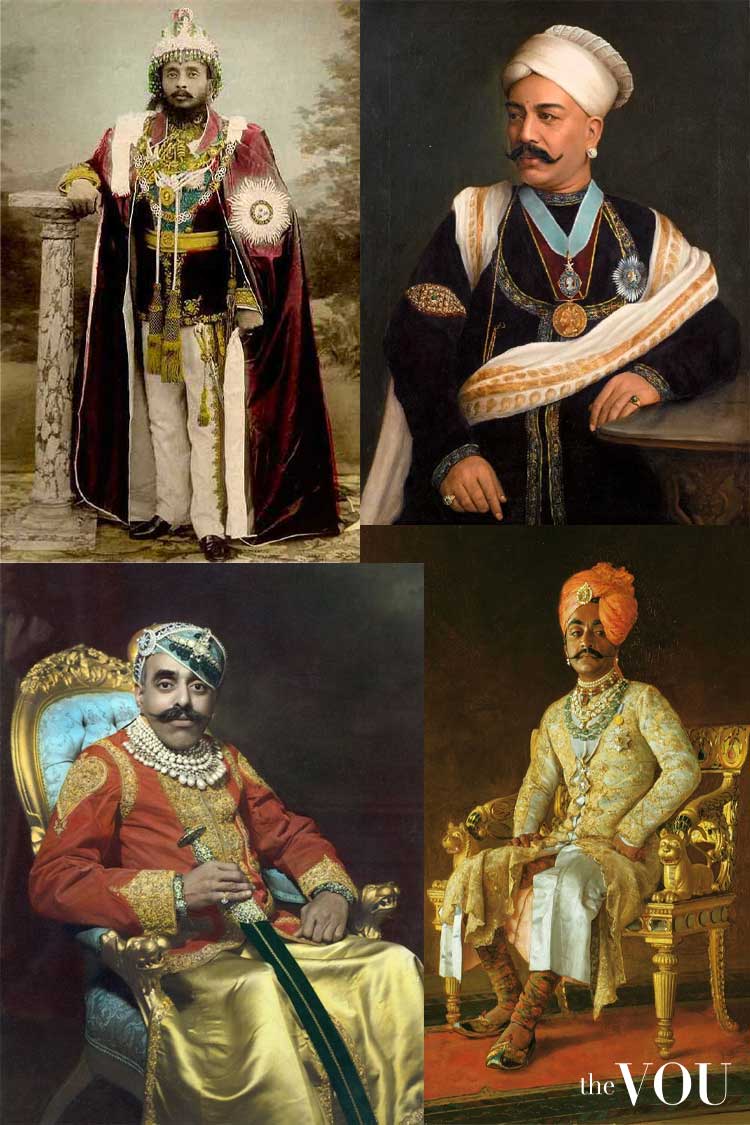
The sherwani, a long fitted coat often worn today at weddings, developed in the late nineteenth century from the earlier achkan, and the Royal Ontario Museum describes it as combining British tailoring with Indian fabric techniques.
Indian court dress often uses rich colour, gold thread and jewellery, a very different visual language from the muted Western look.
How to start an Old Money wardrobe
Start with what you already own, and add one garment at a time where you have a real gap.
A navy blazer, a light blue Oxford button-down, stone chinos, grey flannel trousers and brown loafers already make several complete outfits.
Next, add a plain knit, a dark suit if your work or events need one, and an overcoat for winter.
Have new jackets and trousers altered where needed, look after your shoes and knitwear, and remember that second-hand and vintage clothes can fit this look well.
Optional tools from The VOU
Some readers like extra help when choosing clothes, although none of these tools is needed to wear the garments above.
You can read about choosing an image consultant and what an image consultant does, and our guides to dressing for your body shape and seasonal colour analysis explain two optional frameworks for thinking about proportion and colour.
For more on dressing for the setting, see styling by occasion, location, season and time of day and our Old Money accessories guide.
For the vocabulary behind this guide, see our explainers on garments, fashion accessories, menswear silhouettes and outfits.
We also cover heritage luxury brands and how logo-heavy luxury designs come across, and our fashion style guide explains personal and historic styles.
You can start with three of The VOU’s quizzes: a body shape quiz for men, a seasonal colour quiz for men and a fashion style quiz for men.
For personal help after the quizzes, you can book a consultation: read about The VOU’s image consultants and stylists, see our styling services for men or contact us with questions.
Mandy Meyer’s focus at The VOU is men’s body-shape styling, garment fit and outfit proportions. Her coverage addresses the practical questions behind a wardrobe choice: how a jacket sits across the shoulders, how trousers fall and how different cuts change the silhouette a wearer wants to create.
Her subject areas include the triangle, inverted triangle, rectangle, oval, trapezoid, hourglass and diamond labels used in body-shape styling. These provide starting references for comparing visible proportions; they do not capture every body or prescribe one correct way to dress. The focus connects those observations with garment shape, construction, length and the relationship between the upper and lower parts of an outfit.
Mandy’s editorial coverage combines visual comparisons with fit checks for comfort and movement. Readers can consider whether a cut gives them the room they need, where clothing pulls or gathers and which changes might support their preferred look. The aim is to make menswear choices more understandable while keeping personal preferences and the wearer’s own styling goals central.